
For a christening, choose a midi dress, a tailored pantsuit or a refined jumpsuit in a soft daytime palette, keeping shoulders covered and hemlines at or below the knee. White is permitted for guests, provided the styling doesn’t read as bridal. Order or reserve your outfit four to six weeks ahead to allow for delivery and alterations.
TL;DR:
- A versatile midi dress, tailored pantsuit, or jumpsuit in high-quality fabrics can be worn for multiple events beyond the christening.
- Expect to spend a low hundreds of dollars for a well-made, timeless piece, or rent a premium outfit for a fraction of its retail price.
- Fabrics like linen, crepe, silk blends, wool, and heavier knits are recommended based on the season, with layering options for temperature control.
- Shoes should be practical, such as block heels, kitten heels, or flats, and accessories should be minimal to avoid distractions and hazards.
- Planning to order or rent four to six weeks in advance provides enough time for delivery, fittings, and adjustments.
Table of Contents
- What is the best christening outfit for women?
- What should a mother, godmother or guest wear differently?
- Which fabrics and layers suit the season?
- What shoes and accessories work best?
- Should you buy, rent or borrow your outfit?
- Edito’s perspective: what we choose and why
- What should a christening outfit cost?
- Getting the balance right between tradition and personal style
- Why the Etoile Knot Dress works for a christening
- Sources
- FAQ
What is the best christening outfit for women?
Three silhouettes cover almost every christening scenario, whether you’re the mother, the godmother, or simply a guest trying to strike the right note between polished and comfortable.
A midi dress remains the most versatile choice. Look for a hemline that sits at or just below the knee, a fabric with enough structure to hold its shape through a service and a reception, and a neckline modest enough for a church setting. Round it out with a light layer, a cardigan, blazer, or wrap, so you can adjust for a cool nave and a warmer afternoon tea afterwards. A midi dress in a muted floral or soft solid, paired with a cropped jacket, is a formula that rarely misses.
The tailored pantsuit is the practical choice when comfort matters more than anything else, particularly if you’re holding a baby, chasing toddlers, or standing for long stretches during photos. A midweight fabric with some structure through the shoulder holds its shape without wrinkling in the car, and trousers mean you can crouch, lift, and move without worrying about a hemline. A midi-length dress or a tailored pantsuit is widely recommended for christenings precisely because both options balance formality with the mobility the occasion demands.
The jumpsuit splits the difference between the two. Choose a wide-leg cut with a defined waist rather than anything slouchy, and favour a higher neckline or add a light jacket to keep it church-appropriate. A tailored jumpsuit in navy or dusty pink, with a structured blazer over the top for the ceremony and removed for the reception, photographs beautifully and works across seasons.
- Midi dress: knee-length or below, structured fabric, light layer for temperature shifts
- Tailored pantsuit: midweight cloth, relaxed through the leg, ideal for mobility and long days
- Jumpsuit: wide-leg, defined waist, paired with a blazer for modesty
What should a mother, godmother or guest wear differently?
Your role in the day changes what “practical” actually means, and a little forward planning avoids the small wardrobe disasters that show up in every photo.
- The mother needs mobility above all else. Choose low-maintenance fabrics that resist creasing in the car and through a long service, and if you’re nursing, prioritise a dress or top with discreet access. Photos happen fast and often unplanned, so avoid anything that needs constant adjusting.
- The godmother sits close to the family in every photo, so coordinate loosely with the parents on tone (without matching outright) and lean into modest, elevated styling. A tailored dress or a jumpsuit with a considered accessory does the job without competing for attention.
- The guest should aim for a polished daytime look that respects the occasion without overshadowing it. Avoid bridal-level white from head to toe. Anything that reads as reception wear is safer than anything that reads as evening wear.
- Everyone benefits from a short packing checklist: a spare pair of flats for the car park or garden reception, a small emergency kit (safety pins, stain wipe, blister plasters), and a light layer for a church that’s colder than the weather outside suggests.
Which fabrics and layers suit the season?
Church interiors run cold no matter the forecast outside, so fabric choice matters as much as silhouette.
For warmer months, linen blends, lightweight crepe and silk blends give you the drape and breathability a long day demands without creasing into a mess by the reception. Christening style guides consistently point to daytime-appropriate fabrics like linen, crepe and silk over anything with high shine, which reads as evening wear in a daylight setting.
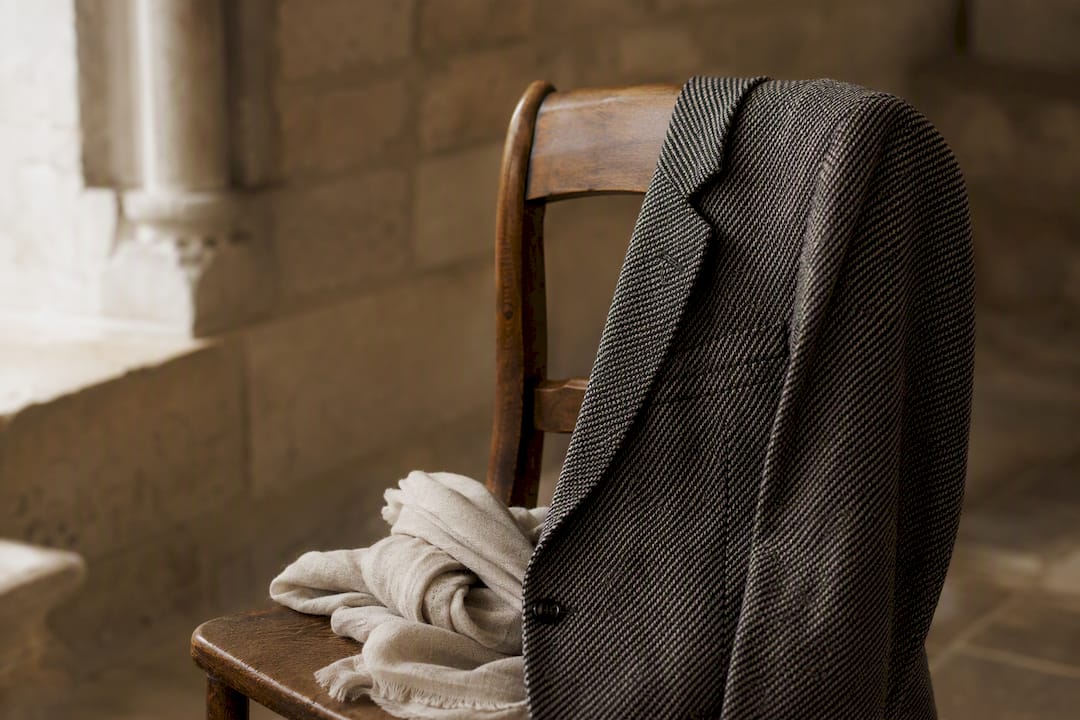
For the cooler months, wool blends, heavier crepe and fine-gauge knits hold their shape and warmth through a longer ceremony. A piece from a cooler-season collection, like the tailoring in Laurence Bras’ autumn winter range, shows how a fine wool blend can carry both the formality of a service and the ease of a family lunch afterwards.
- Warm weather: linen blends, lightweight crepe, silk blends
- Cool weather: wool blends, heavier crepe, fine knits
- All year: a tailored blazer or pashmina for modesty and temperature control
Pro Tip: Steam delicate fabrics the night before rather than the morning of, and transport dresses on a padded hanger in a garment bag. Crepe and silk blends crease easily in a folded suitcase and rarely recover before you’re out the door.
A structured blazer earns its place in almost every christening wardrobe. Church dress codes lean conservative, and covering shoulders with a blazer or wrap solves the modesty question instantly, whatever the base outfit underneath.
What shoes and accessories work best?
Church floors, uneven paths and grassy reception lawns rule out a few shoe categories immediately, and jewellery needs a second thought if you’ll be holding a baby.
Block heels, kitten heels and elegant flats are the safest bets. Stilettos and platforms struggle on cobblestones, grass and old stone floors, and there’s little upside to fighting your shoes through an entire afternoon. Keep jewellery minimal, and if there’s any chance you’ll be holding the baby, skip long or dangly pieces in favour of short studs and slim bracelets that won’t catch on fabric or tiny hands. A small clutch or a compact crossbody keeps your hands free for photos, cake, and inevitably, a baby handed to you mid-conversation. For hair and makeup, aim for daytime finishes, softer contouring and satin rather than heavy shimmer, since natural light in church photography is unforgiving of anything too heavy.
- Shoes: block heels, kitten heels, refined flats
- Avoid: stilettos, platforms
- Jewellery: short studs, slim bracelets, no long necklaces
- Bag: clutch or small crossbody
Should you buy, rent or borrow your outfit?
Each route suits a different budget and timeline, and the right choice usually comes down to how often you expect to wear the piece again.
- Buying makes sense for a silhouette you’ll reach for again, weddings, work functions, other family events, and it avoids the fit compromises that come with rental sizing. Expect to pay more upfront but get full control over alterations and timing.
- Renting suits a one-off need or a style you want to try without the investment. Australian dress-hire services carry extensive inventories built specifically around occasions like christenings, and it’s worth checking a rental boutique’s return window and fit-photo policy before committing.
- Borrowing works if a friend or family member has recently worn something similar, though it comes with the least control over fit and timing.
Whichever route you choose, order four to six weeks before the event to leave room for delivery, alterations or an exchange if the size runs wrong.
Edito’s perspective: what we choose and why
At Edito, we select fabrics and silhouettes built to outlast a single Sunday. A well-cut piece in a quality crepe or wool blend earns its place in a wardrobe well beyond the christening itself, which is the whole premise behind European occasionwear done properly: versatility first, novelty second.
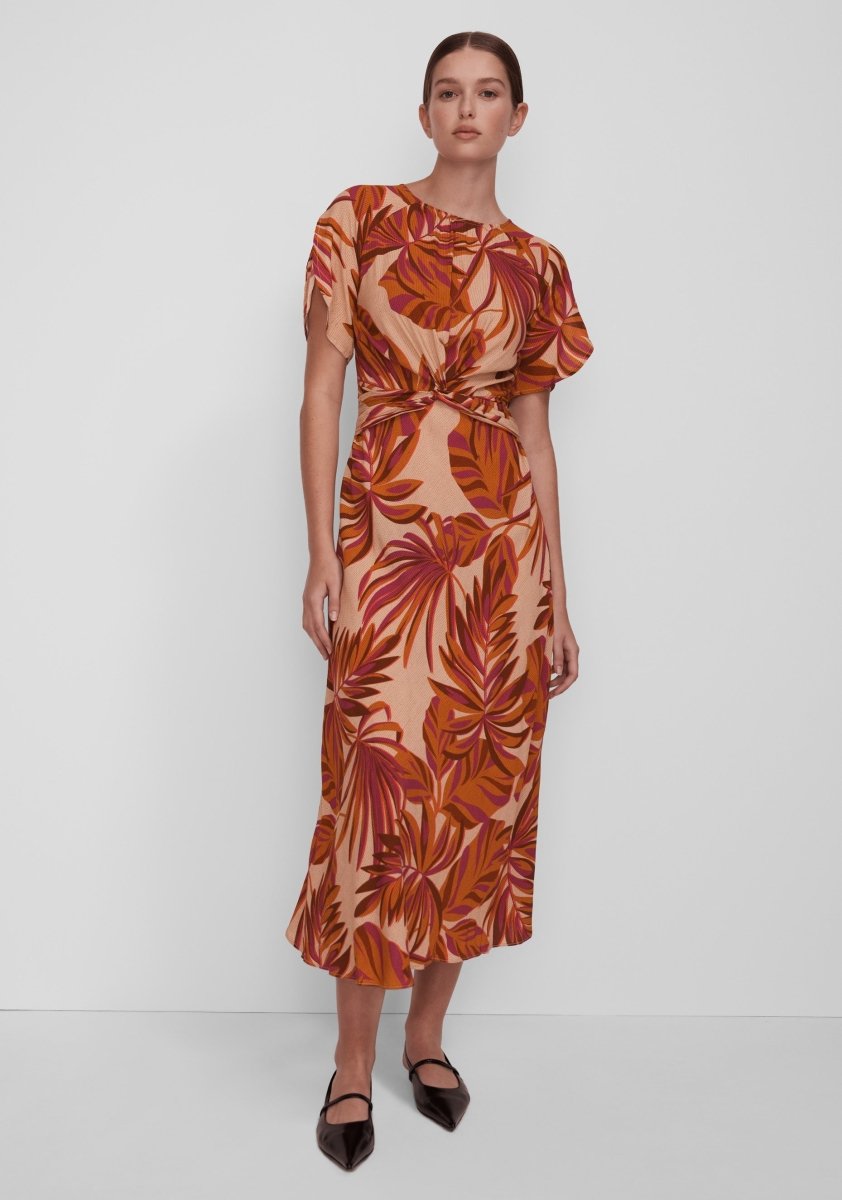
One piece we return to for exactly this brief is the Etoile Knot Dress, a midi silhouette with a considered neckline and a knot detail that photographs beautifully without tipping into fussy. Paired with a light blazer for the service and removed for the reception, it moves easily between the two settings a christening demands.
A christening outfit should work as hard as your everyday wardrobe. Choose fabric and cut that earn a second and third outing, not just a single afternoon of photos.
Mickael Martin, Edito’s founder, built the boutique’s edit around exactly this principle: European tailoring that serves real, recurring occasions rather than one-off events.
What should a christening outfit cost?
Budgets for christening attire span a wide range, and the right number depends on how often you expect to wear the piece again.
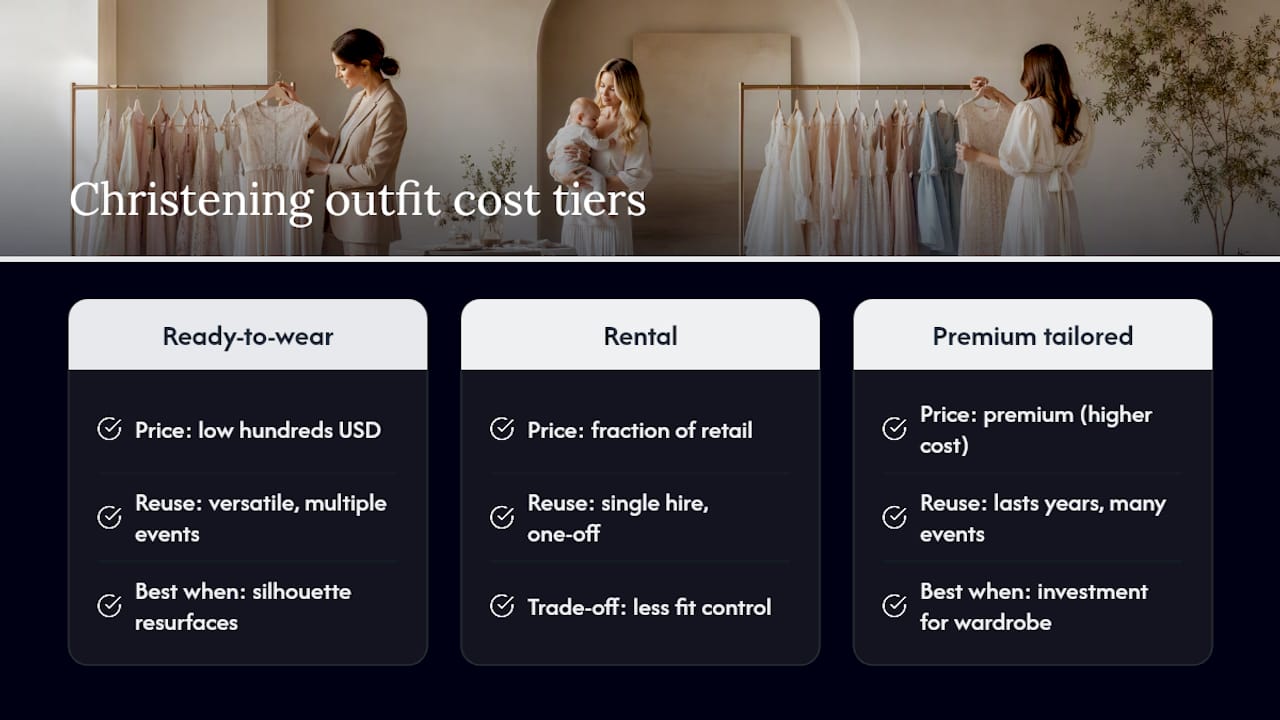
At the accessible end, a well-made midi dress or jumpsuit from a considered ready-to-wear label typically sits in the same range as smart occasionwear you’d buy for a wedding guest slot or a work function, generally landing somewhere in the low hundreds of dollars. That’s a reasonable investment if the silhouette is versatile enough to resurface at other events across the year.
Renting shifts the maths considerably. A single hire of a premium dress usually costs a fraction of its retail price, which makes sense if the style is a one-off or if you’re not planning to build a recurring occasionwear wardrobe. The trade-off is less control over fit and no guarantee the same style will be available next time you need something similar.
At the higher end, tailored pantsuits and pieces in finer fabrics, silk blends, structured wool, sit at a premium because the fabric and construction are built to last years of wear, not one afternoon. If you already lean towards buying quality basics for your wardrobe, this is often the more economical path over time, since the same blazer or trouser suit can carry you through several seasons of events. The smartest approach is usually to decide first whether the piece has a life beyond the christening, then let that answer guide whether you buy or rent.
Getting the balance right between tradition and personal style
The conventional advice on christening dressing tends to over-index on caution: cover everything, avoid colour, default to the safest possible dress. That’s not wrong, but it’s incomplete. The research on this consistently points to comfort and mobility, not just modesty, as the deciding factor in what actually works on the day. A guest who’s constantly tugging at a hemline or adjusting a strap is more of a distraction than someone in a well-chosen colour with a slightly bolder cut.
What’s underrated is fabric quality over trend. A christening happens once for that baby, but the outfit you choose can serve you for years if you pick a silhouette and cloth built to last, rather than a fast-fashion piece bought for a single Sunday. If there’s one thing to prioritise first, it’s versatility: choose the piece you’ll actually wear again, and let modesty and season dictate the details around it, not the other way around.
— Mickael Martin
Why the Etoile Knot Dress works for a christening
The Etoile Knot Dress sits at exactly the intersection this guide has been building towards: a midi length that clears every modesty guideline, a fabric with enough structure to survive a long service and a garden reception, and a knot detail that gives it personality without tipping into anything too casual for church.

Sizing runs true to standard Australian measurements, and Edito’s size guide is worth checking before you order if you’re between sizes. Shipping typically arrives within a week for most Australian addresses, which still leaves comfortable room if you order within the four to six week window this guide recommends. If the fit isn’t quite right, Edito’s returns policy allows an exchange or refund, so there’s no pressure to get it perfect on the first try. For a piece that’s just as easy to wear to a spring wedding or a long lunch afterwards, start with the Etoile Knot Dress and build the rest of your look around it.
Sources
- Christening dress | Huggies Australia
- What to Wear to a Christening or Baptism: The Complete Guide for Women
- What to Wear to a Christening | GlamCorner
- Planning an autumn christening in Australia | Minnie Me
FAQ
What should a woman wear to a christening?
A midi dress, tailored pantsuit or elegant jumpsuit all work well, provided shoulders are covered and the hemline sits at or below the knee. Add a blazer or wrap for the service if your outfit is sleeveless.
Can you wear white to a christening?
Yes, white is generally acceptable for guests at a christening, unlike at a wedding, though it’s best balanced with colour in accessories rather than worn head to toe to avoid looking bridal.
What is a classy christening guest outfit?
A midi dress in a soft, daytime fabric like crepe or a linen blend, paired with block heels and minimal jewellery, reads as classy without overdressing. A tailored jumpsuit with a light blazer is an equally elevated alternative.
What should I wear to a christening in Australia?
Australian christenings typically follow the same modesty guidelines as other church services: covered shoulders, knee-length or longer hemlines, and daytime-appropriate fabrics suited to the season, linen and crepe in summer, wool blends in cooler months.
What’s the best christening outfit trend for 2026?
Tailored jumpsuits and structured midi dresses in quality European fabrics are leading the way, favouring versatile, well-made pieces that can be worn again over anything bought for a single occasion.