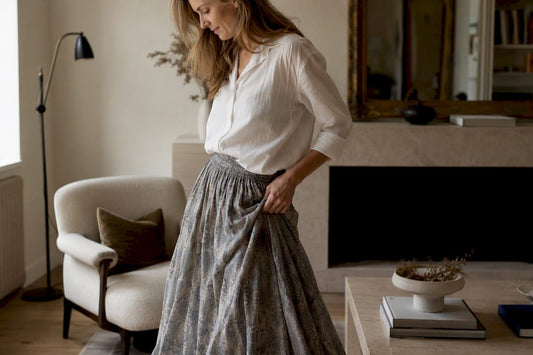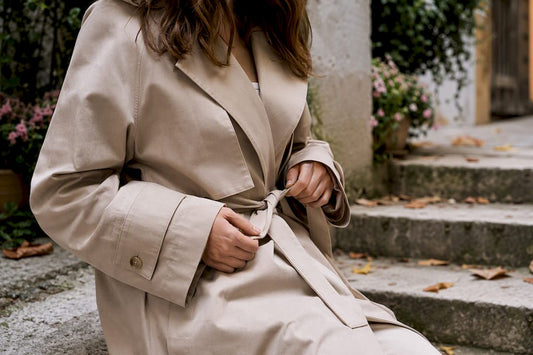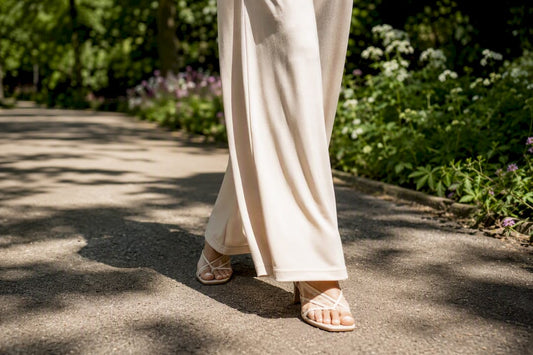

A capsule wardrobe pares your clothing down to a working set of pieces, typically 30 to 35 garments, that combine into far more outfits than their number suggests. The lived-experience study on capsule wardrobes found participants felt less decision fatigue and more satisfied with their style within three weeks. Whether you start with a strict Project 333 rotation or a looser capsule range, the method is the same: audit first, then buy only what fills a genuine gap. Edito builds its own edit on that same logic.
TL;DR:
- Building a capsule wardrobe involves auditing your current clothing and buying only what fills specific gaps, not following a fixed number of items.
- Choosing versatile pieces in a limited neutral palette and maintaining a disciplined approach to fit and fabric significantly extends wardrobe longevity.
- Outfit formulas, layered with shoes and accessories, create many diverse looks from a small set of core items, making styling simple and creative.
- Reassessing your wardrobe every three to six months helps remove unused pieces and adapt to life or climate changes without overhauling the entire capsule.
- Prioritizing quality, craftsmanship, and proper tailoring for essential items ensures durability and cost-effectiveness over years of use.
Table of Contents
- What is a capsule wardrobe for women, and why does it work?
- How do you audit your wardrobe before buying anything new?
- How to build a seasonal capsule with the right piece counts
- Which outfit formulas actually work for everyday, work and travel?
- What to buy, what fabrics last, and how to care for a capsule
- Edito boutique in practice: a small worked capsule
- How do you add trend pieces without losing versatility?
- How do you adapt a capsule to your body type and personal style?
- What mistakes derail a capsule wardrobe before it starts?
- How do you layer a capsule wardrobe across different climates?
- How often should you reassess and refresh your capsule?
- Author perspective: why Edito recommends a quality-first capsule approach
- How to start your capsule with Edito: featured pieces and next steps
- Sources
- FAQ
What is a capsule wardrobe for women, and why does it work?
A capsule wardrobe is a deliberately small, coordinated set of clothing built so that most items work with most other items. It is not minimalism for its own sake. It is a system designed to reduce the number of decisions you make in front of your wardrobe each morning, and to make every purchase count.
Four principles hold the whole idea together.
- Wear-first, not buy-first. Start with what you already own and wear often, rather than shopping for a pre-made list. This single shift is what separates a capsule that lasts from one you abandon in six weeks.
- A disciplined palette. Three to four neutrals plus one or two accent colours means nearly everything you own can be worn with nearly everything else.
- Versatility over novelty. Each piece should earn its place by working across at least two or three occasions, not one outfit.
- Buy to fill gaps, not to fill a wardrobe. Every new purchase answers a specific question: “What can’t I currently make an outfit for?”
The evidence for this approach is more than anecdotal. A peer-reviewed study on lived experiences with capsule wardrobes identified recurring themes among participants: reduced stress, detachment from trend pressure, a clearer sense of personal style, and more conscious consumption habits. These are not minor side effects. For women juggling a working wardrobe, a social life and a wardrobe budget, that reduction in daily decision-making is often the entire point.
Quick test for any candidate garment: Can you name two outfits it works in right now, using clothes you already own? Does it work in at least two seasons where you live? Would you buy it again at full price if it wore out tomorrow? If the answer to any of these is no, it likely does not belong in the capsule.
How do you audit your wardrobe before buying anything new?
Building a capsule from what you already own, rather than from a shopping list, is the step most practitioner guides treat as non-negotiable. It stops you duplicating what you already have and reveals real gaps rather than imagined ones.
- Set a timeframe. Give yourself a weekend for a fast audit, or 30 days if you want to track actual wear patterns rather than guess at them.
- Empty the wardrobe completely. Every drawer, every hook. You cannot audit what you cannot see.
- Run the bed test. Lay everything out and sort into three piles: worn in the last three months, worn occasionally, and untouched. Be honest about which pile each piece belongs in.
- Track wear for 30 days if you’re unsure. Turn hangers backward, or snap a daily outfit photo. At the end of the month, anything untouched has answered its own question.
- Set up a quarantine box. Anything you’re not ready to donate but haven’t worn goes into a labelled box for three months. If you don’t retrieve it, donate it unopened.
- Apply the three-outfit rule. Keep only pieces you can style at least three different ways with items you already own.
- Use the one-week rule for new purchases. Wait seven days before buying anything that isn’t replacing a worn-out staple. Impulse pieces rarely survive the wait.
Cost-per-wear is the number that should drive every purchase decision from here. A $250 blazer worn 100 times costs $2.50 per wear. A $60 top worn four times before it’s relegated to the quarantine box costs $15 per wear, and that is before accounting for the wardrobe space it occupies in the meantime.
A simple spreadsheet or even a phone photo album sorted by category does more work here than any app. Photograph each piece, note the last time you wore it, and you have an audit trail without needing new software.
Pro Tip: Before you donate anything you’re on the fence about, try a tailor first. A blazer that’s slightly too big through the shoulders, or trousers that pool at the ankle, are often one $30 alteration away from becoming a wardrobe workhorse again.
How to build a seasonal capsule with the right piece counts
Once you know what survives the audit, the next question is scale. Not every woman needs the same capsule, and the Vogue guide to building a capsule wardrobe makes a useful point here: durability and fit matter more than adhering to any particular number.
Three starter templates cover most situations:
- The 30 to 35 piece seasonal capsule. The most workable size for someone building a capsule wardrobe for women’s everyday life, work included. Strict enough to force real choices, loose enough to feel liveable.
- The 20 to 30 piece travel capsule. Built for a trip of one to three weeks, prioritising layering pieces and one or two outfit formulas repeated with different accessories. Edito’s travel capsule wardrobe guide walks through a 12-piece version for shorter trips.
- The 10 to 12 piece minimalist travel capsule. For weekend trips or carry-on-only travel, where every piece needs to double up on function.
Inside a seasonal capsule, thinking in modules rather than a single flat list makes the maths easier.
- Work module: one blazer, two trousers, three tops, one pair of smart shoes. Edito’s work capsule wardrobe guide breaks this down further for office dressing specifically.
- Weekend or casual module: jeans, a knit or two, a casual jacket, flat shoes or sneakers.
- Dressy module: one dress, one pair of heeled or dressy flats, a structured bag.
Colour is what makes these modules talk to each other. Choose three to four neutrals (think navy, camel, white, charcoal) and layer in one or two accents (a burgundy, a forest green) that repeat across seasons. An insight from Vogue’s own guidance notes that when 60 to 70% of core items carry through unchanged between seasons, trans-seasonal dressing becomes far less work. To sample your own palette, lay out your keep pile from the audit and photograph it. The dominant two or three colours you see are usually your palette already. You are simply formalising a choice you have been making unconsciously for years. For guidance specific to Australian seasonal shifts, Edito’s trans-seasonal dressing guide covers what to swap and when.
Which outfit formulas actually work for everyday, work and travel?
The real test of a capsule wardrobe is not how it looks folded in a drawer. It is how many genuinely different outfits it produces on a Tuesday morning when you have four minutes and a coffee going cold on the bench.
A well-built capsule of four to six anchor pieces can produce a dozen or more distinct looks once you factor in layering and accessories. These formulas are the proof:
- Everyday: fitted tee, straight-leg jeans, loafers, structured tote.
- Everyday, cooler weather: merino knit, jeans, ankle boots, cropped jacket.
- Work, warm months: silk-blend blouse, tailored trousers, low heel, slim belt.
- Work, cooler months: blouse layered under a blazer, trousers, ankle boots.
- Elevated casual: knit, wide-leg trousers, loafers, gold hoops.
- Evening: slip dress, ankle boots, leather jacket, statement earrings.
- Weekend: white tee, denim, sneakers, crossbody bag.
- Travel, one formula repeated: knit, trousers, trench, flat boots, scarf as a second layer.
Edito’s smart casual outfit guide works through several of these combinations in more detail if you want a starting point that doesn’t require guesswork.
Shoes and accessories do more heavy lifting here than any other category. Swap loafers for heeled boots and the same trousers-and-blouse combination shifts from office-appropriate to dinner-ready without a single new garment purchase. A scarf, a different bag, or a stack of gold jewellery changes the mood of an outfit formula in seconds, which is exactly why the lived-experience study on capsule wardrobes found participants reported feeling more, not less, creative once the base wardrobe was settled. Fewer decisions about what to wear seem to free up more attention for how to style it.
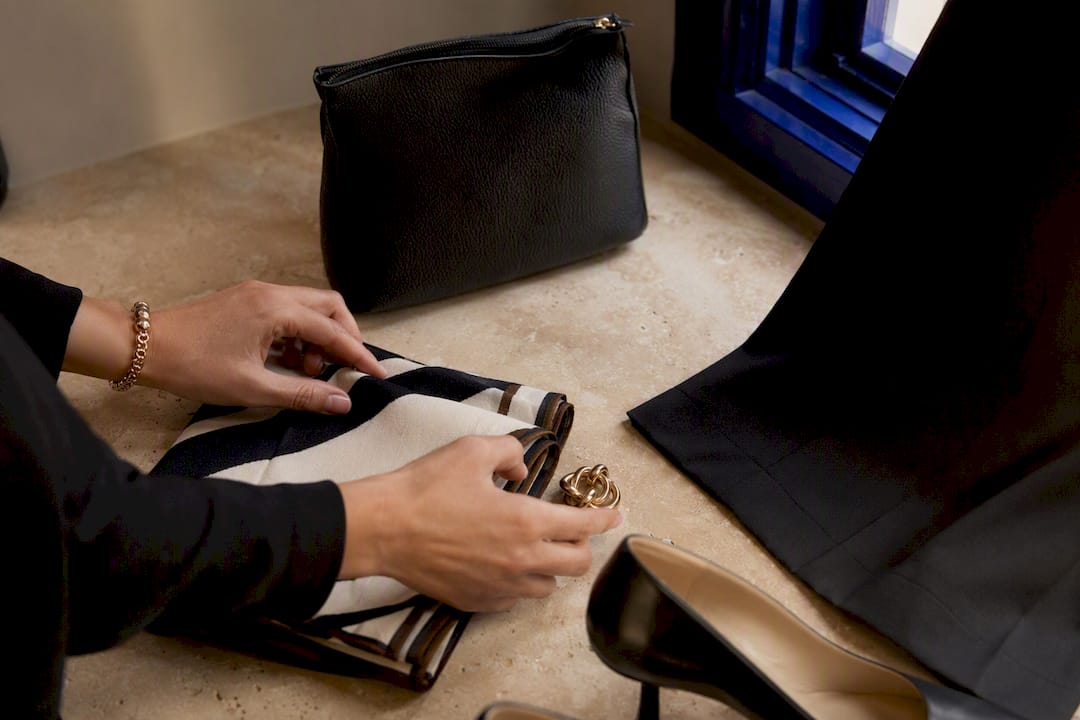
Seasonally, the same formulas hold. Swap the merino knit for a linen version, the ankle boots for espadrilles, and the trench for a lighter jacket, and most of these combinations carry straight through into warmer months.
What to buy, what fabrics last, and how to care for a capsule
Not every item in a capsule deserves the same budget. The pieces you wear constantly (a coat, your everyday shoes, a structured bag) are worth spending more on, because the cost-per-wear maths favours durability every time. A widely cited approach to capsule shopping recommends treating these anchor pieces as the ones to prioritise financially, while treating trend-driven or occasional pieces as places to spend less.
Fabric choice does most of the work in whether a piece survives two years or twenty wears.
- Merino wool: warm without bulk, resists odour, and holds its shape through repeated wear.
- Cotton and linen: breathable staples for warmer months, though linen wrinkles by design rather than by flaw.
- TENCEL or lyocell: drapes well, holds colour, and is increasingly used in European-made basics for exactly this reason.
The Capsulee Wardrobe guide to fabric selection points to these fibres specifically for their combination of longevity, comfort and drape, all qualities that matter more once a garment is doing double or triple duty in your rotation.
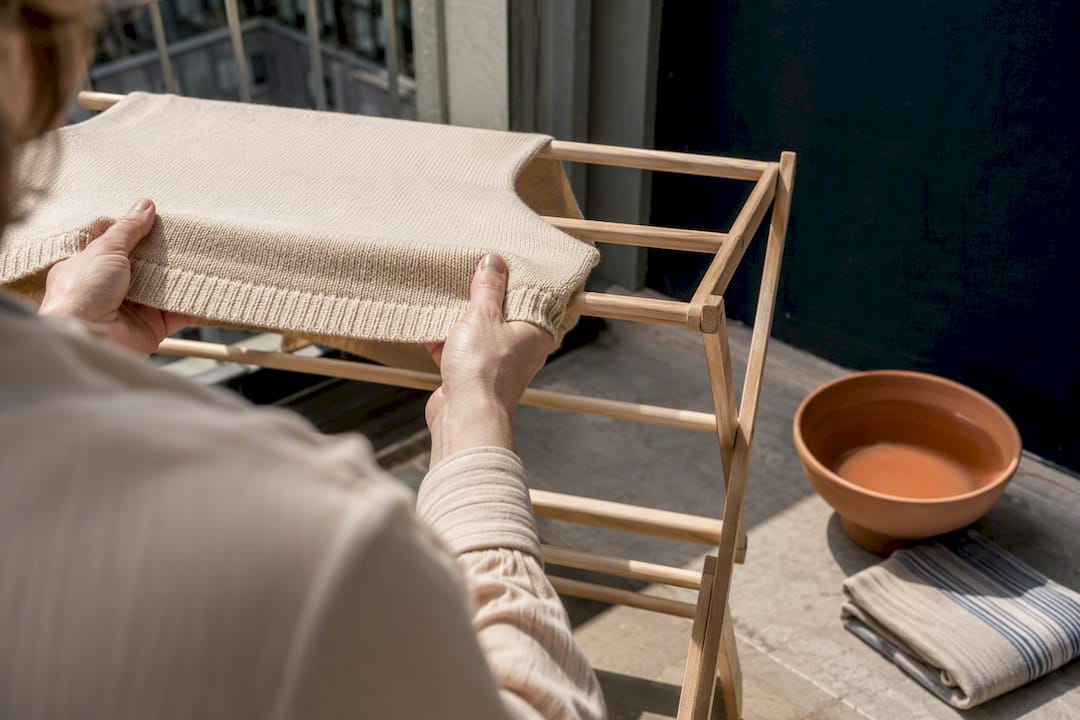
Care extends the life of every piece in the capsule. Wash knits cooler and less often, air them between wears instead of always laundering, and rotate shoes rather than wearing the same pair daily so the leather and soles get time to recover.
Pro Tip: Find a local tailor before you need one. A properly fitted blazer or trouser hem often does more for how “expensive” an outfit looks than the price tag on the garment itself.
Edito boutique in practice: a small worked capsule
Edito curates around three criteria: quality of construction, the craftsmanship behind each piece, and genuine everyday wearability rather than runway styling that dates within a season. That is the same filter this article has walked you through applying to your own wardrobe.
A small worked capsule shows how it comes together. Start with the Christen Jacket, a tailored layering piece that moves between a blazer’s formality and a jacket’s ease. Add the Cargo Pants in Vegetal, a tailored-casual trouser with enough structure for the office and enough ease for the weekend. Layer in the Chorus Blouse in Navy/White, an elevated basic that works equally well tucked into tailored trousers or knotted over jeans.
Around these three, a handful of generic complements complete the capsule:
- A pair of well-fitted tailored trousers in a neutral shade.
- One crisp white tee for the days you want simplicity.
- A neutral knit for cooler mornings and evenings.
- Ankle boots that work with both trousers and jeans.
- A structured bag that carries from desk to dinner.
Nine pieces, and the outfit formulas above already show how many looks that produces.
How do you add trend pieces without losing versatility?
A capsule wardrobe is not a ban on trends. It is a filter for deciding which ones deserve a place in your rotation.
The rule that works best in practice: treat trend pieces as the one or two accent items in your palette, never as a replacement for your neutrals. If your capsule runs on navy, camel, white and charcoal, a single seasonal colour or print can slot in as your accent without disrupting the system underneath it.
Before buying a trend piece, run it through the same three-outfit rule you applied during your audit. Can you style it three different ways with pieces you already own? A patterned blouse that only works with one specific skirt is not a capsule piece, no matter how current the print. A textured knit in an unusual but wearable colour, on the other hand, might slot into four or five existing outfits without any trouble.
Accessories are the lower-risk entry point for trend experimentation, with useful options like a UPart clip that quickly finishes hairstyles and complements outfit formulas. A statement bag, a bold earring, or a seasonal scarf lets you participate in a trend without committing wardrobe real estate to it. If the trend fades in a year, you have lost a $60 accessory decision, not a $300 garment mistake.
Edito’s European fashion trends guide is worth a look if you want a sense of which seasonal pieces are genuinely wearable investments versus which are one-season novelties. The distinction usually comes down to fabric quality and cut, not the trend itself.
How do you adapt a capsule to your body type and personal style?
The core structure of a capsule wardrobe (neutrals, versatility, wear-first selection) stays the same for every woman. What changes from person to person is which silhouettes and proportions you choose within that structure.
If you’re drawn to fitted silhouettes, your capsule might lean on tailored trousers, structured blazers and fitted knits. If you prefer ease and movement, wide-leg trousers, relaxed blouses and softer knits achieve the same versatility without ever feeling restrictive. Neither approach is more “capsule” than the other. The structure adapts to you, not the reverse.
Body proportion matters more in fit than in garment type. A cropped jacket that flatters a shorter torso might need to become a longer-line blazer for someone taller, but the role that jacket plays in the capsule, the layering piece that lifts an outfit, stays identical. This is where tailoring earns its place again: the same capsule concept, adjusted at the shoulder, hem or waist, works across a far wider range of bodies than off-the-rack sizing suggests.
Personal style comes through in the accent colours and accessories more than in the neutrals. Two women can build an almost identical capsule structure, thirty pieces, four neutrals, one accent colour, and end up with visibly different wardrobes once jewellery, scarves and shoe choices are layered on top. That is the point. A capsule gives you a scaffold, not a uniform.
What mistakes derail a capsule wardrobe before it starts?
Most capsule wardrobes fail for the same handful of avoidable reasons.
Buying the “capsule list” before doing the audit. Following someone else’s exact 33-item list without checking it against your own climate, job and body ignores the entire point of the wear-first method. Their capsule was built for their life.
Choosing trend colours as your neutrals. A palette built around this season’s popular shade will feel dated within a year, undermining the entire trans-seasonal logic a capsule depends on.
Skipping the fit check. A capsule full of ill-fitting pieces looks like a small wardrobe of mistakes, not a curated edit. Tailoring is not optional maintenance here. It is core to the method.
Treating the capsule as permanent. A capsule that never gets reassessed becomes a static snapshot of who you were eighteen months ago, not a living system.
Ignoring cost-per-wear on anchor pieces. Underspending on a coat or daily shoes to “save money” often costs more over two years than one considered purchase would have.
Forgetting quantity limits on modules. Three blazers in a 30-piece capsule leaves too little room for the tops, trousers and shoes that actually generate variety.
How do you layer a capsule wardrobe across different climates?
Layering is what makes a genuinely small wardrobe stretch across an entire year, and across the very different climate zones many Australian women live between.
Start with a base layer that does the quiet work: a fitted tee, a fine merino knit, or a silk-blend camisole. This layer sits closest to the body and should be breathable enough to wear alone in warmer months and thin enough to disappear under other layers in cooler ones.
The middle layer adds warmth without bulk. A cardigan, a slightly heavier knit, or a shirt worn open over a tee all serve this role. This is the layer that changes most often through the day, on and off as temperature shifts, so it needs to be easy to add and remove without disrupting the outfit underneath.
The outer layer handles weather and finishes the silhouette. A tailored blazer works for temperate days and indoor warmth; a trench or wool coat takes over as temperatures drop further. The genuinely versatile capsule outer layer is trans-seasonal by design, something Edito’s seasonal dressing guide covers in more depth for the shoulder-season stretches that trip up most wardrobes.
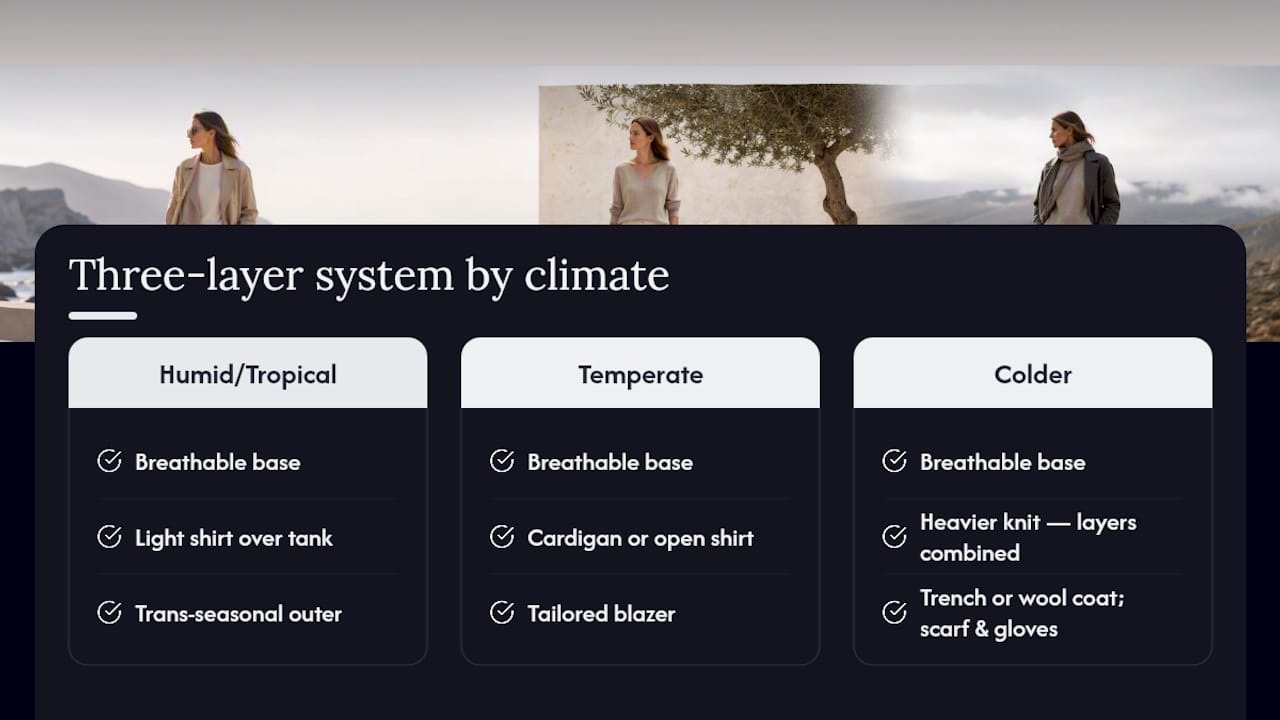
For humid or tropical climates, the same three-layer logic holds, but the middle layer often shrinks to almost nothing, a light shirt over a tank, rather than a knit. For colder regions, all three layers may be worn simultaneously most days, which is exactly why the accent scarf and a good pair of gloves earn a permanent place in a cold-climate capsule rather than counting as optional accessories.
How often should you reassess and refresh your capsule?
A capsule wardrobe is not a one-time project. It is a system that needs a light checkup roughly every three to six months, ideally timed to genuine seasonal shifts rather than arbitrary calendar dates.
At each reassessment, run a shortened version of your original audit. Which pieces did you reach for constantly this season? Which sat untouched? Anything untouched for two full seasons in a row is a strong candidate for the quarantine box, regardless of how much it cost or how much you liked it in the shop.
Life changes should trigger a reassessment outside the usual schedule too. A new job, a house move to a different climate, or even a shift in your daily commute can quietly make half a capsule obsolete without you noticing until you’re standing in front of the wardrobe wondering why nothing feels right.
Keep the outfit-photo habit going even after the initial audit. A simple album of outfit combinations that worked saves real decision time months later and gives you honest evidence of what you actually wear, rather than what you remember wearing. Treat reassessment as maintenance, not a failure of the original capsule. Wardrobes, like the rest of a considered life, need small course corrections far more often than a complete overhaul.
Author perspective: why Edito recommends a quality-first capsule approach
What strikes me most about the capsule wardrobe conversation is how often it gets reduced to a number, as though 33 items is a finish line rather than a starting proposition. The real work is curation: choosing pieces with genuine craftsmanship, then giving them the tailoring they need to earn their place permanently. A capsule built from well-made, well-fitted basics rewards you for years. One built from a rushed shopping list rewards you for a season, if that.
My advice stays practical: audit before you buy, build your anchors slowly, and never underestimate what a good tailor can do for a piece you already own. Shop with confidence in returns and alterations, and let the capsule earn its place gradually, not all at once.
— Mickael Martin
How to start your capsule with Edito: featured pieces and next steps
Edito exists for exactly the moment you’ve reached after reading this: knowing what your capsule needs and wanting pieces built to actually last inside it, not fast-fashion basics that fade after a dozen washes. Every piece in the edit is chosen for craftsmanship and wearability first, which means fewer replacement purchases and a genuinely lower cost-per-wear over time.

Three pieces make a natural starting point for building or extending your own capsule. The Christen Jacket works as your tailored layering anchor, the piece that lifts a simple tee-and-jeans combination into something considered. The Cargo Pants in Vegetal bridge tailored and casual, useful for both office days and weekends. The Chorus Blouse in Navy/White covers the elevated basic role your capsule needs multiples of.
If a fit isn’t quite right, Edito’s returns process makes trying pieces at home straightforward, and a local tailor can handle the rest. Build your shopping list from your own audit results first, then let these three pieces fill the specific gaps you found.
Sources
- Finding yourself in your wardrobe: An exploratory study of lived experiences with a capsule wardrobe
- Finding yourself in your wardrobe: An exploratory study of lived experiences with a capsule wardrobe
- How to build a capsule wardrobe that stands the test of time — Vogue
FAQ
What is the 5-4-3-2-1 capsule wardrobe?
It’s a structured formula for a minimalist capsule: five tops, four bottoms, three layering pieces, two pairs of shoes and one dressy option, adaptable to your own climate and lifestyle.
What should a woman in her 70s wear in a capsule wardrobe?
The same principles apply at any age: comfortable, well-fitted neutrals, one or two elevated statement pieces, and easy layering. Fit and fabric quality matter more than following any age-specific rule.
What is the 3-3-3 rule for a capsule wardrobe?
It’s a minimalist variation using three tops, three bottoms and three pairs of shoes for a set period, often a season, to test how far a small rotation can genuinely stretch.
What is a good capsule wardrobe for Australia’s climate?
A trans-seasonal capsule built around layering works best, since most Australian regions swing between warm days and cooler mornings within the same week. Edito’s trans-seasonal dressing guide covers specific swap points across the year.
How many pieces should a starter capsule wardrobe have?
Most practical starter capsules sit between 30 and 35 pieces, a range the lived-experience capsule study and multiple practitioner guides both point to as workable without feeling austere.