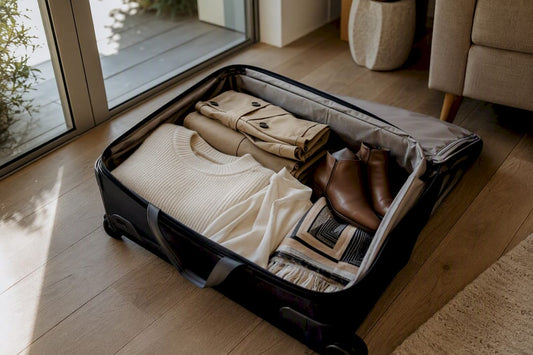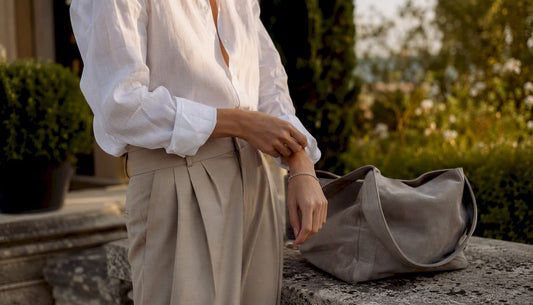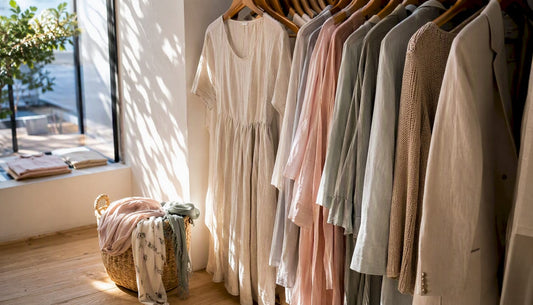

Aim for a moderate-sized capsule, built on neutrals with one accent tone in fabrics that breathe such as linen, cotton and fine merino wool. That’s the core size the best work capsules settle on, and it’s the number we come back to at Edito when clients ask where to start.
Fewer pieces than that and you’re re-wearing the same three outfits by Thursday. More, and you’re back to a wardrobe full of things you forgot you owned. The 15 to 20 range hits the sweet spot: enough tops, bottoms and layers to mix genuinely different outfits, without so much volume that laundry day becomes archaeology. It also covers Australia’s swing between a mild Brisbane winter and a Sydney summer that turns any office into a sauna by 2pm.
Before you buy anything new, audit what’s already in the wardrobe against this list:
- A pair of tailored trousers that sit at the natural waist
- A blazer in a neutral tone (navy, camel or charcoal)
- A crisp white or cream button-up
- A fine-knit jumper for layering
- A midi dress that works alone or under a blazer
- Leather flats or a low heel you can walk in
- A neutral structured bag
- One accent piece (a jacket, a print blouse) that carries your personality
Key Takeaways
A 15 to 20 piece work capsule built on neutral tones, one accent colour and breathable natural fabrics delivers the most wearable, cost-effective professional wardrobe for most Australian working women.
| Point | Details |
|---|---|
| Target 15–20 pieces | This range balances daily variety with manageable laundry and storage, covering most work dress codes. |
| Choose breathable fabrics | Linen, cotton and fine merino wool handle Australian humidity and office air-conditioning better than synthetics. |
| Buy in two phases | Cover Foundation pieces (trousers, blazer, shoes) first, then add Supplementary pieces across sale cycles. |
| Use capsule rules as tools, not gospel | The 3-3-3 rule teaches outfit math; scale to 15–22 pieces for real working-week variability. |
| Shop Edito for curated core pieces | Edito’s European edit, including the Cargo Pants in Vegetal, Travel Crew Sweater and Christen Jacket, covers Foundation and accent pieces in one boutique range. |
Table of Contents
- What Goes Into a Work Capsule Wardrobe Checklist?
- Which Fabrics And Fits Actually Last At Work?
- How Do Capsule Rules Like 3-3-3 Apply To Work?
- What’s A Realistic Budget To Build A Work Capsule?
- How Do You Adapt A Work Capsule Each Season?
- How Do You Care For Capsule Pieces So They Last?
- How Edito’s Pieces Slot Into A Work Capsule
- What Colours And Patterns Actually Read As Professional?
- How Do You Accessorise A Work Capsule Without Overdoing It?
- How Do You Adjust A Capsule For Different Dress Codes?
- How Do You Keep Personal Style In A Professional Wardrobe?
- The work capsule wardrobe: build a polished 15–20 piece rotation
- Build Your Work Capsule From Edito’s Curated Edit
- Sources
- FAQ
What Goes Into a Work Capsule Wardrobe Checklist?
The maths behind 15 to 20 pieces is simple: divide the list into categories, weight it toward tops and bottoms (the pieces you touch daily), and let outerwear and accessories carry the smaller share.
A workable breakdown looks like this:
- Six to eight tops — button-ups, blouses and knits that layer under a blazer or stand alone
- Three to four bottoms — at least one tailored trouser, one skirt or second trouser, and denim if your workplace allows it
- Two blazers or structured layers — one neutral, one with texture or colour
- One coat — weather-appropriate for your city, cut to actually fit over a blazer
- Two to three pairs of shoes — a flat, a low heel, and a boot or sandal depending on season
- Two accessories — a bag and a belt, or a bag and a scarf, whichever you’ll reach for daily
That’s roughly 16 to 19 pieces before you count a dress or two, which most working women fold in as a seventh top-adjacent category because a good midi dress replaces two garments in one.
Two palette approaches work, and they produce different wardrobes:
- All neutrals (navy, black, grey, cream, tan) maximize mix-and-match. Everything works with everything, which suits women who want zero decision-making before 8am.
- Neutrals with one accent (building in a colour or two beyond the core neutrals keeps the capsule from reading flat) gives the wardrobe personality without breaking the system. A burgundy blazer or an olive trouser still pairs with every neutral top you own.
Substitution is where a capsule earns its flexibility. A tailored skirt can stand in for trousers on days you want a dressier silhouette. A wrap blouse, like the Doodle Wrap Blouse in Grey, does double duty as a soft layer under a blazer or a standalone top with tailored pants. A midi dress substitutes for a blouse-and-skirt combination entirely, which matters on a warm February morning when the last thing you want is two layers.
The point isn’t to hit an exact number. It’s to make sure every piece can partner with at least three others in the wardrobe. If something only works with one other item, it doesn’t belong in the capsule, no matter how much you like it.
Which Fabrics And Fits Actually Last At Work?
Fabric choice decides whether your capsule survives an Australian summer or wilts by lunchtime. Linen is the standout for warmer months: it breathes, it softens with wear, and its characteristic crease reads as relaxed rather than sloppy in most modern offices. Cotton does similar work with a crisper finish, better suited to structured shirts and shift dresses. Fine merino wool covers the cooler months and shoulder seasons, regulating temperature far better than synthetic knits and resisting odour over multiple wears, which matters when you’re packing light.
Lightweight suiting blends, often wool mixed with a touch of stretch fibre, hold their shape through a full day of sitting, standing and commuting without the shine or crush you get from pure synthetic tailoring.
Fit checkpoints matter more than fabric in some cases. A blazer with shoulder seams sitting even fractionally past your natural shoulder line will always look borrowed, not owned. Trousers should sit at the waistline without gaping or pulling, with a break at the shoe that suits the cut, cropped or full length. Dresses need enough structure through the waist to avoid the shapeless “sack” silhouette that undermines an otherwise sharp outfit.
Finish details tell you whether a piece is built to last:
- A lined blazer or skirt resists pilling and holds its shape through dry-cleaning
- Reinforced seams at the underarm and crotch survive repeated wear without splitting
- A generous hem allowance means a skirt or trouser can be let down or taken up as your body or style changes
- Natural-fibre linings breathe better than polyester, especially in Queensland or Northern Territory humidity
Pro Tip: Run your hand along the inside seam of a blazer before buying. If you can feel the seam allowance is generous and evenly finished, the garment was made to be altered and worn for years, not replaced next season.
How Do Capsule Rules Like 3-3-3 Apply To Work?
The 3-3-3 rule, three tops, three bottoms, three pairs of shoes, generates 27 outfit combinations from just nine pieces. It’s a brilliant teaching tool for understanding outfit math and a genuinely useful exercise if you’re packing for a short trip. But nine pieces is rarely enough for a working week that includes client meetings, casual Fridays and the odd after-work event, which is why most professional wardrobes scale up to the 15 to 22 piece range once the exercise is done.
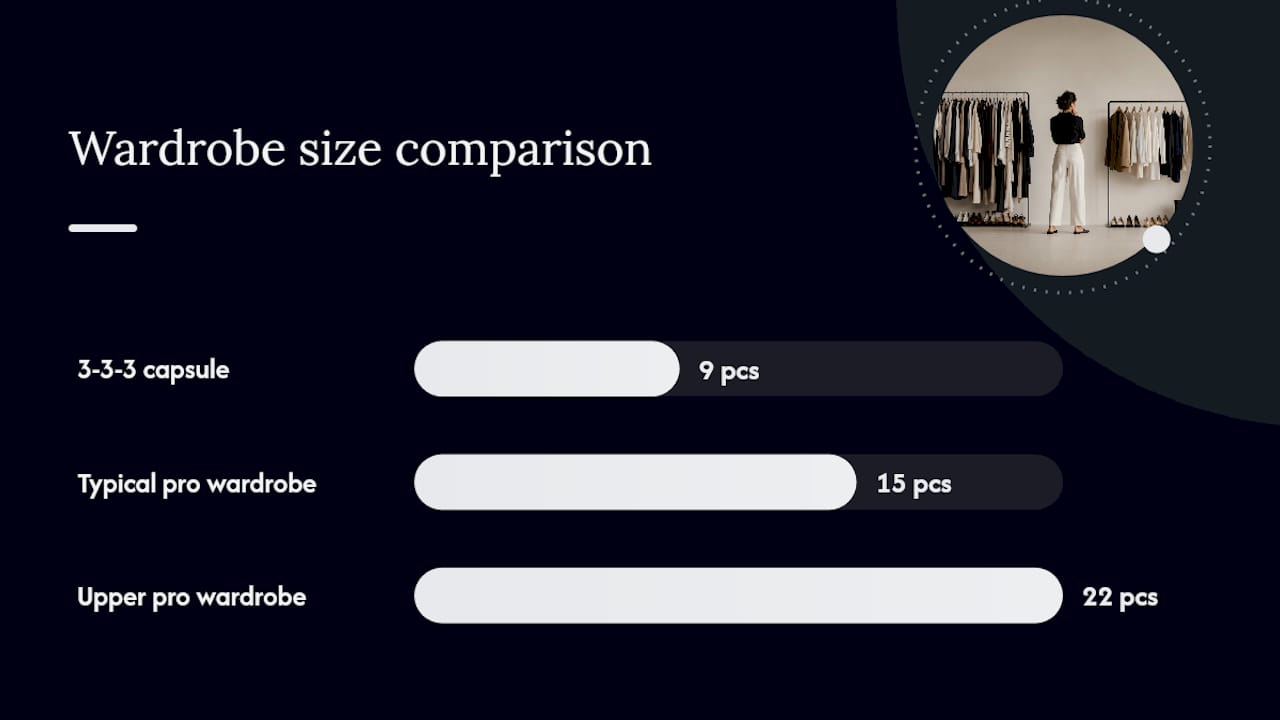
The 5-4-3-2-1 rule scales the same logic further: five tops, four bottoms, three layers, two pairs of shoes, one bag, applied across a season rather than a week. It’s the more realistic version of 3-3-3 for anyone whose job doesn’t let them repeat the identical outfit twice in a fortnight.
Three formulas to steal directly:
- Smart-casual day: tailored trousers, a fine knit, flat leather loafers, structured tote
- Client-facing day: blazer over a blouse, tailored trousers or a midi skirt, a low heel, minimal jewellery
- Hybrid or remote day: a soft knit dress or trouser-and-blouse combination, flats, a lighter cardigan for video calls where the room runs cold
Layering is the fastest lever for changing an outfit’s register without buying anything new. Add a blazer and the outfit reads formal. Swap it for an open cardigan and the same trousers and top read relaxed. A scarf or a statement earring pulls the same base outfit toward personality-forward without touching the clothing itself.
What’s A Realistic Budget To Build A Work Capsule?
Buy in two phases, not one. The Foundation phase covers 15 to 18 core pieces: trousers, a blazer, a pair of well-made shoes, and the basics you’ll wear weekly regardless of season. The Supplementary phase follows over the next two or three sale cycles, filling in accent colours, a second blazer, or a dress for client-facing days.
Foundation purchases are best timed around end-of-financial-year sales, with supplementary buys picked up at Boxing Day and mid-season markdowns. This spreads the financial load and means you’re never paying full price for everything at once.
On cost: a functional 30-piece capsule built with mid-range pieces runs roughly $1,200 to $2,500 in Australia, and most capsules break even within 12 to 18 months compared with habitual, unplanned shopping.
A simple break-even example: if impulse work-clothing purchases previously cost you around $150 a month with half going unworn within a year, a $1,800 capsule invested upfront pays for itself in roughly 14 months once you account for reduced wastage and higher wear-per-item.
A few shopping habits that shorten that timeline further:
- Buy tailoring alongside the piece, not after. A $30 alteration on a $200 blazer is cheaper than replacing it in twelve months because the fit never sat right.
- Secondhand and consignment work well for structured pieces (blazers, coats) that hold shape regardless of previous wear.
- Reserve full-price spending for the two or three pieces you’ll wear weekly. Everything else can wait for a sale window.
How Do You Adapt A Work Capsule Each Season?
A genuinely capsule-friendly wardrobe rotates a small number of pieces each season rather than overhauling the lot. Plan for three to five swaps: a heavier coat replaces a light jacket, a fine merino knit replaces a linen layer, and one or two pairs of shoes change with the weather. Everything else, trousers, blazers, the core blouses, stays in rotation year-round.
For a short work trip, pack to the same principle rather than throwing in “just in case” extras:
- Two bottoms that both pair with every top you’re bringing
- Three tops, including at least one that layers under a blazer
- One blazer or structured layer that dresses up the whole set
- One pair of walking-comfortable shoes and one slightly dressier option
- One accessory (scarf or jewellery) that changes the tone of a repeated outfit
Climate matters more than most packing guides admit. A trip from a temperate southern city to tropical Far North Queensland calls for lighter fabrics and less layering than the reverse. If you’re genuinely unsure how a destination will run, linen and merino both perform reasonably across a wider temperature band than cotton alone, which is worth factoring in before you commit a suitcase to one climate assumption.
How Do You Care For Capsule Pieces So They Last?
Good fabric only pays off if you look after it. Linen wants a cool wash, minimal tumble drying, and a steam rather than a hot iron to avoid scorching the fibre. Merino prefers hand washing or a wool cycle, folded flat to dry, never hung, which stretches the shoulders. Suiting blends generally need dry cleaning, but spot-clean small marks yourself first to avoid unnecessary chemical exposure.
Quality-built pieces typically last three to five years, with annual maintenance and replacement costs sitting around $200 to $400 for a mid-range capsule. Follow a simple replacement priority: shoes and trousers wear out fastest and go first; blazers and coats last longest and go last.
- Store knits folded, not hung, to protect the shoulder line
- Rotate shoes across at least two pairs so soles and linings recover between wears
- Re-sole or reheel shoes before the wear reaches the upper, it’s cheaper and extends life by years, not months
Pro Tip: A loose button or a dropped hem is a five-minute fix, not a reason to retire a blazer. Learn the two repairs yourself and you’ll keep pieces in rotation for an extra year or more.
How Edito’s Pieces Slot Into A Work Capsule
Edito’s curatorial focus, under founder Mickael Martin, has always leaned toward European pieces that carry their own quiet authority rather than chasing trend cycles. That’s precisely the brief for a work capsule: garments with enough substance to be worn on repeat without ever looking repeated.
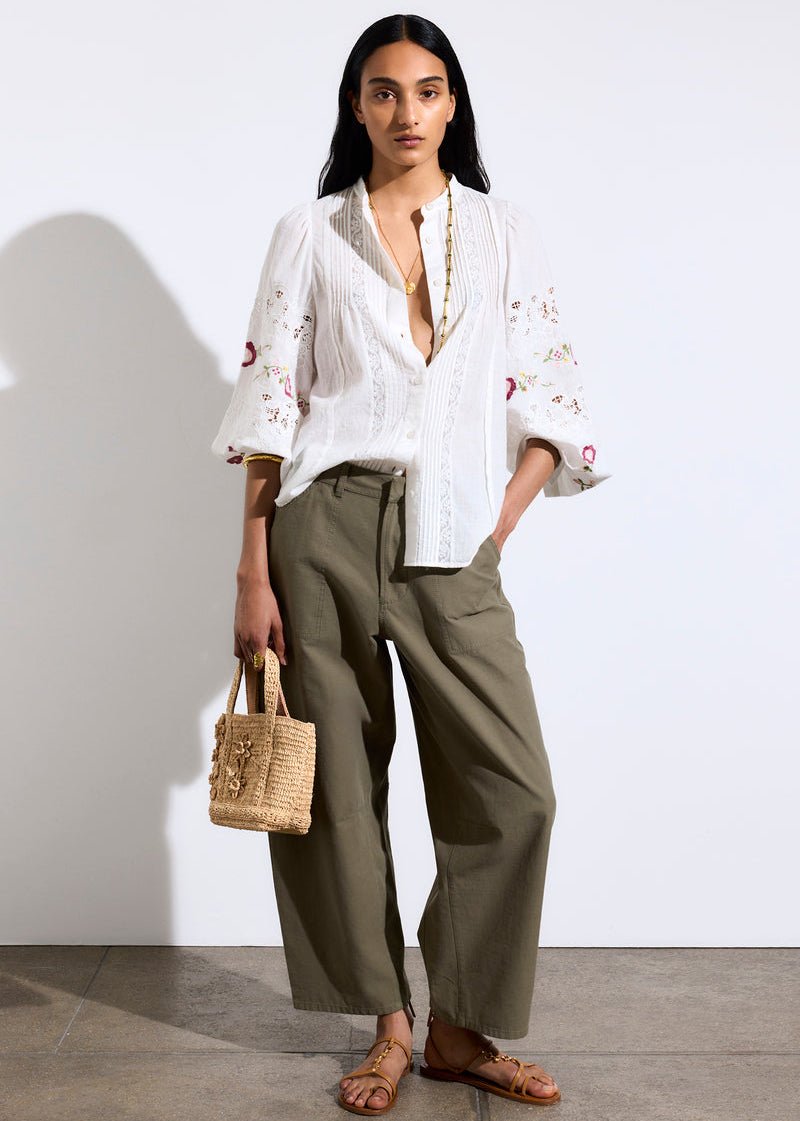
The Cargo Pants in Vegetal bring a slightly relaxed utility silhouette that works harder than a standard tailored trouser. Pair them with a crisp blouse and blazer for client meetings, with a simple tee and loafers for a smart-casual day, or with the Travel Crew Sweater for a cooler-weather office look that still feels considered.
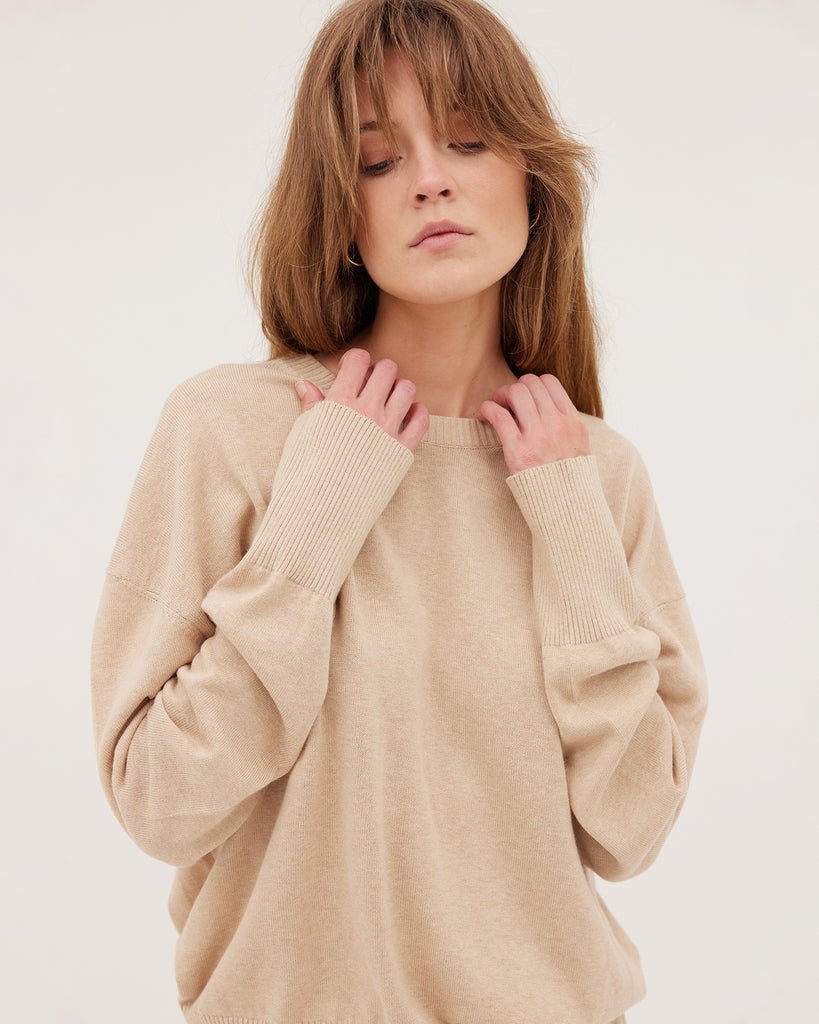
The Travel Crew Sweater is the layering workhorse of the three. Its fine knit sits easily under a blazer, works alone with tailored trousers on a low-key day, or pairs with the Cargo Pants for a monochrome, put-together look with almost no effort.
The Christen Jacket is the elevate piece: thrown over a simple knit and trousers for an instant client-ready look, worn open over a midi dress for transitional weather, or paired with the Cargo Pants when you want structure without a full suit.
| Piece | Best For |
|---|---|
| Cargo Pants in Vegetal | Smart-casual and hybrid days needing a relaxed but polished trouser |
| Travel Crew Sweater | Layering across seasons and dressing up or down a single base outfit |
| Christen Jacket | Instantly elevating a simple outfit for client-facing days |
Sizing notes and fit details sit on each product page, and Edito’s returns process allows you to try a piece within your own capsule before committing.
What Colours And Patterns Actually Read As Professional?
Neutral-first is the safest and most versatile route: navy, charcoal, cream, tan and black form a base where almost nothing clashes. Within that base, undertone matters more than most women expect. A warm cream reads softer and more approachable, while a cool grey projects precision, and mixing warm and cool neutrals in the same outfit is often what makes a combination feel slightly off, even when the individual pieces are fine on their own.
Pattern works best in small, controlled doses inside a work capsule. A fine pinstripe or fleck in a blazer adds texture without competing with anything else in the wardrobe. Large-scale florals or bold geometric prints tend to date faster and pair with fewer pieces, which works against the entire point of a capsule. If you love pattern, put it in a blouse rather than trousers or a blazer: it’s easier to build an outfit around a patterned top than to match bottoms and layers to a busy print.
Colour-blocking a single accent, say, a burgundy skirt or an olive trouser, gives the capsule personality without the maintenance headache of matching multiple bold hues. The safest professional rule of thumb: if a colour or pattern is loud enough that colleagues comment on it more than once, it’s probably working against the “read as capable and consistent” goal most workplaces reward, even in creative industries.
How Do You Accessorise A Work Capsule Without Overdoing It?
Accessories are where a 15 to 20 piece capsule earns most of its apparent variety, because the clothing barely needs to change for the outfit to look different. A structured leather belt cinches a blazer or a shirt dress into a completely different silhouette, and a slim belt reads more formal than a wide one.
Jewellery works best kept simple and repeatable: one pair of quality earrings, one necklace, one or two rings you can wear daily without a second thought. Rotating statement pieces occasionally is fine, but the daily default should require zero decision-making.
A scarf earns its place in a work capsule more than most accessories, because it does three jobs: it adds colour to a neutral outfit, it provides warmth without the bulk of a second layer, and it dresses up a simple blouse-and-trouser combination in under a minute. Bags deserve the same restraint as jewellery. One structured neutral tote covers the majority of office days; a smaller crossbody or clutch covers evening events without duplicating the capsule’s core carrying piece.
The test for every accessory: if it doesn’t pair with at least half the wardrobe, it’s decorative clutter, not a capsule addition.
How Do You Adjust A Capsule For Different Dress Codes?
Business formal workplaces need more structure than the base capsule provides: two or three blazers rather than one, tailored trousers over relaxed cuts, and shoes with a heel rather than a flat for client-facing days. Colour stays conservative, navy, charcoal and black doing most of the work, with accent colour reserved for accessories rather than garments.
Business casual, the most common Australian office dress code, is where the standard 15 to 20 piece capsule fits almost exactly as described. Blazers become optional rather than daily, knitwear and blouses can carry more of the week, and one dressier outfit covers the occasional client meeting.
Creative workplaces give more room to move. Texture, pattern and colour can shift from the 70/30 split toward something closer to 50/50 without reading as unprofessional, because the context itself rewards individuality. Even here, though, one or two “presentable on short notice” outfits are worth keeping in reserve, because creative offices still have client pitches and investor meetings.
The practical move is to build the neutral base first, regardless of dress code, then adjust the proportion of structured versus expressive pieces to match the workplace.
How Do You Keep Personal Style In A Professional Wardrobe?
The mistake most capsule guides make is treating personal style and professionalism as opposing forces that need balancing. They’re not. Personal style in a work capsule shows up in the choices within the neutral base, not in abandoning the base altogether.
A woman who loves colour can express that through one confident accent piece each season rather than diluting it across five mediocre items. A woman drawn to European tailoring can lean into structured silhouettes even in a casual office, provided the fabric and cut are relaxed enough to fit the context. The capsule format doesn’t erase individuality; it forces individuality into fewer, more deliberate decisions, which usually results in a more consistent personal aesthetic than an unstructured wardrobe ever produces.
The simplest way to protect personal style inside a capsule is to choose one signature element, and repeat it. That might be a specific colour you always wear, a particular silhouette of trouser, or a single piece of jewellery you never leave the house without. Repetition of a chosen signature reads as intentional style, not lack of imagination, and it’s the quiet difference between a capsule that feels like a uniform and one that feels like you, edited down.
The work capsule wardrobe: build a polished 15–20 piece rotation
Most capsule advice treats piece count as the whole answer, and that’s where it falls short. The number matters less than whether each piece can partner with three or four others, which is a fit and fabric question as much as a maths one. A 20-piece wardrobe of poorly cut synthetic blends will always underperform a tighter 15-piece capsule built from linen, merino and well-finished tailoring.
The conventional wisdom also underrates how much seasonal Australian conditions should drive fabric choice over trend. A capsule that ignores humidity, air-conditioned offices and 40-degree commutes in favour of what looked good on a European runway is a capsule you’ll stop wearing by February. Build for the climate first, then let style follow.
If there’s one place to spend more than feels comfortable, it’s fit. A $250 blazer altered to sit perfectly at the shoulder will outperform a $400 blazer worn straight off the rack, every single time. Prioritise the tailor’s appointment before the next purchase.
Build Your Work Capsule From Edito’s Curated Edit
Edito exists for exactly this brief: a curated European edit where the trousers, blazers and knitwear are already selected for durability, fit and cross-seasonal wear, rather than a mass rack you have to filter yourself. Instead of scrolling through hundreds of near-identical basics, you’re choosing from a boutique range where every piece has already been vetted for the fabric and finish qualities this guide recommends.
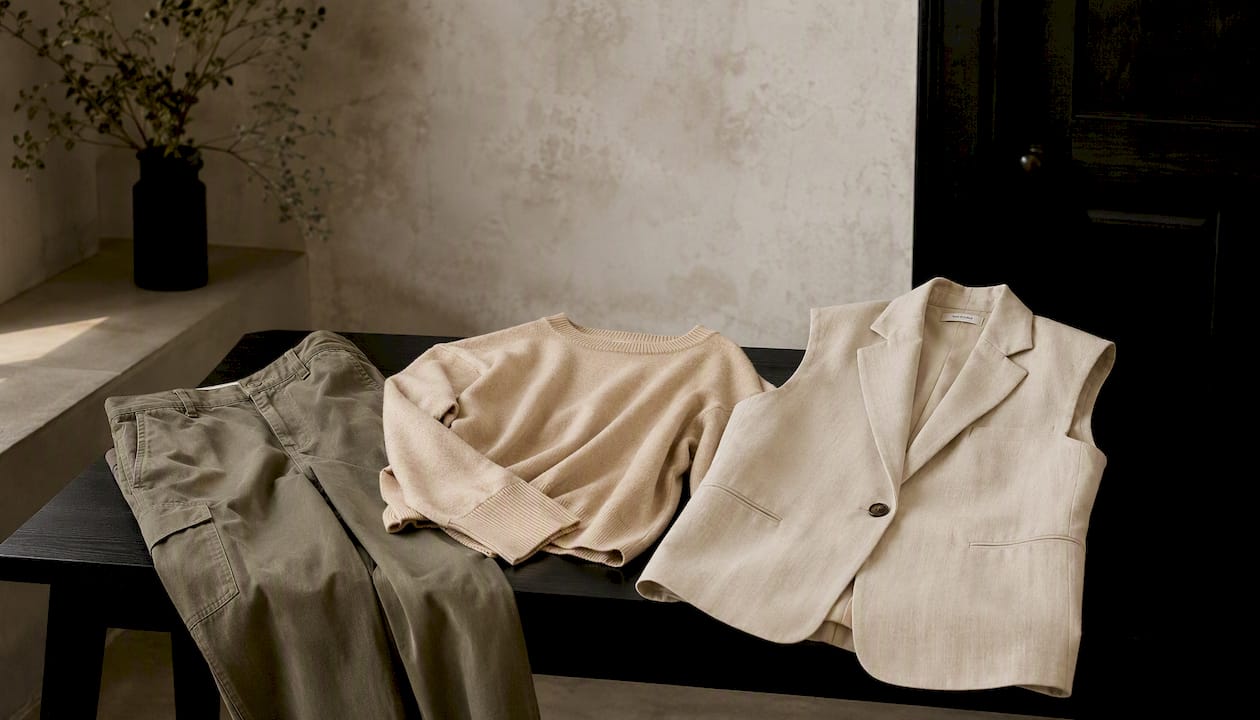
That matters most for the Foundation phase pieces, blazers, trousers and knitwear, where fit and fabric quality carry the heaviest cost-per-wear payoff. Edito’s Elegance Pants in Black and the Erina Blouse both slot directly into the core checklist above, while seasonal pieces from the Second Female Summer collection cover the lighter-fabric swap this guide recommends for warmer months. Browse the current edit, check sizing against the fit checkpoints outlined earlier, and build your Foundation phase around two or three pieces to start.
Sources
- How to build a work capsule wardrobe in Australia in 2025 | Checkout – Best Deals, Expert Product Reviews & Buying Guides
- Building a Capsule Wardrobe in Australia: What It Costs and Where to Buy | ShopBack Blog
- The 3-3-3 Rule Capsule Wardrobe: Complete Guide (Plus 5-4-3-2-1 and 70/30) — 1abel
FAQ
What Is The 3-3-3 Rule For A Capsule Wardrobe?
The 3-3-3 rule pairs three tops, three bottoms and three pairs of shoes to create many outfit combinations from nine pieces. It’s a useful exercise for learning outfit math or packing light, but most working wardrobes scale up to 15 to 22 pieces for genuine week-to-week variety.
What Should I Include In A Work Capsule Wardrobe?
Prioritise tailored trousers, a neutral blazer, a crisp button-up, a fine knit, a midi dress, comfortable leather flats or a low heel, and a neutral structured bag as the essential starting point. From there, build out to 15 to 20 pieces across tops, bottoms, layers and shoes.
What Is The 5-4-3-2-1 Capsule Wardrobe Rule?
The 5-4-3-2-1 rule allocates five tops, four bottoms, three layers, two pairs of shoes and one bag across a season. It’s a more realistic scale-up from the 3-3-3 rule for anyone who wants genuine outfit variety across a full working week.
What Do You Need For A Work Capsule Wardrobe?
You need 15 to 20 core pieces in breathable fabrics like linen, cotton and fine merino wool, built on a neutral palette with one or two accent tones. Prioritise fit over quantity, starting with trousers, a blazer and a reliable pair of shoes before filling in the rest.
How Much Does It Cost To Build A Work Capsule Wardrobe?
A functional mid-range capsule typically costs between $1,200 and $2,500 in Australia, and building in phases around sale periods spreads that cost while most capsules break even within 12 to 18 months compared with habitual shopping.
Recommended
- Soeur Autumn Winter 2026 | French Fashion | Australia | Edito Boutique
- Second Female Pre Autumn 2026 Collection | European Fashion Trends | Australia | Edito Boutique
- Travel Crew Sweater in Barley | Cloth & Co | Australia | Edito Boutique
- Laurence Bras Spring Summer 2025 | French Fashion | Australia | Edito Boutique