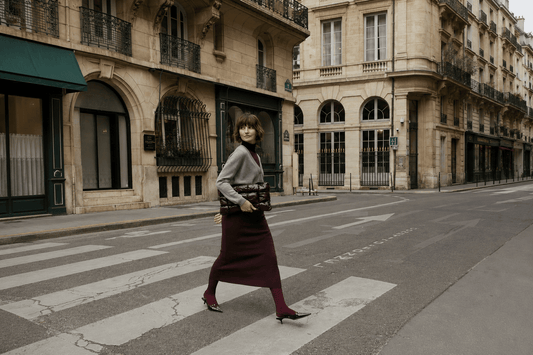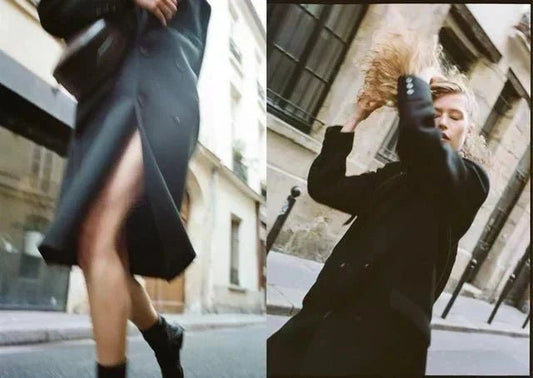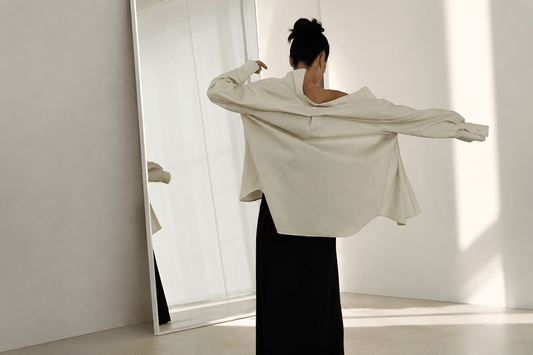

A European capsule wardrobe is a small, deliberately chosen collection of French and other European designer pieces, built around timeless silhouettes, superior fabrics and quiet-luxury restraint rather than logos or trends. It favours tailoring and versatile layering over volume, so every piece earns its place through construction quality and how often you’ll actually wear it. Europe’s fashion and high-end sector isn’t a niche indulgence, either. It employs around 5 million people and generates an estimated €260 billion in exports, much of it built on small ateliers and specialist workshops that still do things by hand.
You don’t need forty items to dress well. You need the right twelve to twenty, chosen against a clear personal brief. Here’s how to start today, in three steps:
- Audit what you own. Lay everything out and sort by what you’ve worn in the last three months versus what’s been sitting untouched.
- Choose three anchor pieces. Pick the three garments that best represent the silhouette and colour story you want to build around, whether that’s a tailored coat, a knife-pleat trouser or a soft knit.
- Buy one intentional piece. Don’t buy five things this week. Buy the single item your audit revealed as the biggest gap, and buy it well.
Edito’s curated edit of French and European labels is one place to start that search once you know what you’re looking for.
Table of Contents
- What is a European capsule wardrobe, and how do you build one?
- How do you build a personal wardrobe thesis?
- Which 12 core pieces should you prioritise first?
- What should you look for in European fabrics and construction?
- How should you balance investment pieces and everyday basics?
- How do you care for and repair designer garments?
- How do you adapt one capsule across all four seasons?
- What outfit combinations work from a 12-piece capsule?
- How do you track your wardrobe gaps and priorities?
- How do you shop European designer pieces sustainably?
- How Edito Boutique can help build your capsule
- Sources
- FAQ
What is a European capsule wardrobe, and how do you build one?
A European capsule wardrobe is less a shopping list than a discipline. It’s a deliberate, curated set of garments from European ateliers and design houses, selected for enduring cut, quality fabric and mix-and-match versatility, rather than accumulated through impulse or trend-chasing. The label “capsule wardrobe” gets used loosely across fashion media, but the European version specifically leans on savoir-faire, the accumulated craft knowledge of workshops that have made garments the same rigorous way for generations. That’s the standard industry vocabulary worth knowing: when a French or Italian house talks about savoir-faire, they mean the technical skill embedded in construction, not just design.
The goal isn’t minimalism for its own sake. It’s building a wardrobe where nothing fights for attention, everything works together, and pieces are chosen to be worn for a decade rather than a season.
How do you build a personal wardrobe thesis?
Before you buy anything, define the rules that will filter every future purchase. Stylists sometimes call this a wardrobe thesis, and it works because it stops you buying reactively.
- Map your daily functions. List the three or four contexts you dress for most: office days, weekend errands, dinners, travel.
- Identify your flattering silhouettes. Note whether you gravitate towards structured tailoring, softer draping, or a mix, and be honest about what you actually feel confident wearing.
- Name your fabric non-negotiables. Merino, silk, linen, fine wool. Write down what feels good against your skin and holds its shape through a working day.
- Choose two to three core neutrals. Think camel, navy, charcoal, or ivory, chosen to work across autumn through summer without needing to be reinvented each season.
- Add one or two accent colours. A single accent, like a deep bottle green or burgundy, gives the capsule personality without breaking its cohesion.
A written wardrobe thesis, even three lines long, prevents the reactive buying that fills wardrobes with near-misses.
- Keep the list visible on your phone when you shop.
- Revisit it every six months as your life or work changes.
- Treat it as a filter, not a cage. It should evolve.
Pro Tip: Before committing to a new piece, wear-test it around the house for a full day and photograph yourself in it against at least two other items you already own. If it doesn’t pair easily with your existing capsule, it’s not the anchor piece it looked like in the mirror.
Which 12 core pieces should you prioritise first?
Start with a tight starter capsule before layering in extras. This order reflects versatility and frequency of wear, not price.
- A well-cut wool coat in a neutral tone
- A tailored blazer that works over a knit or a dress
- Tailored trousers in your core neutral
- A silk blouse for the days trousers need lifting
- A fine merino or cashmere knit
- A midi dress that moves from desk to dinner
- A well-fitting pair of jeans
- Leather ankle boots in a European tan or black
- Leather loafers for everyday wear
- A fine-knit tee, the quiet workhorse of the whole capsule
- A lightweight trench for shoulder seasons
- A structured, quality leather bag
Each piece earns its place through layerability. A blazer over a knit reads as smart-casual; the same blazer over the silk blouse reads as boardroom-ready. That’s the entire logic of a capsule: fewer decisions, more combinations.
If a piece doesn’t suit your build or climate, swap it laterally rather than dropping the category. Trousers can be swapped for a tailored midi skirt; a trench can be swapped for a longline knit cardigan in cooler climates. The category matters more than the exact garment.
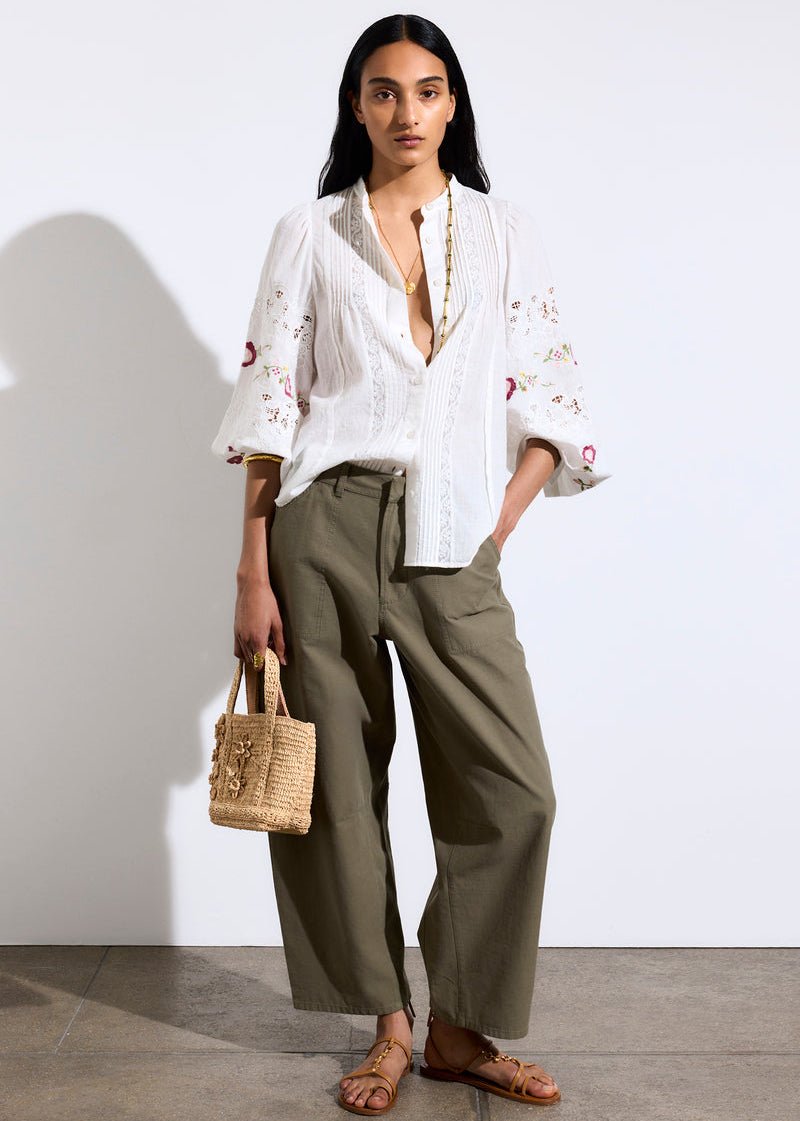
On branding: an investment wardrobe built on timeless silhouette and construction quality outperforms one chased for logos, which is exactly why quiet luxury favours restrained detailing over visible branding. A well-cut cargo pant, like the Cargo Pants in Vegetal, earns its place through fit and fabric rather than a logo, which is precisely what makes it a genuinely versatile anchor rather than a seasonal statement.
Pro Tip: Buy your coat and your bag last, not first. They’re the highest-investment pieces, and you’ll choose better once the rest of the capsule (and its colour story) is settled.
What should you look for in European fabrics and construction?
Fabric is where European craftsmanship becomes tangible, and it’s worth learning to recognise before you spend serious money.
Merino and fine wool feel dense but not scratchy, with a slight give when stretched. Cashmere should feel soft without being fluffy. A fluffy pill-prone knit is often a lower grade blended with synthetic fibre. Silk has a particular cool, slightly grippy hand, and drapes rather than clings. Linen creases by nature. That’s not a flaw, it’s the fibre behaving as it should. Vegetable-tanned leather develops a patina over years, unlike chrome-tanned leather, which stays static and eventually cracks.
Construction tells you more than any swing tag. Check:
- Lining quality: a fully lined blazer or coat should sit smoothly with no pulling at the seams.
- Stitch density: closer, even stitching along seams and hems signals better construction.
- Hand-finishing: hand-finished buttonholes and hems on higher-end pieces resist fraying far longer than machine-only finishing.
- Seam allowance: a generous seam allowance means a tailor can let a garment out later, extending its life.
The scale of this craft economy is genuinely striking. Europe’s high-end goods sector represents an estimated €260 billion in exports, with 62% sold outside Europe, a scale built on the kind of specialist workshops most shoppers never see. Chanel, for instance, works with specialised suppliers such as ACT3 for its tweeds, and its ready-to-wear runs through roughly 2,000 manufacturers, many still based in France and Italy. Dior takes a similar approach with its Cruise collections, deliberately seeking out regional artisan suppliers like Harris Tweed weavers and Scottish knitters rather than defaulting to mass manufacturing. Even a fabric as refined as Loro Piana’s Royal Lightness, blending ultra-fine merino with silk or cashmere, depends on artisans trained specifically to weave and finish that yarn. Provenance isn’t a marketing flourish. It’s a genuine signal of who made the decisions that determine how a garment ages.
How should you balance investment pieces and everyday basics?
Spend where wear-frequency is highest, not where the price tag feels most exciting. A well-constructed investment wardrobe prioritises coats, tailoring and shoes, the pieces you’ll touch weekly, over trend pieces you might wear six times.
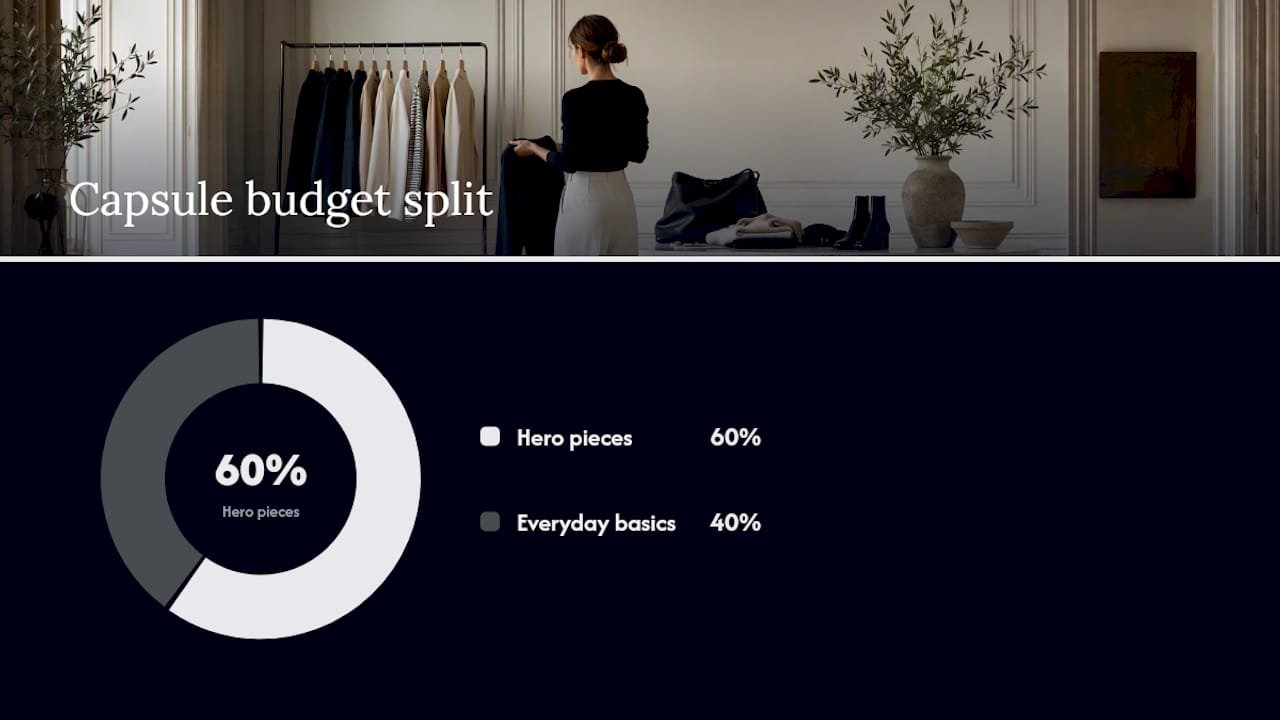
- Allocate roughly 60% of your capsule budget to three to four hero pieces: coat, blazer, boots, bag.
- Allocate the remaining 40% to fabric-first basics: knits, blouses, a fine-knit tee.
- Delay trend-adjacent purchases until the hero pieces are settled.
Shop across a mix of channels. Curated e-tailers and boutiques like Edito do the vetting work for you, selecting pieces already filtered for quality and provenance. Specialist boutiques let you handle fabric in person, which matters enormously for judging drape and weight. Pre-loved European designer pieces are worth exploring too, provided you check stitching, linings and any resale documentation, since a well-cared-for ten-year-old coat often outperforms a poorly made new one.
Pace the whole build over six to twelve months. A slower, deliberate curation process centred on three to five anchor pieces prevents the impulsive buying that fills wardrobes with near-misses rather than staples.
Pro Tip: Set a simple rule: no new capsule piece without living with your last purchase for at least two weeks. If it’s already integrated into three outfits, you’re ready to move on to the next gap.
How do you care for and repair designer garments?
Longevity is a skill, not a stroke of luck. Cashmere and merino need cedar blocks, folding rather than hanging, and washing far less often than most people assume. Silk should be steamed rather than ironed directly, and dry-cleaned sparingly. Leather boots and bags need conditioning every few months, more if you’re wearing them through wet Australian winters.
Alterations matter more than most shoppers realise. A blazer that’s a touch too big through the shoulders is rarely a lost cause; a good tailor can take in the shoulder seam and transform the fit entirely. Hemming trousers to your exact shoe height changes how the whole outfit reads.
- Book a trusted local tailor before you need one urgently, not after a wardrobe malfunction.
- Reserve professional dry cleaning for silk, structured coats and leather.
- Handle small repairs, loose buttons, minor hem drops, yourself or via a quick cobbler visit.
Pro Tip: Keep a small note or photo record of any alterations made to higher-value pieces (what was taken in, by whom, when). It reassures a future buyer if you ever resell, and it helps a new tailor replicate the fit exactly.
How do you adapt one capsule across all four seasons?
The same twelve pieces can carry you from a Brisbane summer to a Melbourne winter if you think in layers rather than separate wardrobes.
For warmer months, swap the wool coat for the lightweight trench, and let the silk blouse and fine-knit tee do most of the work under minimal layering. For cooler months, the knit becomes a base layer under the blazer, and the coat returns as the outer anchor.
Accessories do more seasonal heavy lifting than most people credit. A silk scarf and a structured belt can shift a summer dress into an autumn-ready outfit without buying anything new. Swapping loafers for boots changes the entire register of an outfit in seconds.
| Season shift | What changes |
|---|---|
| Spring to summer | Trench replaces coat; silk blouse worn open over the tee; loafers replace boots |
| Autumn to winter | Knit layers under blazer; boots return; scarf and belt add structure |
| Humid to dry climates | Linen and silk prioritised over wool blends for breathability |
| Travel edits | Fine-knit tee and trousers form the base; trench and loafers cover transit |
Pro Tip: Store off-season pieces properly rather than cramming them to the back of the wardrobe. Cashmere in a breathable garment bag with cedar, leather boots stuffed with tissue to hold shape, ready for the season’s return.
What outfit combinations work from a 12-piece capsule?
Six recipes, all drawn from the starter capsule above, show how far a tight edit actually stretches.
- Office day: tailored trousers, silk blouse, blazer, loafers. Swap the loafers for boots on a cooler day.
- Weekend errands: jeans, fine-knit tee, trench, loafers. Swap the trench for the knit tied over shoulders.
- Dinner out: midi dress, blazer, ankle boots. Swap the blazer for a statement scarf for a softer look.
- Travel day: jeans, fine-knit tee, knit layered on top, trench over the arm. Swap the jeans for tailored trousers for a smarter transit look.
- Smart-casual meeting: midi dress, blazer, loafers, quality bag. Swap the dress for trousers and blouse for a more structured feel.
- Cool-weather weekend: tailored trousers, knit, coat, boots. Swap the coat for the trench once temperatures lift.
- Watch proportion: a fuller midi dress pairs better with a fitted blazer, not a boxy one.
- Layer thinnest-to-thickest against the body for warmth without bulk.
- Let one accessory carry the outfit’s personality; don’t compete jewellery against a statement bag.
Pro Tip: Photograph each outfit as you build it. A visual archive on your phone becomes the fastest styling reference you’ll ever have, far quicker than scrolling for inspiration each morning.
How do you track your wardrobe gaps and priorities?
A simple worksheet keeps the whole exercise honest, especially once you’re browsing in person or online.
Record your measurements, your preferred silhouettes and your three non-negotiable fabrics at the top of the page. Underneath, build a table with four columns: Category, Owned, Gap, Priority (1 to 3). Walk through each of the twelve core categories and mark whether you own it, what’s missing, and how urgently you need it.
- Fill in the worksheet before you shop, not while standing in a fitting room.
- Bring it with you, physically or on your phone, when browsing boutiques or Edito’s curated collections online.
- Update it every time you buy or retire a piece, so it stays a living document rather than a one-off exercise.
- Use the priority column to stop yourself buying a “want” ahead of a genuine “gap.”
- Review the whole sheet every six months alongside your wardrobe thesis.
How do you shop European designer pieces sustainably?
Sustainability in a European capsule isn’t a separate checklist bolted onto the styling one. It’s largely the same discipline, buying fewer, better pieces that last.
Favour natural fibres over synthetic blends where possible; wool, silk, linen and cashmere biodegrade, while synthetic blends shed microplastics through their whole lifespan and often can’t be recycled. Ask about country of origin and workshop provenance where it’s listed. A garment made in a known European atelier, rather than an unnamed factory, tends to carry both better construction and clearer accountability.
Buying pre-loved European designer pieces genuinely reduces demand on new production while giving you access to older, often better-constructed garments. Extending the life of what you already own through proper care and considered, sustainable updates to your wardrobe is arguably the single highest-impact sustainable choice available to any shopper, more so than any specific fibre or certification.
Editor’s note: why European ateliers suit a lasting capsule
European fashion houses that still route production through small, specialised workshops build a different kind of durability into their garments, one that comes from accumulated technical knowledge rather than marketing. When Dior’s Cruise team seeks out regional weavers, or a supplier like ACT3 hand-develops a tweed for Chanel, the resulting garment carries construction decisions that mass manufacturing simply doesn’t make. That’s not sentimentality. It’s the practical reason a well-made European coat outlasts a fast-fashion equivalent by a decade or more.
Quiet luxury, in this sense, isn’t an aesthetic preference so much as a maintenance strategy. A piece without a visible logo doesn’t date the way a heavily branded one does, which means it keeps earning its place in your wardrobe long after a trend cycle would have retired it. Edito’s curatorial approach, selecting French and European labels for cut and fabric rather than for hype, reflects exactly this logic: the goal is a wardrobe that still makes sense in five years, not one built for this season’s feed.
How Edito Boutique can help build your capsule
Edito exists precisely for the shopper who’s decided to buy fewer, better things. Rather than scrolling endless seasonal drops, you can browse a curated edit of French and European labels already filtered for craftsmanship, fit and longevity, which is the single biggest time-saver against building a capsule piece by piece across dozens of individual brand sites.
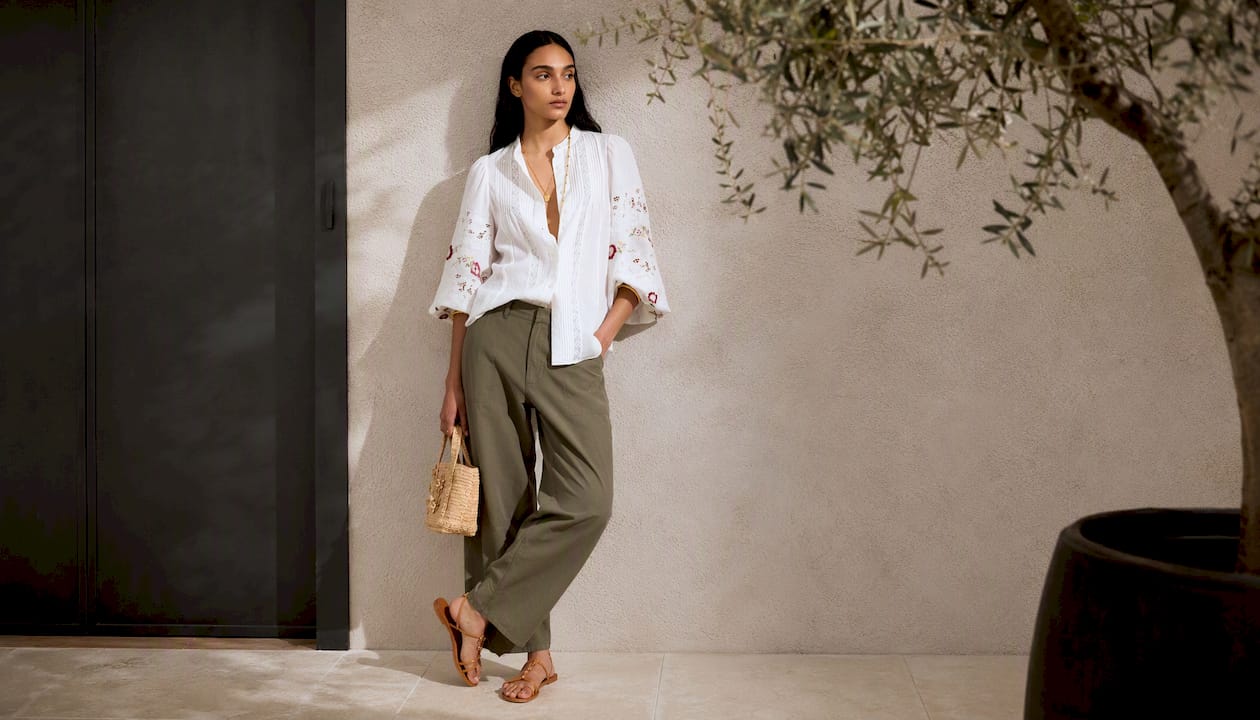
Edito’s collection includes labels like Sœur, Sessùn, BA&SH, Vanessa Bruno, Sita Murt and Essentiel Antwerp, each chosen for wearable, understated design rather than fast trend cycles. If you’re filling a gap in your own starter capsule, the Cargo Pants in Vegetal are a genuinely versatile example: a quietly designed bottom that anchors both casual weekend outfits and smart-casual ones, exactly the kind of layerable piece your wardrobe thesis should prioritise. Edito ships across Australia with straightforward returns, and the team is happy to help with sizing and styling questions if you’re unsure how a piece will sit in your existing rotation. Browse the current collection to see what fits your gaps right now.
Short recap: buy slowly, prioritise craftsmanship, curate your palette
A European capsule wardrobe works because it replaces impulsive buying with a written wardrobe thesis, a prioritised twelve-piece list and a paced six-to-twelve-month budget.
- Define your wardrobe thesis before you buy anything else.
- Prioritise the twelve core pieces by frequency of wear, not price.
- Choose fabric and construction over branding every time.
- Treat care and repair as an investment in longevity, not an afterthought.
- Use the wardrobe worksheet to track gaps and keep purchases intentional.
Sources
- Fashion and high-end industries in the EU - Internal Market, Industry, Entrepreneurship and SMEs
- Chanel cruise 2027 — Matthieu Blazy textile manufacturer
- How Dior uses Cruise to discover new supply opportunities
- This ethereal Loro Piana fabric is one of its finest yet | Wallpaper*
- The Ultimate Guide: How to Build a High Fashion Investment Wardrobe
FAQ
What counts as a European capsule wardrobe?
It’s a small, deliberately chosen set of French and European designer pieces, usually twelve to twenty garments, selected for timeless cut, quality fabric and versatile layering rather than trends or branding.
How many pieces should a starter capsule have?
Twelve pieces is a solid starting point, covering a coat, blazer, trousers, blouse, knit, dress, jeans, boots, loafers, a fine-knit tee, a trench and a quality bag.
How long should building a capsule wardrobe take?
Pace the process over six to twelve months rather than buying everything at once, allowing time to live with each piece and confirm it earns a permanent place.
Where can I shop for European designer capsule pieces?
Curated boutiques like Edito, specialist stores, and vetted pre-loved sources are all reasonable channels, provided you check provenance and construction quality on pre-loved pieces.
How do I know if a fabric is genuinely high quality?
Check the hand-feel (merino and cashmere shouldn’t feel scratchy or overly fluffy), look for hand-finished buttonholes and even stitch density, and check that linings sit smoothly without pulling at the seams.
Recommended
- French Fashion vs Scandinavian Fashion | Edito Guide | Australia | Edito Boutique
- Women’s European & French Designer Clothing Australia | Edito Boutique
- Essentiel Antwerp Autumn 2026 | European Fashion | Australia | Edito Boutique
- Essentiel Antwerp Summer 2026 Collection | European Fashion | Australia | Edito Boutique