
Trans-seasonal dressing means building a wardrobe of neutral, mix-and-match pieces layered so you can add or remove warmth as an Australian day shifts from cool morning to warm afternoon and back again. The single most useful move is to invest in a handful of neutral base pieces, then add two or three layering pieces that work across outerwear, mid-weight knits and dresses. Edito’s edit gives a clear sense of what this looks like in practice.
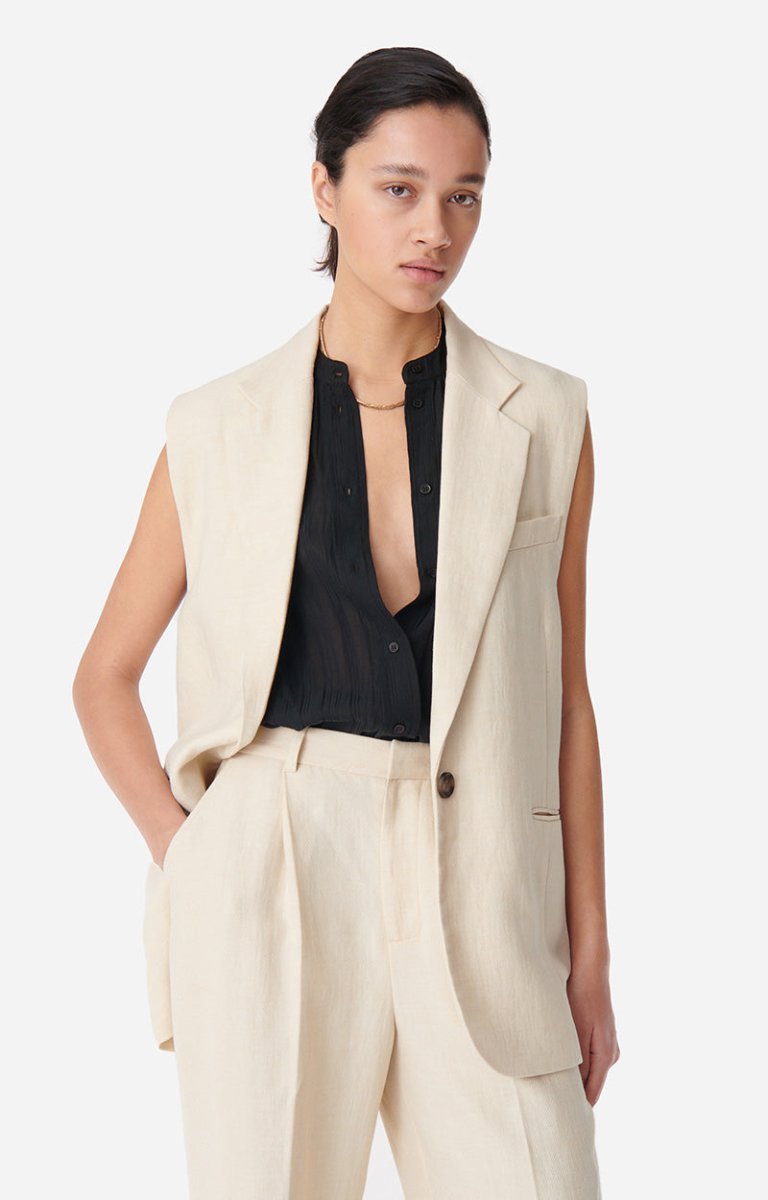
- The Christen Jacket works as structured outerwear over almost anything.
- The Cap Sleeve Button Front Dress in White layers under a knit or wears alone.
- The Natalie Dress shifts from day to evening with one added layer.
What follows is a practical, wardrobe-first guide to building this kind of flexibility into your own rotation.
Key Takeaways
A trans-seasonal wardrobe works when a small set of neutral, well-fitted layering pieces replace a large collection of single-season garments.
| Point | Details |
|---|---|
| Layer in three tiers | Choose a base for temperature, a mid layer for warmth, and an outer layer for weather. |
| Adapt the 3-3-3 rule | Use it as a starting formula, not a fixed law, and adjust it to your climate and fit. |
| Prioritise fabric and fit | Light wool, cotton twill and linen blends move across seasons better than trend fabrics. |
| Footwear bridges seasons | A leather ankle boot and a neutral leather sneaker cover most trans-seasonal days. |
| Choose adaptable pieces from Edito | The Christen Jacket, Cap Sleeve Button Front Dress in White and Natalie Dress each layer across temperature shifts. |
Table of Contents
- What are the key pieces for trans-seasonal dressing in Australia?
- How do you layer for a day that changes temperature?
- What colour palette makes a small wardrobe work harder?
- How does the 3-3-3 rule work for an Australian capsule wardrobe?
- Which fabrics and fits actually last across seasons?
- How does Edito’s edit reflect trans-seasonal principles?
- What shoes work across an Australian trans-seasonal wardrobe?
- What accessories help manage a changeable Australian day?
- Trans-seasonal dressing for Australian wardrobes: a practical capsule approach
- Sources
- FAQ
What are the key pieces for trans-seasonal dressing in Australia?
A trans-seasonal wardrobe works because every piece pulls double duty across temperature swings. Stylists point to a light coat or blazer, a midweight knit, denim and a dress that layers well as the backbone of any Australian wardrobe built for unpredictable days.
Here are the staples worth prioritising:
- A structured jacket (like the Christen Jacket) worn open over a dress in the morning, buttoned as the wind picks up.
- A midweight knit for layering under a coat or alone on milder days.
- Straight or wide-leg denim that pairs with knits or a blouse.
- A shirt dress or button-front dress worn solo when warm, under a jacket when it’s not.
- A tailored blazer as a smarter alternative to the casual jacket.
- A slip dress or column dress (the Natalie Dress fits this role) for evenings.
- A lightweight scarf as a temperature buffer that also lifts an outfit.
- A pair of ankle boots that bridge open sandals and closed winter shoes.
- A trench or water-resistant coat for the genuinely changeable weeks.
- A fine merino or cotton tee as the quiet workhorse under everything else.
The Cap Sleeve Button Front Dress in White does the same job as the shirt dress above: worn open over trousers in the morning, buttoned and belted alone by midday, making it a key piece in a streetwear capsule wardrobe that focuses on versatile mix-and-match items.
Pro Tip: Buy your outerwear one size roomier than you’d expect. A jacket that fits over a knit is far more useful across a trans-seasonal wardrobe than one that only fits over a t-shirt.
How do you layer for a day that changes temperature?
Layering works on three tiers: a base layer against the skin, a mid layer for warmth, and an outer layer for wind or rain. Choose the base for temperature, the mid for texture, and the outer for weather, not the other way around.
Three moves make this practical rather than fussy:
- Vertical layering. Stack a fine knit over a shirt under a jacket, so you can strip back one piece at a time as the day warms.
- Tying it over. A knit or shirt tied at the waist becomes an accessory once it’s no longer needed for warmth, rather than dead weight in a bag.
- Sweater-draping. A jumper draped over the shoulders keeps it accessible without disrupting an outfit’s line.
Three combinations to borrow directly:
- Coastal spring: the Cap Sleeve Button Front Dress in White, a linen blazer, and sandals, with a scarf for the sea breeze.
- Southern autumn (Melbourne, Hobart): denim, a merino knit, and the Christen Jacket over the top for Melbourne’s four-seasons-in-a-day reputation.
- Inland changeable days: the Natalie Dress with boots and a light trench, given inland regions often see sharper morning-to-afternoon swings than the coast.
What colour palette makes a small wardrobe work harder?
Two or three neutrals plus one accent colour is the simplest system for a wardrobe that mixes and matches without effort. Tonal dressing, where similar shades sit together rather than clash, reads as more considered than a wardrobe of unrelated colours, which is part of why it turns up so often in advice on looking put-together.
- Neutral set one: camel, cream and charcoal, good for cooler months and structured pieces like the Christen Jacket.
- Neutral set two: white, stone and olive, suited to warmer stretches and pieces like the Natalie Dress.
- One accent (rust, forest green or a deep berry) worn as a scarf, shoe or bag to stop the palette feeling flat.
Texture, not colour, is what keeps a tonal wardrobe interesting. A ribbed knit against a smooth cotton dress does more visual work than adding a fourth colour ever will.
How does the 3-3-3 rule work for an Australian capsule wardrobe?
The 3-3-3 rule (three tops, three bottoms, three layering pieces) is a useful starting formula, not a rigid law. Nine core items can generate as many as 27 outfit combinations, and adding one extra layering piece roughly doubles that count again.
- Start with three tops that suit your climate: a tee, a shirt, and a knit.
- Add three bottoms: denim, tailored trousers, and a skirt like the Lato Skirt in Black Leather, which dresses up or down depending on what sits above it.
- Choose three layers: a blazer, a coat, and a scarf, prioritising pieces that work as stand-alone looks rather than only in one combination.
Stylists are consistent on one point: the formula only works when it’s adapted to your own fit, palette and climate, not followed as gospel. For frequent domestic travel, a second, smaller 3-3-3 set built around one neutral palette packs into a carry-on without duplicating your main wardrobe. Bumping the count to 4-4-4 suits anyone who works across very different settings in the same week, office one day, weekend markets the next.
Which fabrics and fits actually last across seasons?
Fabric weight and fit do more for a garment’s versatility than its colour or cut. Light wool, cotton twill, linen blends and quality denim all move between seasons without looking out of place, and fit, fabric and restraint consistently beat logos as the fastest way to a polished look.
- Light wool for structured jackets and trousers that need to work in both 15°C and 24°C.
- Cotton twill for trousers and skirts that hold their shape without bulk.
- Linen blends (rather than pure linen) resist creasing enough for a full day’s wear.
- Quality denim with a touch of structure, not so stretchy it loses shape by lunchtime.
On tailoring: shorten sleeves and hems to your exact proportions, but leave shoulder seams and blazer cuts to a professional. A single well-tailored jacket often improves a wardrobe’s overall polish more than several new, ill-fitting pieces, a point echoed in advice on investing in outerwear and fit over quantity.
Pro Tip: Steam rather than iron structured pieces like blazers and coats. Steaming preserves the drape of tailored fabric where a hot iron can flatten it.
How does Edito’s edit reflect trans-seasonal principles?
Edito’s curated selection isn’t assembled around trends. It’s assembled around the same principles above: layering, tonal palettes, and fabric that earns its place across seasons.
- The Christen Jacket is structured outerwear designed to sit over knits, dresses and shirts alike, the exact role a trans-seasonal jacket needs to play.
- The Cap Sleeve Button Front Dress in White and the Natalie Dress both work standalone in warmer weather and layer easily underneath a coat or blazer when temperatures drop.
- Quiet, restrained palettes and considered fabric choices are recurring hallmarks of the quiet luxury approach Edito’s European edit reflects.
This is less about following a formula and more about choosing pieces built to move with you through a change of weather, which is the whole point of the exercise.
What shoes work across an Australian trans-seasonal wardrobe?
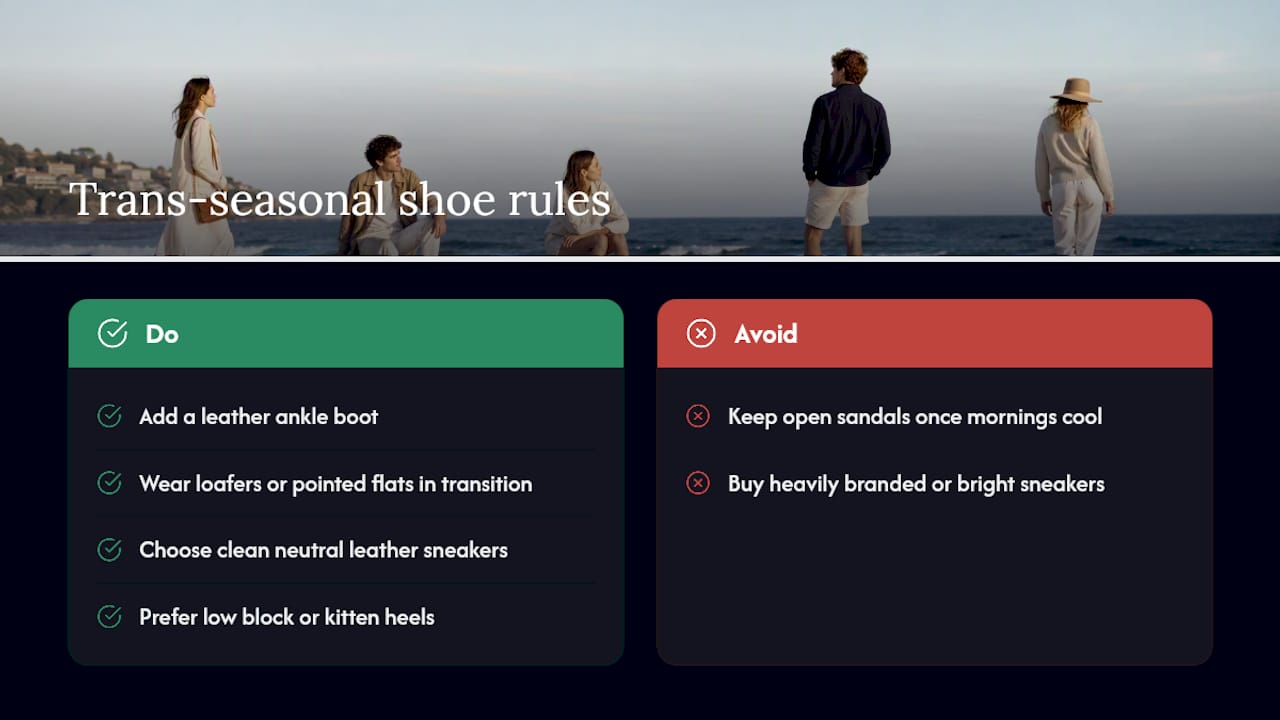
Footwear has to do more work than any other category in a trans-seasonal wardrobe, because your feet feel a temperature shift before the rest of you does. A leather ankle boot is the single most versatile option most Australian wardrobes are missing: it bridges the gap between open sandals and closed winter boots, and it works with denim, a dress or tailored trousers without looking mismatched.
For the warmer half of the transition, a leather loafer or a pointed flat does the job a sandal can’t once mornings turn cool. Loafers pair naturally with the Cap Sleeve Button Front Dress in White for an outfit that reads as considered rather than thrown together, and they hold up better than a strappy sandal on a day that starts at 14°C and finishes at 26°C.
Sneakers remain useful, but the trans-seasonal test is whether a sneaker looks intentional with tailored pieces, not just with denim. A clean leather sneaker in a neutral tone (white, stone or black) earns its place; anything heavily branded or brightly coloured tends to fight with a tonal wardrobe rather than support it.
Save open sandals for the genuinely warm stretch of the calendar and store them once mornings drop below the point where bare feet feel uncomfortable, which varies by region but is worth tracking rather than guessing at. In southern cities, that shift often comes weeks earlier than it does further north, so a boot or closed flat needs to be ready well before the calendar says autumn has arrived.
Heel height matters more in a trans-seasonal context than in a single-season wardrobe. A low block heel or kitten heel gives you the polish of a heeled shoe without the discomfort of a stiletto on a day where you might be walking between air-conditioned spaces and warm footpaths. It’s a small adjustment, but it’s the one that determines whether a shoe gets worn twice a week or left at the back of the rack.
What accessories help manage a changeable Australian day?
A lightweight scarf is the most efficient accessory in a trans-seasonal wardrobe, doing the job of an extra layer without the bulk of a second jacket. Australian stylists specifically call out scarves as segue items between seasons, useful for a cool morning commute and easy to remove and tuck into a bag once the temperature lifts.
A wide-brim hat earns its keep for most of the year in Australia, not just summer, given how strong midday sun remains well into what other climates would call autumn or spring. Pair it with sunglasses that suit your face shape rather than whatever’s trending; both are practical necessities here before they’re a styling choice.
Layer your accessories the same way you layer garments. A scarf for warmth in the morning, sunglasses against the glare by midday, and a crossbody bag that doesn’t compete with either. Consider these additions:
- A structured tote or crossbody bag in a neutral tone that works with every outfit in your rotation, rather than a seasonal colour you’ll only reach for twice.
- Fine jewellery (a single necklace, simple studs) that doesn’t need to change with the weather, unlike heavier statement pieces that can feel wrong once the temperature climbs.
- A light cardigan or wrap kept in your bag for air-conditioned interiors, since indoor and outdoor temperatures in Australia often disagree more than the forecast suggests.
- A belt in leather or suede to adjust the silhouette of a looser dress as you move from a relaxed daytime look to something sharper for evening.
The common thread across all of these is portability: an accessory that can’t be removed, folded or tucked away when it’s no longer needed isn’t doing its job in a trans-seasonal wardrobe.
Trans-seasonal dressing for Australian wardrobes: a practical capsule approach
The research on this topic consistently rewards restraint over acquisition. Most advice on trans-seasonal dressing focuses on buying more transitional pieces, when the better move is usually tailoring and caring for what already works. A single well-fitted jacket, properly hemmed and steamed rather than ironed, does more for a wardrobe’s usefulness than three new impulse buys.
Where conventional advice falls short is in treating the 3-3-3 rule as a fixed formula rather than a starting point. Climate, body shape and lifestyle all bend the numbers, and a rigid nine-piece rule ignores that Brisbane’s transition looks nothing like Hobart’s. What the reader should prioritise first is fit and fabric weight, not colour or trend. A jacket that layers over everything, a dress that stands alone and dresses up, and shoes that don’t fight the rest of the outfit will outperform a wardrobe chosen on pattern or print.
The European approach to building a wardrobe, favouring fewer, better pieces over volume, maps onto Australian conditions better than most local advice acknowledges.
Where to find these pieces for your own wardrobe
Building this kind of wardrobe from scratch is easier with a curated starting point rather than trawling department stores for the right jacket weight or the right shade of camel. Edito’s collection of European designer pieces is selected specifically around the layering, fit and fabric principles covered above, so the guesswork of matching weight to climate is largely done for you.
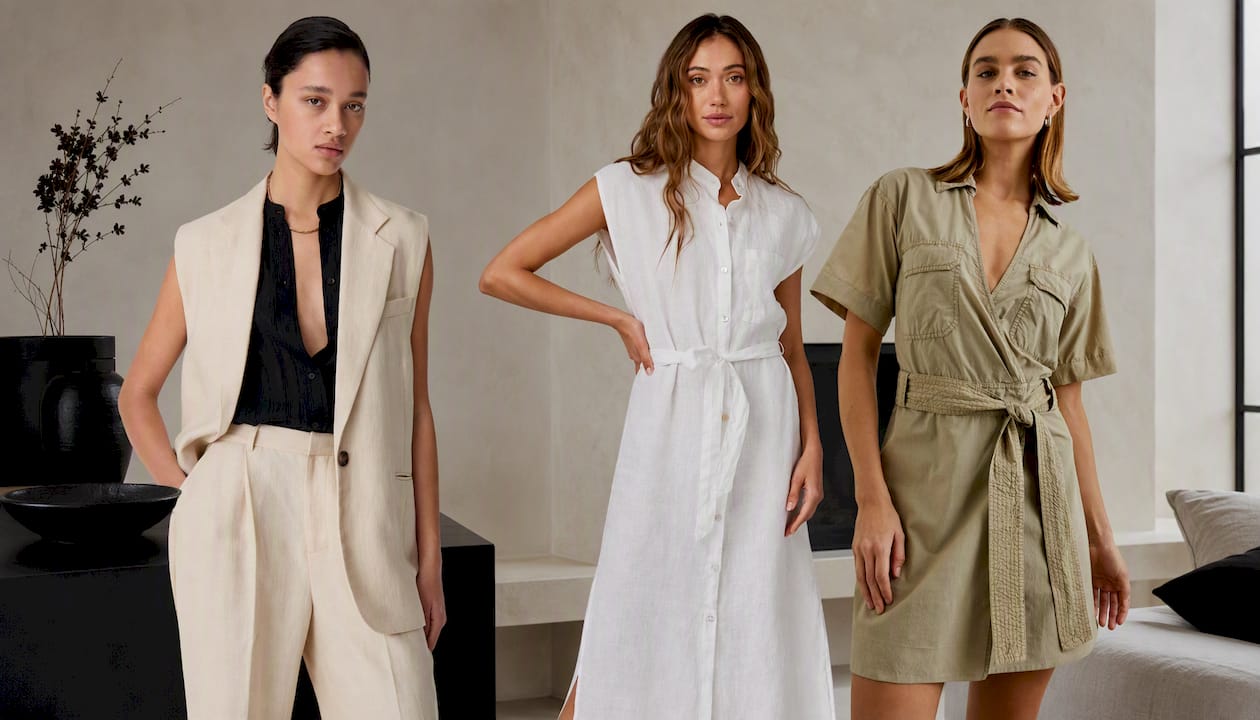
The Christen Jacket is a practical place to begin if outerwear is the gap in your current rotation, and pieces like the Cap Sleeve Button Front Dress in White or the Natalie Dress round out a capsule that moves from a cool morning to a warm afternoon without a wardrobe change. Browse the current edit online or visit the Brisbane boutique to try fit and fabric in person before you commit.
Sources
- A Guide to Trans-Seasonal Dressing (When the Seasons Are Unpredictable) | Broadsheet
- How to look wealthy: practical styling tips | Who What Wear
- What Is the 3-3-3 Rule for Fashion? A Stylist’s Guide | Sterling Style Academy
FAQ
What is the 3-3-3 rule for clothes?
It’s a capsule wardrobe formula of three tops, three bottoms and three layering pieces, which can generate up to 27 outfit combinations. Stylists recommend adapting it to your own fit, palette and climate rather than following it exactly.
What makes a woman look wealthy?
Fit, fabric quality and tonal dressing consistently outperform logos or trend pieces for a polished look. Tailoring one well-worn garment and investing in outerwear and shoes tends to have more visible impact than buying several cheaper items.
What to wear in autumn 2026 in Australia?
A layered combination of a structured jacket like the Christen Jacket, a midweight knit, and denim or tailored trousers handles the temperature swings typical of an Australian autumn. Add a scarf and ankle boots for the cooler mornings and evenings.
What are the 10 pieces every woman should own?
A structured jacket, a midweight knit, denim, a shirt or button-front dress, a tailored blazer, a slip or column dress, a lightweight scarf, ankle boots, a trench coat and a fine tee cover most trans-seasonal needs. Building a rotation around pieces like the Natalie Dress and the Cap Sleeve Button Front Dress in White gives you adaptable options within that list.
Recommended
- Second Female Pre Autumn 2026 Collection | European Fashion Trends | Australia | Edito Boutique
- Second Female Summer 2026 Collection | European Fashion Trends | Australia | Edito Boutique
- Second Female Autumn 2025 Collection | European Fashion Trends | Australia | Edito Boutique
- Second Female Spring 2026 Collection | European Fashion Trends | Australia | Edito Boutique