
Linen is the natural fibre to build a warm-weather wardrobe around: breathable, moisture-wicking and, when chosen and cared for well, capable of ageing beautifully rather than wearing out. It comes from the flax plant, a detail that explains both its cooling properties and its tendency to crease. What follows is a practical linen clothing guide to buying, caring for and styling it so it earns its place season after season.
TL;DR:
- Linen’s straight fibers make it prone to creasing, especially in pure form, but heavier weaves and blends with cotton can reduce this issue.
- Proper care involves gentle washing, reshaping while damp, line drying, and steaming instead of heavy ironing to preserve its durability and texture.
- Fitting is critical; linen garments should skim the body and be paired with structured accessories to avoid a sloppy appearance.
- Heavier linen or linen blends extend wearability into spring and autumn, especially when layered and in darker, muted tones.
- Linen is a sustainable choice due to low resource needs, high durability, and the potential for traceability through certification, making it a considered wardrobe investment.
Table of Contents
- What is linen, and why does it wrinkle so easily?
- Is linen actually worth the wrinkles? Weighing the pros and cons
- How do you care for linen without ruining it?
- How do you wear linen without looking frumpy?
- What should you check before buying a linen garment?
- Edito’s checklist for choosing and styling linen
- Can you wear linen outside summer?
- Is linen actually a sustainable fabric choice?
- How does linen compare to cotton and hemp?
- Why linen still earns a place in a considered wardrobe
- Shop Edito’s curated linen edit
- Sources
- FAQ
What is linen, and why does it wrinkle so easily?
Linen is spun from the bast fibres of the flax plant, a crop grown for centuries for its long, strong cellulose strands. Those fibres are what give linen its particular character: they’re stronger than cotton, absorb moisture readily, and release it again quickly, which is why a linen shirt feels dry against the skin even on a humid afternoon.
The fibres are also straight rather than crimped, and that straightness is the whole story behind linen’s crease. Straight fibres don’t spring back the way a wavier fibre does, so linen wrinkles because it resists bending recovery, not because of poor manufacturing.
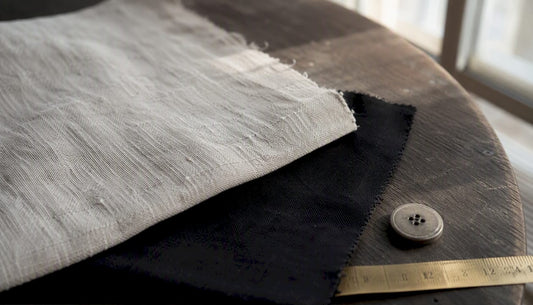
Weave and weight change what a garment can do. A fine, open weave gives you the sheer, floaty linen shirting suited to blouses and summer dresses; a tighter, heavier weave gives structure to trousers and jackets. Finishing matters too. Washed or enzyme-treated linen arrives with the initial stiffness already softened, while raw or unwashed linen has a crisper, more architectural hand that relaxes with wear. Many everyday pieces are blended with cotton, commonly around 55/45 linen to cotton, which tempers the wrinkling and lowers the price while keeping most of linen’s breathability.
Is linen actually worth the wrinkles? Weighing the pros and cons
Linen’s reputation as a hot-weather essential is well earned, but it comes with trade-offs worth knowing before you commit your wardrobe budget.
The benefits:
- Genuinely cooling, since it absorbs and releases moisture fast, which keeps you drier than most synthetics in the heat
- Highly durable fibre that, once broken in, tends to soften and improve with washing
- A tactile, lived-in look that reads as considered rather than try-hard
- Naturally breathable in a way that no amount of clever weaving can replicate in polyester
The drawbacks:
- Creases at the first sit-down, and pure linen shows it more than any blend
- Can shrink modestly on its first few washes if it hasn’t been pre-washed
- Less elastic than cotton, so it doesn’t forgive a snug fit the way jersey does
- Usually pricier than cotton basics, particularly certified or European-milled cloth
Weight and blend shift that balance considerably. A heavier, tightly woven linen holds its shape better and creases less dramatically, while a linen-cotton blend trades a little breathability for a wrinkle profile that suits an office wardrobe. If you want the cooling effect without the crumpled look by 10am, that’s the lever to pull.
How do you care for linen without ruining it?
Linen rewards a light touch. Get the basics right and a good piece will outlast almost anything else in a warm-weather wardrobe.
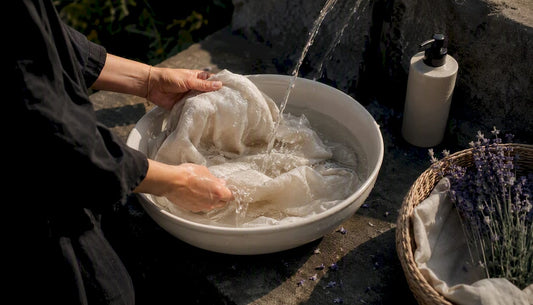
- Wash cold and gentle. Machine wash on a cold or gentle cycle with a short spin, using a mild detergent. Skip chlorine bleach, which weakens the fibre over time.
- Reshape while damp. Take linen out of the machine promptly rather than leaving it balled up, then reshape it while still damp and hang it away from direct sun to dry.
- Go easy on the tumble dryer. A low, brief tumble is fine for softening a stiff piece, but line drying is kinder to both colour and fibre.
- Steam rather than iron where you can. Steaming relaxes the fibres without the mechanical stress of a hot iron. If you do iron, use a damp cloth and light steam, and avoid pressing seams and collars hard and repeatedly, since aggressive ironing can stress the fibres and cause thread breakage over time.
- Treat stains immediately and store loosely. Blot rather than rub, and hang linen with room to breathe in the wardrobe rather than folding it tightly, which sets creases in for the long haul.
Pro Tip: Don’t fight every crease. A little softness in the fabric is part of linen’s appeal; save the iron for genuinely crisp pieces like a tailored shirt, and let a relaxed dress or trouser keep its natural texture.
For a fuller laundering walk-through, this guide on how to care for linen clothes covers stain-specific notes in more depth.
How do you wear linen without looking frumpy?
Linen’s reputation for looking sloppy usually comes down to fit, not fabric. A shapeless silhouette paired with nothing structured is what reads as frumpy, and it’s an easy fix once you know the levers.
- Choose fit over volume. Look for linen pieces that skim the body rather than swamp it, and have anything genuinely oversized taken in at the waist or shoulder.
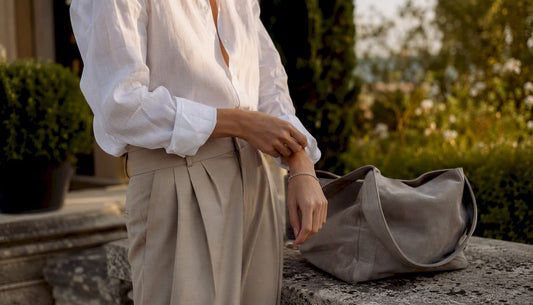
- Ground loose pieces with structure. A relaxed linen shirt or dress needs a fitted element nearby, whether that’s a tailored trouser, a structured bag, or leather sandals rather than another soft texture.
- Use proven formulas. A linen shirt over tailored trousers, a matching linen co-ord with a structured flat or heel, or a linen dress cinched with a belt are all reliable, photograph-ready combinations. Some helpful linen shirt outfit formulas and linen pants styling ideas run through more of these pairings.
- Keep colour considered. Neutrals and tonal dressing (ecru on ecru, stone on white) look intentional in a way that clashing brights rarely do in linen.
- Layer for cooler days. A lightweight knit or linen blazer over a linen dress carries the look into a cooler evening without losing the breathability that makes linen worth wearing in the first place.
A simple, low-effort updo also does more for a linen outfit than people expect; these quick ponytail styles pair well with the relaxed ease linen is known for.
What should you check before buying a linen garment?
Weight tells you what a piece is for. Lightweight linen suits shirts and blouses, mid-weight suits trousers and dresses, and heavier linen holds its shape in a jacket or structured skirt.
- Decide between pure linen and a blend based on how much wrinkling your prepared to live with; a linen-cotton blend softens both the crease and the price
- Check the construction: look at seam finishing, whether there’s a lining (useful for opacity in paler colours), and hold the fabric to the light to check it isn’t too sheer for its intended use.
- Ask, where it’s listed, whether the fabric has been pre-washed, and look for provenance markers like European Flax certification, which verifies EU origin and adds a modest premium for traceability.
- Size with shrinkage in mind and lean into the relaxed silhouette linen is meant to have, rather than buying it fitted like a knit.
For a side-by-side on how linen stacks up against cotton for specific uses, A linen versus cotton comparison is worth a look before you commit to a whole capsule in one fibre.
Edito’s checklist for choosing and styling linen
Some boutiques curate European fabrics with an eye for pieces that earn their keep across a wardrobe, not just a single season. This checklist reflects general selection criteria for linen.
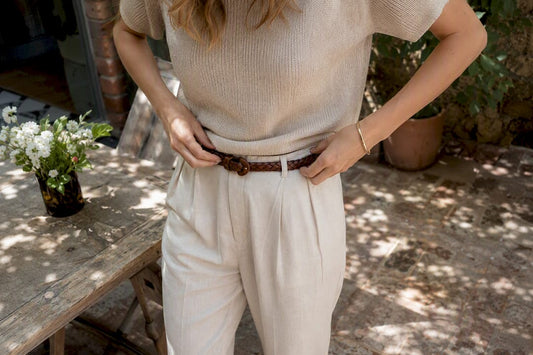
We favour mid-weight pure linen or linen-cotton blends for trousers and dresses, where drape and a manageable crease matter more than featherweight coolness. For shirting, a lighter, washed linen with some ease through the body avoids the stiff, boxy look that gives linen its unfair reputation. Our own styling leans on structured accessories, a slim belt, a leather sandal, to keep relaxed linen pieces looking finished rather than undone.
Can you wear linen outside summer?
Linen isn’t only a beach-holiday fabric. Its breathability makes it the obvious choice for warm-weather wear, but heavier linen and linen blends earn their place in spring and autumn wardrobes too, particularly in a climate with long, mild shoulder seasons either side of a hot summer.
The trick to transitional dressing in linen is layering rather than swapping the fabric out. A linen shirt works under a light knit on a cool morning and comes off by lunchtime once the temperature climbs, which is exactly the kind of flexibility a lot of synthetic fabrics can’t offer. A linen dress takes on a jumper or lightweight jacket over the top and tights or boots underneath, turning a summer piece into something wearable well into a cooler month.
Colour is a useful signal here too. Where high summer favours white, ecru and pale stone, the shoulder seasons suit linen in deeper, muted tones, olive, rust, chocolate, which read as considered rather than out of season even when the fabric itself is unmistakably linen.
Heavier-weight linen, or a linen-wool blend where you can find one, holds up better in cooler conditions than the finest shirting weights, since the denser weave traps a little more warmth and drapes with more structure. That makes it a sound option for a jacket or a tailored trouser you want to wear from September through into the cooler months, rather than retiring the moment the heat drops. A guide to styling a European summer wardrobe has more on building pieces that carry across seasons rather than sitting idle for nine months of the year.
Is linen actually a sustainable fabric choice?
Flax is one of the less resource-intensive crops used in clothing production, which is part of why linen has a genuine sustainability story behind it, not just a marketing one. The plant typically requires less irrigation and fewer pesticide inputs than cotton grown in comparable conditions, and much of European flax cultivation happens in regions, notably France and Belgium, with rainfall patterns suited to growing it without heavy irrigation.
Linen production also uses more of the plant than many fibres allow. Flax seed is pressed for linseed oil, the shorter fibres (tow) go into paper and composite materials, and the long fibres are spun into the yarn that becomes clothing, which means less of the crop goes to waste compared with fibres grown purely for textile use.
Certification is where the sustainability claim becomes verifiable rather than assumed. European Flax certification traces fibre back to EU-grown flax and confirms certain chain-of-custody standards, and while certified linen costs more, that premium buys traceability that uncertified linen simply can’t offer. For a shopper trying to build a considered, lower-impact wardrobe, checking for that certification is a more useful step than trusting a vague “eco” label on a hangtag.
Linen’s durability adds to the sustainability case in a quieter way. A fibre that’s built to last several years of regular wear and washing, rather than a season or two, reduces the churn that drives most of fashion’s environmental footprint, provided it’s cared for the way it deserves to be.
How does linen compare to cotton and hemp?
Linen, cotton and hemp are all natural, plant-based fibres, but they behave differently enough that the choice between them should depend on what you’re wearing them for.
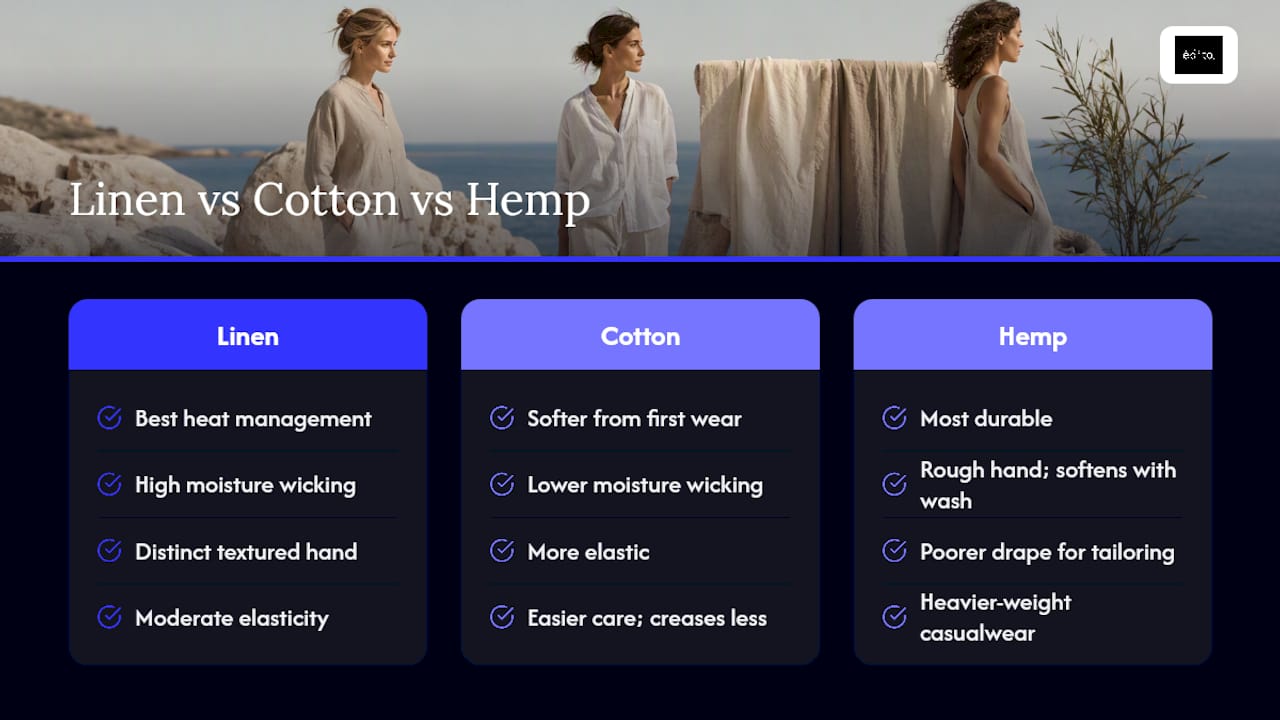
Cotton is softer from the first wear, more elastic, and generally cheaper, which is why it dominates casual basics. It doesn’t wick moisture away as efficiently as linen does, though, and in genuinely hot, humid conditions a cotton tee will feel damper against the skin for longer than a linen shirt will. Cotton also creases less aggressively, which is part of why it’s the easier everyday fabric for people who don’t want to think about ironing.
Hemp sits at the sturdier end of the spectrum. It’s typically even more durable than linen, with a rougher initial hand that softens over repeated washing, and it’s often grown with a similarly light environmental footprint to flax. Hemp doesn’t drape as elegantly as linen for tailored pieces, though, which is why it shows up more often in heavier-weight casualwear than in the fluid shirting and dresses linen is known for.
Linen’s advantage is the specific combination it offers: better heat management than cotton, better drape than hemp, and a distinctive textured hand that neither fibre quite replicates. If pure cooling performance in serious heat is the priority, linen wins. If ease of care and elasticity matter more than breathability, cotton is the more forgiving choice. And if you want maximum durability in a heavier, more casual piece, hemp holds up longest.
Why linen still earns a place in a considered wardrobe
Linen makes sense for anyone who travels light, dresses for genuine heat rather than air-conditioned offices, and appreciates a fabric with some craft behind it. It creases, and that’s the point. A wardrobe built on quality over quantity treats a well-made linen piece as a long-term investment, not a disposable summer buy, which means caring for it properly matters more than owning plenty of it.
If you’re building out lighter-weight pieces for the warmer months ahead, it’s worth spending on fewer, better linen garments and looking after them properly rather than chasing volume.
— Mickael Martin
Shop Edito’s curated linen edit
This curated edit is an alternative to guessing your way through generic linen basics: every piece is chosen for weight, weave and cut that actually work for the way you’ll wear it, not just how it photographs on a hanger.
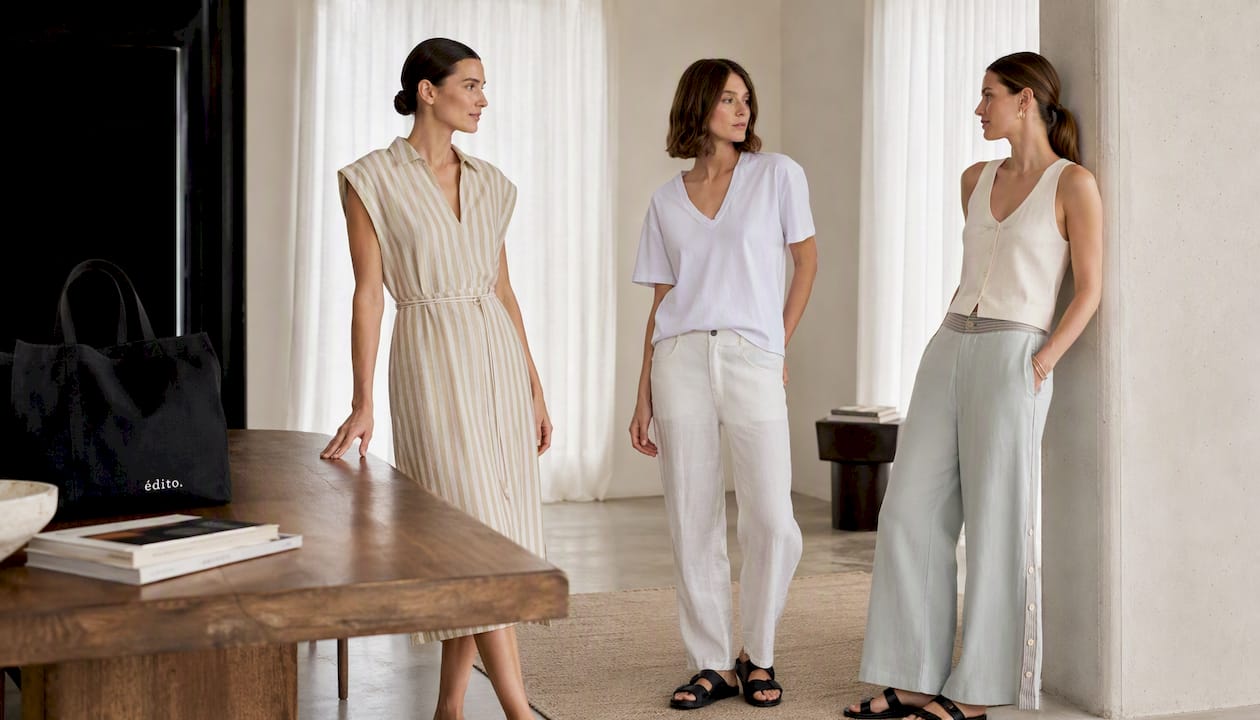
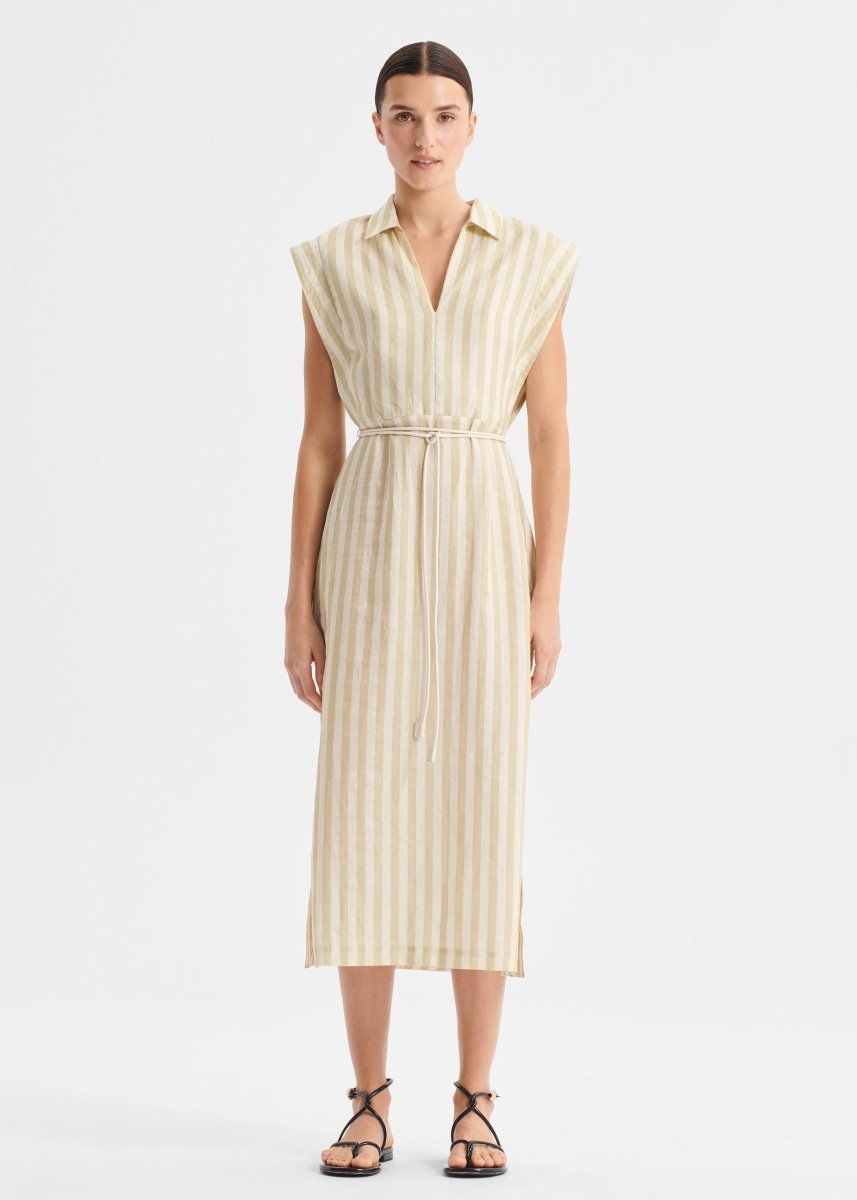
The Cybil Linen Dress in Stripe is built for exactly the belt-and-structure formula covered above: a striped linen dress with enough shape to skim rather than swamp, ideal for anyone who wants one piece that works from a lunch date to an evening with sandals swapped for heels. For trousers, the Seven Linen Pant in Mint brings tailored shaping in a colour that reads fresh without trying too hard, a strong pairing with a simple white shirt and structured flat. If you’d rather keep things neutral and airy, the Alen Linen Pant in White offers the relaxed, wide-leg silhouette that grounds a loose linen top beautifully.
Browse the full range at Edito and build your warm-weather edit around pieces designed to earn their place well beyond one season.
Sources
FAQ
What is the 3-3-3 rule for clothes?
The 3-3-3 rule is a capsule wardrobe approach where you choose three tops, three bottoms and three pairs of shoes to wear on rotation over three weeks, and it works particularly well with linen since mixing a few well-fitted pieces avoids the crease build-up that comes from overpacking.
What are the general rules for wearing linen well?
Choose a fit that skims rather than drowns the body, pair loose pieces with something structured like a belt or fitted shoe, and accept some natural creasing as part of linen’s character rather than fighting it with heavy ironing.
Why is mixing linen and wool traditionally avoided?
That restriction comes from an ancient religious textile law rather than any practical fabric-care reason, and it has no bearing on how linen performs or blends with other fibres in a modern wardrobe.
How do you stop linen looking frumpy?
Fit and structure are the fix: size linen to skim the body, tailor anything genuinely oversized, and ground relaxed pieces with a defined waist, a belt or structured accessories rather than letting the whole outfit stay soft and shapeless.