

The core routine for leather bag care is three steps: clean, condition, store. Done in that order, and repeated at the right intervals, this routine preserves suppleness, prevents cracking, and builds the kind of rich patina that makes a quality leather piece more beautiful with age. This guide covers everything from daily habits to climate-aware storage, material-specific rules, and when to entrust a bag to a professional.
Quick daily habits:
- Wipe the surface with a dry, soft microfibre cloth after each use to lift dust and surface grime.
- Spot-check handles, base corners, and strap attachment points — these flex points show wear first.
- Return the bag to its dust bag when not in use, stuffed lightly to hold its shape.
Three cautions to memorise before you do anything else:
- Never use a hair dryer or place a wet bag near a heat source; heat dries leather irreversibly.
- Never store leather in a plastic bag or sealed container; plastic traps moisture and feeds mould.
- Patch-test every new product on a hidden seam or base corner before applying it to the full surface.
Pro Tip: Run your thumb firmly across the handles and base of the bag. If the leather feels stiff, papery, or shows fine surface lines when flexed, it needs conditioning now — don’t wait for the calendar.
| Situation | Action |
|---|---|
| After every use | Dry wipe with microfibre cloth; return to dust bag |
| Visible surface marks | Spot-clean with pH-neutral leather cleaner on a damp cloth |
| Stiff or dull surface | Condition with a cream conditioner; buff off excess |
| Long-term storage | Clean, condition, stuff with acid-free tissue, store in breathable cover |
Key takeaways
| Point | Details |
|---|---|
| Clean before conditioning | Always remove surface dirt before applying conditioner; conditioning over grime traps it in the hide. |
| Condition every 3–6 months | Adjust frequency by climate: every 1–3 months in dry areas, every 4–6 months in humid zones. |
| Store in breathable covers | Use cotton or linen dust bags, never plastic; stuff with acid-free tissue and stand bags upright. |
| Match method to material | Suede needs a suede brush and protector spray; patent leather needs a damp cloth only; never use water on suede. |
| Edito’s recommendation | Invest in European leather pieces built to last, then maintain them with the same care their makers intended. |
Table of Contents
- What supplies do you actually need for leather bag care?
- How to clean a leather bag step by step
- How and when should you condition your leather bag?
- How to store leather bags to keep their shape and prevent mould
- Does the care routine change for suede, patent, and smooth leather?
- What to do when stains and accidents happen
- When should you take a leather bag to a professional?
- What environment does leather actually need for long-term storage?
- The craft behind the care: an editorial perspective
- Edito’s curated approach to quality leather pieces
- Sources
- FAQ
What supplies do you actually need for leather bag care?
The right tools make the difference between a safe clean and an irreversible mistake. You do not need an elaborate kit — a handful of purpose-made items covers almost every situation.
Recommended supplies:
- Soft microfibre cloths (two: one for cleaning, one for buffing)
- A soft-bristled brush for seams and hardware crevices
- pH-neutral leather cleaner (purpose-made, not a household substitute)
- Cream conditioner formulated for smooth leather
- A suede brush and suede protector spray for nubuck or suede pieces
- Acid-free tissue paper for stuffing
- A breathable cotton or linen dust bag for storage
When choosing between product types, cream conditioners are generally preferable to heavy oils for most smooth leathers. Oils can over-saturate the hide, attract dirt, and darken the surface unevenly. Spray waterproofers add a useful layer of protection before rain exposure, but they are not a substitute for conditioning. Leather specialists recommend light, periodic applications of pH-balanced creams rather than heavy oils — too much product invites dirt, darkening, and a surface that cannot breathe.
Patch-test method: Apply a small amount of product to a hidden area (inside base corner or under a flap). Wait five minutes. Look for darkening, tackiness, or any change in texture. If the surface looks and feels unchanged, proceed.
Never use baby wipes, micellar water, household surface sprays, or washing-up liquid on leather. These products alter the pH of the hide, strip natural oils, and cause surface cracking over time. Distilled water is the safest option for any damp cleaning step — tap water’s mineral content can leave faint watermarks on pale or smooth leathers.
Pro Tip: Keep a small bottle of distilled water and a folded microfibre cloth in your bag’s dust bag. That way, the tools for a quick spot-clean are always where the bag is.
How to clean a leather bag step by step
Most leather damage is caused by incorrect home care — wrong products, too much water, or rubbing a stain rather than blotting it. A methodical approach prevents that.
Daily routine (2 minutes):
- Empty the bag completely and shake out debris from interior pockets.
- Wipe the exterior with a dry microfibre cloth, working in gentle circular motions.
- Inspect handles, base corners, and strap points for marks or early wear.
- Spot-treat any fresh marks immediately (see step 5 below).
- Return the bag to its dust bag, lightly stuffed.
Gentle damp clean (monthly or as needed):
- Dampen a microfibre cloth with distilled water — it should feel barely moist, not wet.
- Add one small drop of pH-neutral leather cleaner to the cloth, not directly onto the bag.
- Work across the surface in small sections, using light circular strokes.
- Wipe away any residue with a second clean, dry cloth.
- Allow the bag to air-dry at room temperature for 24–48 hours before storing or conditioning.
- Never place it near a radiator, in direct sun, or use a hair dryer to speed drying.
Stuff the bag loosely with acid-free tissue while it dries so it holds its shape as the leather settles. Once fully dry, the surface may feel slightly stiffer than usual — that is normal, and conditioning will restore suppleness.
Pro Tip: If a mark does not lift after two gentle passes with a damp cloth, stop. Overworking a spot thins the surface finish and creates a dull patch that is harder to fix than the original mark.
Home remedies to avoid entirely: olive oil, coconut oil, petroleum-based products (except for specific patent leather tests), acetone nail polish remover, and baby wipes. Each of these either strips the finish, over-saturates the hide, or introduces chemicals that degrade the leather’s structure over time.
How and when should you condition your leather bag?
Conditioning replaces the natural oils that evaporate from leather through use, heat, and air exposure. Without it, leather becomes brittle, loses its depth of colour, and eventually cracks at flex points. The principle is less is more: a thin, even coat applied every few months does far more good than a heavy treatment applied rarely.
Conditioning steps:
- Patch-test the conditioner on a hidden area first.
- Apply a pea-sized amount to a clean, dry microfibre cloth — never directly to the bag.
- Work across the surface in small circular sections, paying extra attention to handles, base corners, and strap attachment points.
- Allow the conditioner to absorb for 10–15 minutes.
- Buff off any excess with a second clean cloth.
- Leave the bag to rest for at least an hour before using or storing.
Expect a slight temporary darkening after conditioning, particularly on lighter leathers. This fades as the product absorbs fully. If darkening persists after 24 hours, you have applied too much product.
Conditioning frequency by climate:
| Climate / Condition | Recommended frequency |
|---|---|
| Very dry or arid (e.g. inland Australia) | Every 1–3 months |
| Temperate (e.g. Melbourne, Sydney) | Every 3–4 months |
| Humid subtropical (e.g. Brisbane, Darwin) | Every 4–6 months |
| Bag stored long-term (unused) | Condition before storage, then check at 6 months |
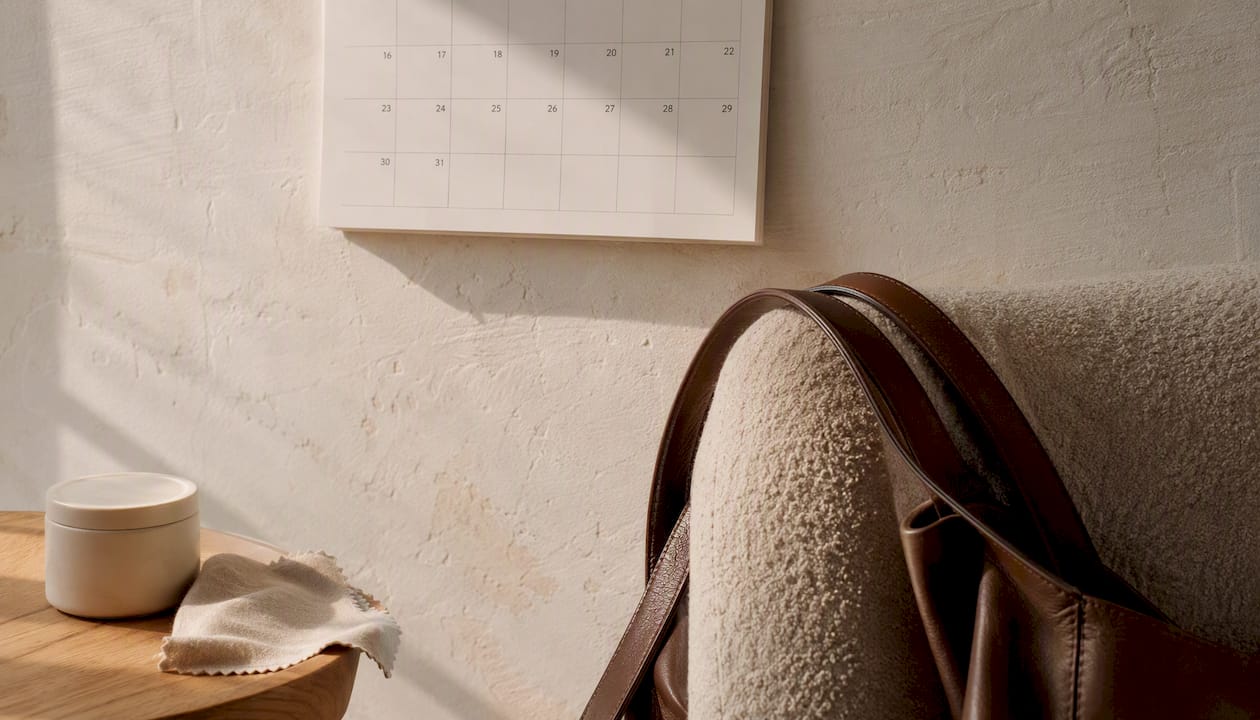
Leather experts advise a six-monthly check as a baseline, with adjustments for climate and how frequently the bag is carried. A bag used daily in a dry climate may need attention every 6–8 weeks; one stored carefully in a temperate environment might go six months without conditioning.
Pro Tip: Press your thumb firmly into the handle or base corner and flex the leather slightly. If you see fine surface creases that don’t spring back, or if the leather feels rigid rather than supple, conditioning is overdue.
How to store leather bags to keep their shape and prevent mould
Storage is where most long-term leather damage quietly accumulates. A bag left on a hook, crammed into a shelf, or sealed in plastic will show the consequences within a season.
Short-term storage (daily or weekly):
- Keep the bag in its cotton or linen dust bag when not in use.
- Stand it upright rather than laying it flat or hanging it by its handles — hanging distorts the strap attachment points over time.
- Stuff the interior lightly with acid-free tissue or clean cotton to maintain the bag’s structure.
Long-term storage (seasonal or extended):
- Clean and lightly condition the bag before putting it away; dirt and residual oils left on the surface can feed mould during storage.
- Use breathable fabric covers, not plastic garment bags or sealed boxes.
- Place a silica gel sachet inside the dust bag during humid months to manage moisture.
- Allow space between stored bags so air can circulate and surfaces don’t press against each other.
What not to do:
- Never store in plastic, sealed containers, or airtight boxes.
- Never place near a window, radiator, or any heat source.
- Avoid stacking bags directly on top of each other — the weight crushes structure and transfers colour between surfaces.
Pro Tip: Wrap metal hardware (clasps, chains, feet) loosely in a small piece of acid-free tissue before storing. Hardware pressed against leather for months leaves permanent imprints. Rotating which bags you carry also distributes wear more evenly across your collection.
Does the care routine change for suede, patent, and smooth leather?
Yes, significantly. Using the wrong method on the wrong material is one of the most common causes of irreversible damage.
Suede and nubuck
Water causes permanent watermarks and stiffening of the nap on suede and nubuck — never use a damp cloth on these materials. The correct approach:
- Brush gently with a dedicated suede brush to lift surface dust and restore the nap direction.
- Blot (never rub) any liquid spills immediately with a clean, dry cloth.
- Apply a suede protector spray before first use and reapply seasonally.
- Store in a cloth bag, never plastic, to allow breathability.
Do not: use water, cream conditioners, wax, or any product formulated for smooth leather.
Patent and coated leathers
Patent leather’s lacquer surface is vulnerable to dye transfer and scratching. A damp cloth removes everyday surface dirt effectively. For dye transfer (colour rub from clothing or other bags):
- Act quickly — fresh transfer is far easier to address than dried colour.
- Test a small amount of petroleum jelly on a hidden area first; if safe, apply gently with a cotton pad.
- Isopropyl alcohol can also be tested as a patch, but use sparingly.
- Never use acetone — it destroys the lacquer finish entirely.
Do not: use cream conditioners, wax, or abrasive cloths on patent surfaces.
Smooth and full-grain leather
This is the most forgiving category and the one where the standard clean-condition-store routine applies directly. Cream conditioners work well; avoid kitchen fats, heavy oils, and any product not formulated for leather.
Pro Tip: When in doubt about a material, check the care label inside the bag or contact the brand directly. European designer houses often publish specific guidance for their leathers, and it is always worth following their recommendation over a generic one.
What to do when stains and accidents happen
Speed matters more than the product you reach for. The first 60 seconds after a spill determine how much damage occurs.
Ink stains:
- Place a piece of absorbent paper (not newspaper) under the affected area if possible.
- Blot gently with a clean, dry cloth — do not rub.
- If the ink is fresh and on smooth leather, test a tiny amount of isopropyl alcohol on a hidden patch first.
- If the stain does not lift after one careful attempt, stop and consult a professional leather cleaner.
Salt and sea spray:
- Allow the surface to dry completely before touching it.
- Brush off any dry salt crystals with a soft brush.
- Wipe gently with a cloth dampened with distilled water.
- Air-dry fully, then condition the affected area — salt draws moisture from leather and leaves it brittle.
Oil and grease:
- Sprinkle a small amount of cornstarch or talcum powder directly onto the fresh stain.
- Leave undisturbed for several hours (overnight if possible) to absorb the oil.
- Brush away the powder gently with a soft brush.
- Do not apply heat or water — both drive oil deeper into the hide.
When to stop and seek help:
- The stain spreads or darkens with each attempt.
- The surface finish lifts or becomes tacky.
- The leather changes texture around the treated area.
- The bag is a high-value or designer piece with a coated or exotic finish.
Pro Tip: For a wet bag, empty it immediately, stuff it loosely with dry paper to absorb internal moisture, and stand it upright in a well-ventilated room. Never squeeze the leather or use heat. Once dry (allow 24–48 hours), condition the surface to replace oils drawn out by the water.
When should you take a leather bag to a professional?
Some damage is beyond safe home treatment, and attempting it risks making the problem permanent.
Take the bag to a professional when you see:
- Dye transfer that has not responded to a careful first attempt at home.
- Deep oil stains that have penetrated the hide.
- Structural damage: broken stitching, torn linings, detached handles, or corroded hardware.
- Persistent watermarks that remain after air-drying and conditioning.
- Mould growth (white or grey bloom on the surface).
Questions to ask a leather repair service:
- Do you have experience with designer or European leather goods?
- What cleaning and conditioning methods do you use, and are they pH-balanced?
- Can you provide an estimated turnaround time and a written cost estimate?
- Do you offer any guarantee on the work?
- How do you handle colour restoration if the finish is affected?
Before drop-off or shipping, photograph the bag from every angle and note specific problem areas in writing. For high-value pieces, keep purchase receipts, authenticity cards, and any original packaging — provenance documentation supports insurance claims and resale value.
What environment does leather actually need for long-term storage?
The single most important environmental factor for leather storage is relative humidity. Conservators recommend a range of 45–55% relative humidity for leather kept in long-term storage.
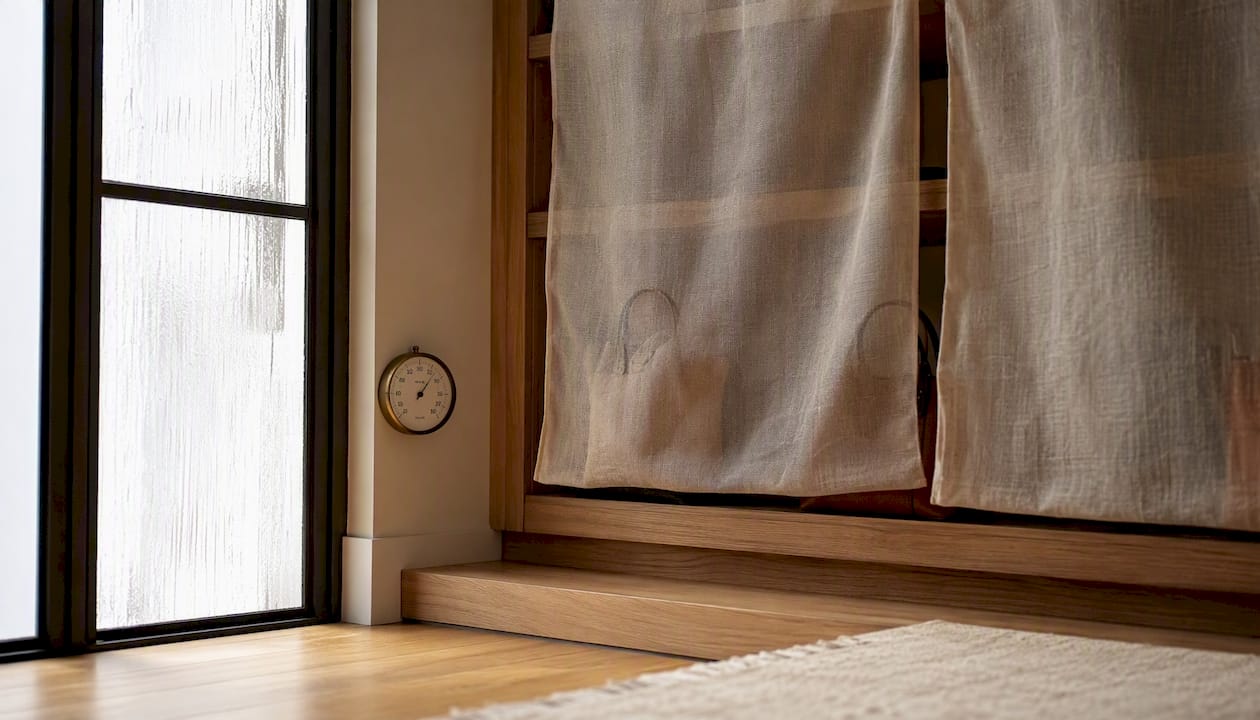
In practice, most Australian homes fall outside this range at some point during the year — particularly in subtropical cities like Brisbane during summer, or in dry inland areas year-round. Leather responds directly to its environment, and a climate-aware routine removes the guesswork from both conditioning frequency and storage choices.
Practical steps to manage your storage environment:
- Place a small hygrometer (humidity monitor) in the wardrobe where bags are stored — they are inexpensive and remove all guesswork.
- Use silica gel sachets inside dust bags during humid months; replace or recharge them every 8–12 weeks.
- In very dry conditions, a small room humidifier near the storage area can bring humidity into the safe range.
- Air out dust bags and stored bags seasonally — even a few hours of gentle air circulation prevents the stale, closed environment that encourages mould.
Conditioning frequency follows the same logic: in very dry areas, every 1–3 months; in temperate zones, every 3–6 months.
Pro Tip: A simple thumb-flex test at the handles and base corners takes ten seconds and tells you more about whether conditioning is due than any calendar reminder. Stiff leather that shows surface creasing when flexed needs attention regardless of when you last conditioned it.
The craft behind the care: an editorial perspective
At Edito, the European pieces we stock — from Sessùn’s considered constructions to Vanessa Bruno’s refined leather accessories — are chosen precisely because they are made to last. That longevity is not passive. It depends on the person who owns the piece choosing to maintain it with the same thoughtfulness the maker brought to it.
There is a philosophy in French and broader European dressing that resists disposability. A well-maintained leather bag does not just survive the years; it deepens. The patina that develops on full-grain leather through careful use and conditioning is something a new bag cannot replicate. It is the material record of a considered life.
Care, in this sense, is part of wardrobe stewardship. Rotating bags, conditioning seasonally, storing with intention — these habits are the practical expression of buying less and choosing better. A capsule wardrobe built around quality European pieces only holds its value, aesthetic and financial, when the pieces are maintained. The bag you carry in ten years should look more interesting than the one you bought, not less.
Edito’s curated approach to quality leather pieces
Quality leather deserves quality care, and the two are inseparable at Edito. We stock European pieces chosen for their craftsmanship and longevity — the kind of accessories and garments that reward careful ownership. Whether you are building a capsule wardrobe around a single exceptional leather bag or rotating several pieces across seasons, the care routine in this guide applies directly to the leathers we curate.

If you have questions about caring for a specific piece from our collection, or you would like advice on which European leather accessories suit your wardrobe and climate, our team is available through the Edito website. We are also happy to point you toward the right storage and care approach for any piece you purchase from us. For a closer look at the quality and craftsmanship behind our current edit, browse our European designer collection and find the piece worth caring for.
Sources
The following sources informed the guidance in this guide and are worth consulting for further detail:
- Storing vintage leather — temperature, humidity and long-term care | Sherpa Leather
- How to care for leather handbags: Leather expert Ben Thompson on the four things you should be doing - 9Style
- How To Care For Leather Bags | Expert Cleaning And Storage
- Leather & Environment: How climate conditions affect your leather – Mission Leather Co
- Care tips | The Leather Laundry
FAQ
Should I oil my leather bag?
Light cream conditioners are preferable to oils for most leather bags. Heavy oils over-saturate the hide, attract dirt, and can cause uneven darkening — a pH-balanced cream conditioner applied thinly every 3–6 months achieves the same result without those risks.
How do I condition my leather bag correctly?
Apply a small amount of cream conditioner to a clean cloth (not directly to the bag), work it across the surface in circular motions, allow 10–15 minutes to absorb, then buff off any excess. Expect slight temporary darkening that fades within 24 hours.
What should you not use on leather bags?
Avoid baby wipes, household surface sprays, olive oil, coconut oil, acetone, and any product not formulated specifically for leather. On suede, never use water or cream conditioners designed for smooth leather.
How do I remove stains from a leather bag at home?
Blot (never rub) fresh stains immediately with a dry cloth, then test a purpose-made leather cleaner on a hidden area before applying it to the stain. For oil stains, apply cornstarch, leave overnight, then brush away. If the stain does not respond after one careful attempt, consult a professional leather cleaner.
How do I protect a leather bag from rain?
Apply a spray waterproofer formulated for leather before exposure, and reapply seasonally. If the bag gets wet, empty it, stuff it with dry paper, and allow it to air-dry at room temperature for 24–48 hours before conditioning the surface to replace moisture-stripped oils.
Recommended
- Essentiel Antwerp Autumn 2025 Collection | European Fashion Trends | Australia | Edito Boutique
- Essentiel Antwerp Spring 2026 Collection | European Fashion | Australia | Edito Boutique
- Laurence Bras Autumn Winter 2025 | French Fashion | Australia | Edito Boutique
- Day Birger et Mikkelsen Autumn Winter 2024 | European Fashion | Australia | Edito Boutique