

Wash linen gently, reshape it while still damp, and air-dry in the shade — that single routine preserves the cellulose fiber structure and dramatically reduces both shrinkage and deep-set creasing. Linen’s flax-derived fibers are robust under gentle conditions but unforgiving when exposed to high heat or left bunched in a wet drum.
- Always check the care label before washing
- Place garments inside out in a mesh laundry bag
- Use a pH-neutral or mild liquid detergent
- Select the gentle or delicate cycle at cool to lukewarm temperatures
- Remove immediately from the washer and reshape while damp
- Air-dry in shade or tumble-dry on the lowest heat setting, removing while slightly damp
Pro Tip: Add ½ cup of white distilled vinegar to the rinse cycle. It neutralizes alkaline detergent residue and softens linen naturally, without the waxy coating that fabric softeners leave behind.
Key Takeaways
Proper linen care comes down to three non-negotiable habits: wash gently at low temperatures, reshape immediately while damp, and air-dry in the shade.
| Point | Details |
|---|---|
| Temperature discipline | Wash garments at 40°C or below; reserve 60°C for household linen needing sanitizing. |
| Mesh bag and separation | Always use a mesh laundry bag and keep linen away from heavy or abrasive fabrics. |
| Skip fabric softener | Use a pH-neutral detergent and add ½ cup white vinegar to the rinse instead. |
| Reshape while damp | Remove from the washer immediately, shake, smooth seams, and hang or lay flat to dry. |
| Air-dry in shade | Line dry away from direct sun; if tumble-drying, use low or no heat and remove slightly damp. |
Table of Contents
- Why linen needs a different approach than other fabrics
- How to wash linen: machine and hand-wash workflows
- How to treat common stains on linen
- How to dry and reshape linen to minimize shrinkage
- Ironing and steaming linen: crisp finish or relaxed allure?
- How to store linen and protect it long-term
- When should you choose professional cleaning for linen?
- Research-backed expert tips and mistakes to avoid
- The most common linen-care mistakes and how to fix them
- A perspective on caring for quality linen every day
- Sources
Why linen needs a different approach than other fabrics
Linen is spun from the cellulose fibers of the flax plant (Linum usitatissimum), and that origin shapes everything about how it behaves in the laundry. Unlike wool or silk, linen actually becomes stronger when wet — a property that makes it durable under gentle washing. The trade-off is low elasticity: linen fibers do not spring back the way cotton or wool do, which means creases can set permanently if the fabric is left damp and compressed.
Two practical consequences follow from that structure. First, linen is prone to wrinkling, not because it is fragile, but because its inelastic fibers hold whatever shape they dry in. Second, high heat causes measurable shrinkage and texture change, particularly in the first few washes. Laundry experts note that most shrinkage happens in the first two to three washes, so buying a size up for unprewashed pieces is a practical hedge worth considering.
The good news: linen softens progressively with repeated laundering. That initial stiffness after the first wash is normal, not a sign of damage.
How to wash linen: machine and hand-wash workflows
Machine-washing linen
- Check the care label — if it reads “dry clean only,” stop here and skip to the professional-care section below.
- Turn the garment inside out to protect the outer surface from friction.
- Place it in a mesh laundry bag. Using a mesh bag prevents pulling and pilling caused by friction against heavier fabrics during the cycle.
- Wash with similarly weighted fabrics — never with denim, towels, or items with zippers or hardware.
- Select the gentle or delicate cycle.
- Set the temperature: cool to lukewarm (up to 40°C / 104°F) for garments; up to 60°C / 140°F for household linen that needs sanitizing, such as bedding or kitchen towels.
- Choose a low spin speed to reduce mechanical stress on the fibers.
- Remove the garment immediately when the cycle ends.
Hand-washing linen
- Fill a clean basin with lukewarm water.
- Add a small amount of mild, pH-neutral liquid detergent and dissolve it before adding the garment.
- Submerge and agitate gently with your hands — no scrubbing, no twisting.
- Rinse thoroughly with cool water until no detergent remains.
- Never wring. Instead, press the garment gently against the basin wall, then lay it flat on a clean dry towel, roll the towel up, and press to absorb excess water.
- Reshape immediately and dry flat or hang.
Delicate or embroidered linen pieces — vintage napkins, heirloom tablecloths, anything with surface embellishment — should always be hand-washed rather than machine-washed.
Detergent matters more than most people realize. Alkaline detergents degrade flax fibers and leave linen feeling scratchy over time. Fabric softeners are equally problematic: they coat fibers with a waxy layer that accumulates wash after wash, reducing linen’s natural breathability and handle. Choose a pH-neutral liquid detergent and skip the softener entirely.
Pro Tip: Dissolve your detergent in water before adding the garment, whether by hand or machine. Undissolved detergent granules can concentrate on fabric and create uneven residue.
How to treat common stains on linen
Act quickly. The longer a stain sits, the deeper it penetrates the open cellulose structure of linen — and heat at any stage will set it permanently.
- Blot immediately. Use a clean white cloth and work from the outside of the stain inward. Never rub; rubbing spreads the stain and pushes it deeper into the weave.
- Lift solids. Use a spoon or dull knife to remove any solid matter before applying any liquid treatment.
- Test first. Apply any pre-treatment to a hidden seam allowance or inner hem and wait two minutes before proceeding.
-
Pre-treat by stain type:
- Oil and grease: Sprinkle cornstarch or baking soda, let it absorb for 15 minutes, brush away, then apply a small amount of pH-neutral dish soap or liquid detergent.
- Wine and tannins: Blot, flush with cold water, then apply an enzyme-based stain remover and let it dwell for the time the product recommends.
- Protein stains (blood, sweat, dairy): Soak in cold water only — never warm — then apply an enzyme cleaner. Heat denatures protein and bonds it to fiber.
- Makeup: Apply an absorbent powder first, then a small amount of gentle liquid detergent worked in with a soft brush.
- Wash promptly on the appropriate cycle before applying any heat.
- Check before drying. Inspect the stain under good light before putting the garment in the dryer or near a heat source. If the stain remains, repeat the pre-treatment rather than drying.
On bleach: Oxygen bleach (sodium percarbonate) is safe for white linen and can lift stubborn discoloration without the fiber damage that chlorine bleach causes. Chlorine bleach weakens flax fibers and alters color on anything other than pure white — avoid it for colored or patterned linen entirely.
How to dry and reshape linen to minimize shrinkage
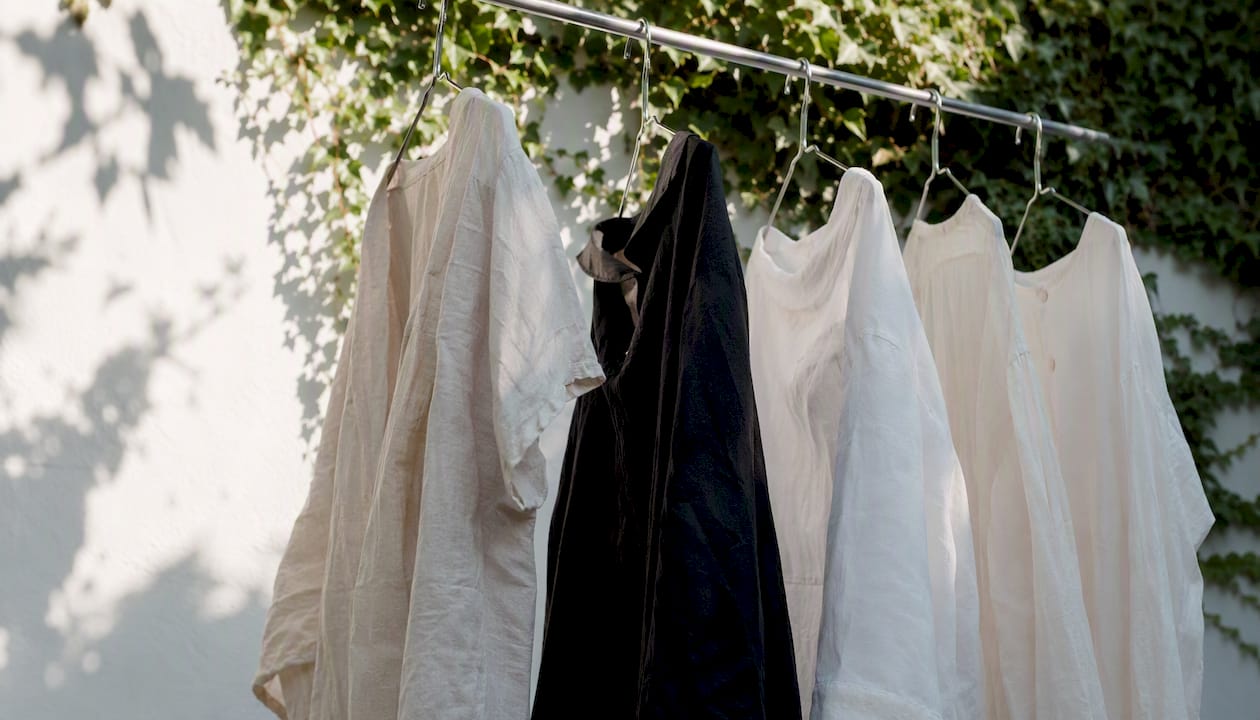
Line drying in the shade is the gold standard. Direct sun fades color and adds heat stress; a shaded spot with good air movement dries linen evenly while preserving both drape and tone. Removing items from the dryer while slightly damp eliminates the need for ironing in many cases and prevents the over-drying that causes excessive wrinkling.
Reshaping while damp (step-by-step):
- Shake the garment firmly two or three times to release compressed creases.
- Smooth all seams flat with your hands.
- Pull gently at the hem, shoulders, and cuffs to restore the original dimensions.
- For shirts and blouses, hang on a padded hanger immediately; for trousers and skirts, hang from the waistband.
- For structured or heavy pieces, lay flat on a clean dry surface to prevent distortion from the weight of wet fabric.
What to avoid:
- No high heat in the dryer, even for a short cycle
- No extended tumbling, which causes shrinkage and stiffening
- Never leave damp linen sitting in the drum — creases set into the cellulose structure and become very difficult to remove
Pro Tip: If linen comes out of the dryer with stubborn creases, a brief two-to-three-minute tumble on the lowest heat setting with a damp cloth in the drum will relax the fibers enough to smooth by hand.
Ironing and steaming linen: crisp finish or relaxed allure?
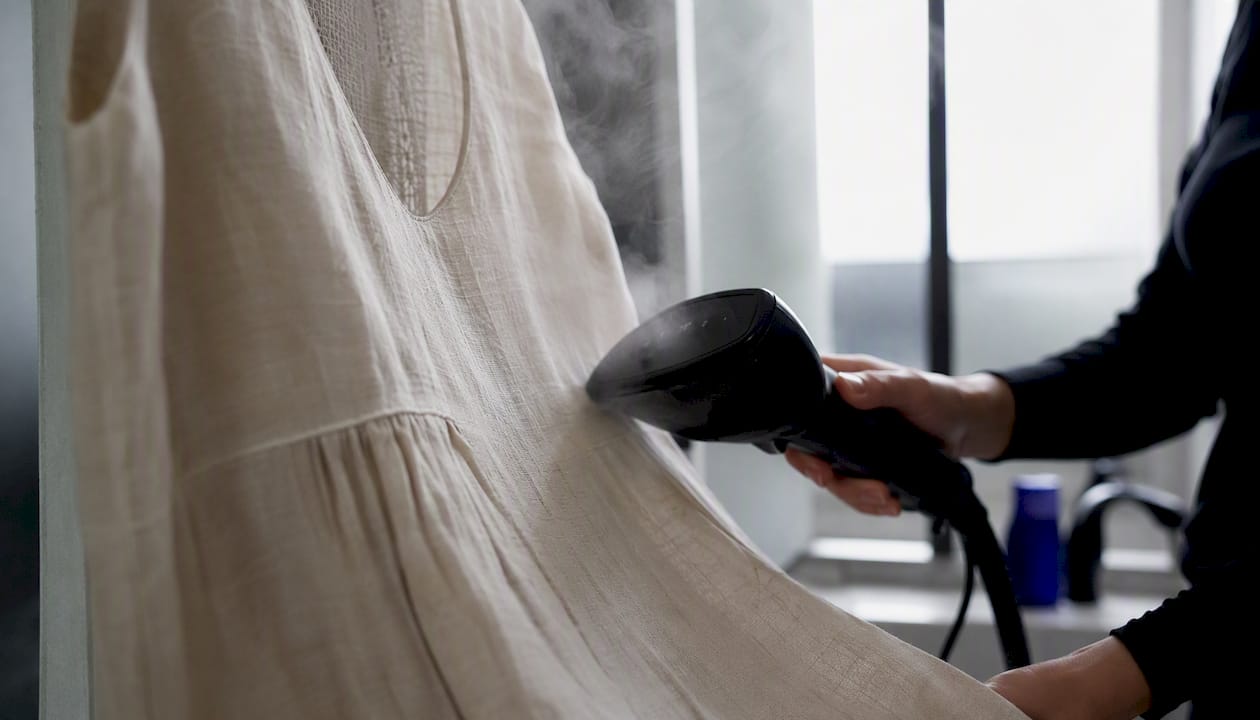
Linen irons beautifully when the fabric is slightly damp. Work on a medium-high heat setting with the steam function active, and iron on the reverse side for most garments to avoid flattening the surface texture. For pieces with delicate finishes, embroidery, or printed details, place a clean pressing cloth between the iron and the fabric.
A garment steamer offers a gentler alternative, particularly for structured pieces where you want to relax wrinkles without flattening the weave. Hold the steamer head a few centimeters from the surface and work in slow downward passes; the vertical steam relaxes fibers without the direct pressure of an iron plate.
Worth saying plainly: wrinkling is not a laundering failure. Linen’s low elasticity means some texture is inherent to the fiber, and many designers — including those whose pieces appear in Edito’s curated collections — treat that relaxed, lived-in quality as part of the fabric’s allure. A slightly rumpled linen shirt carries a certain savoir-faire that a perfectly pressed synthetic never will. If the intentionally relaxed aesthetic appeals to you, a textured, crinkled finish is a deliberate design choice, not a care shortcut.
How to store linen and protect it long-term
Proper storage is where linen care either succeeds or quietly fails. Mildew, yellowing, and insect damage are almost always the result of storing linen that is not fully clean and dry.
- Clean and fully dry before storing — any residual moisture or body oils will yellow and weaken fibers over time.
- Use breathable storage: cotton or linen bags, acid-free tissue paper, or open shelving. Plastic bags trap humidity and accelerate yellowing.
- Choose a cool, dry location away from direct sunlight and heat sources.
- Folding vs. hanging: fold casual pieces loosely to avoid permanent crease lines along fold edges; hang structured blazers, coats, and tailored trousers on padded hangers to preserve their shape.
- Seasonal refresh: air garments outdoors in the shade for a few hours before storing for the season, even if they appear clean.
- Insect prevention: place cedar blocks or lavender sachets near (not touching) stored linen. Both deter moths without the harsh chemicals in traditional mothballs, which can transfer odor and residue to fabric.
When should you choose professional cleaning for linen?
Most linen garments wash beautifully at home, but certain pieces genuinely warrant professional care. Use this checklist:
- The care label reads “dry clean only” — follow it without exception.
- The garment has heavy internal structure, canvas interfacing, or a full lining that can distort when wet.
- Complex tailoring (bound buttonholes, hand-stitched details, structured shoulders) risks losing its shape in a home wash.
- Surface embellishment — sequins, beading, delicate embroidery — cannot safely withstand agitation.
- A stain persists after two rounds of home pre-treatment and washing.
- The piece is an heirloom, vintage, or high-value item where the risk of irreversible damage outweighs the cost of professional handling.
What professionals offer beyond cleaning is worth noting: a skilled dry cleaner can re-block structured linen pieces, press with industrial equipment that restores crisp tailoring, and reinforce weakened seams before they fail. For premium European pieces from brands like Soeur or Sita Murt, that investment in professional care often extends garment life significantly.
Research-backed expert tips and mistakes to avoid
The most consistent guidance from laundry professionals centers on chemistry and timing. Alkaline detergents and fabric softeners are the two most common sources of long-term linen damage — the former degrades fiber structure, the latter builds up a coating that progressively dulls the fabric’s natural handle. Both are avoidable with a simple swap to a pH-neutral liquid detergent.
The single most protective habit is immediate removal from the washer followed by firm reshaping while damp. Linen’s cellulose structure holds whatever shape it dries in — a garment left bunched in the drum for even thirty minutes can develop creases that no amount of ironing fully removes.
On the chemistry side, adding ½ cup of white distilled vinegar to the rinse cycle neutralizes residual alkalinity and mineral deposits without coating fibers. The acetic acid dissipates during drying, leaving no odor — a more elegant solution than fabric softener by any measure.
Pro Tip: During the first few washes, a brief tumble on the lowest heat setting can accelerate the break-in softening process. Use it occasionally, not routinely, and always remove the garment while still slightly damp.
Additional technical points worth knowing:
- Washing linen with heavy items like denim or towels causes mechanical abrasion that accelerates pilling and fiber wear.
- Most shrinkage occurs in the first two to three washes; after that, a well-cared-for piece stabilizes.
- Leaving damp linen in the drum sets creases into the cellulose structure — timing is the key control point.
The most common linen-care mistakes and how to fix them
- Washing in hot water: Switch to cool or lukewarm (40°C / 104°F maximum for garments). If mild shrinkage has already occurred, soak in lukewarm water with a few drops of baby shampoo and gently stretch the garment back toward its original dimensions while air-drying.
- Using fabric softener: Replace with ½ cup white distilled vinegar in the rinse. It softens without coating.
- Washing with heavy items: Always separate linen from denim, towels, and anything with metal hardware. Use a mesh bag for additional protection.
- Leaving damp linen in the drum: Remove immediately after the cycle ends, shake, and reshape. Every minute it sits bunched increases the depth of the creases.
- Using chlorine bleach on colored linen: Switch to oxygen bleach for whites only. For colored pieces, enzyme pre-treatment is the safer path to stain removal.
- Drying on high heat: Use low or no heat and remove while slightly damp. If the garment has already over-dried and stiffened, a light mist of water followed by a gentle tumble on the lowest setting can restore some softness.
A perspective on caring for quality linen every day
There is a certain philosophy in choosing linen — an acceptance that beauty and practicality are not opposites. The fabric rewards attentiveness: a mesh bag here, a vinegar rinse there, two minutes of reshaping while damp. These are not burdensome rituals; they are small acts of savoir-faire that compound over years into a garment that ages with genuine character rather than simply wearing out.
What strikes me most, having thought carefully about how higher-end European linen performs over time, is how much damage happens not from washing but from the moments between washing: the garment left in the drum, the piece stored slightly damp, the blazer hung on a wire hanger that distorts the shoulder. The wash itself is almost the easy part. The habits around it are what separate a linen shirt that looks better at five years than it did at five months from one that pills, yellows, and loses its drape by the second season.
Edito’s collections from brands like Soeur and Laurence Bras are designed with exactly this longevity in mind. Protecting that craftsmanship starts the moment the garment comes out of the wash.
Sources
The guidance in this article draws on expert and professional sources across textile care and fashion. Each is worth bookmarking for deeper reference:
- How to Wash Linen the Right Way | The Spruce
- How to wash linen | Southern Living
- How To Wash Linen, According To Laundry And Fabric Care Experts | Vogue
- How To Wash Linen: Machine Vs. Hand Washing Guide - TextileTuts
- How to Wash Linen the Right Way, According to Laundry Experts | Martha Stewart
- We Asked Laundry Pros How to Wash Linen Clothes the Right Way So They Don’t Shrink or Get Scratchy - AOL

Caring for beautiful linen starts with knowing where to find pieces worth the effort. Edito brings together timeless European women’s fashion — from SOEUR to Hartford and beyond — with one-business-day dispatch and a generous return policy. Explore the full collection and invest in pieces designed to last.
Recommended
- Lena Blouse in Black | Sacrecoeur | Australia | Edito Boutique
- Helle Vestergaard Poulsen: Shaping Playful Luxury at Anni Lu | Australia | Edito Boutique
- Sessùn Winter 2024 Collection | French Winter Fashion | Australia | Edito Boutique
- Laurence Bras Autumn Winter 2024 | French Fashion | Australia | Edito Boutique