
Six outfit formulas that work immediately, across seasons and occasions — that is the short answer for anyone who has ever stood in front of a wardrobe wondering whether loafers are too casual, too formal, or simply too good to leave on the shelf. Vogue UK and WhoWhatWear both confirm what stylists have known for years: loafers are one of the few shoes that move from a polished office to a weekend market without a costume change. Here are six instant looks to start with:
- Tailored trousers + longline blazer + penny loafers — the modern business-casual formula that sidesteps the full suit entirely, per Glamour’s shoe editor.
- Straight-leg jeans + white tee + chunky loafers — elevated basics; the loafer does the heavy lifting.
- Midi skirt + fitted knit + suede loafers — texture contrast that reads effortlessly French.
- Slip dress + tonal loafers — the warm-weather formula; Cosmopolitan recommends linen and light fabrics here.
- Bermuda shorts + body + backless loafers — a WhoWhatWear spring favourite that works from October through March in Australia.
- Cropped flares + V-neck knit + tassel loafers — proportion-perfect; the flare hem and the loafer toe create a clean, balanced line.
Key takeaways
Loafers are one of the most cross-occasion shoes a woman can own, provided the silhouette, hem length, and material are matched deliberately to the outfit.
| Point | Details |
|---|---|
| Match sole weight to hem length | Chunky soles need shorter hems; slim loafers suit midi and maxi lengths. |
| Socks are a styling choice | White ankle socks or tonal crew socks worn intentionally change the outfit’s mood. |
| Full-grain leather lasts longest | Prioritise full-grain leather uppers, consistent stitch density, and a resoleable sole. |
| Break-in is normal | Goodyear-welted loafers typically need 3–5 wears to conform; avoid pairs that cause immediate sharp pain. |
| Edito’s curated edit | Edito selects European pieces designed to work with considered footwear — browse the current collection at edito.com.au. |
Table of Contents
- Women loafers outfits: 12 formulas for work, weekend and warm weather
- Which loafer silhouette suits which outfit?
- How to wear loafers in 2026: what is new this season
- Proportions, hems and socks: the dos and don’ts
- An editorial checklist for choosing quality loafers
- Simple care tips to keep loafers looking good year after year
- An editor’s perspective on loafers
- Edito’s curated edit: loafers and the pieces that complete them
- Sources
- FAQ
Women loafers outfits: 12 formulas for work, weekend and warm weather
Each formula below is built to be copied as-is or adjusted by one piece. Loafer type, proportion notes, and one accessory suggestion are included for each.
-
Ankle-grazing tailored trousers + longline blazer + penny loafers. A Glamour editor’s preferred business-casual alternative to a full suit. The trouser hem should skim the ankle to show a sliver of skin — this keeps the silhouette light. Carry a structured leather tote to hold the polish.
-
Wide-leg linen trousers + tucked linen shirt + slim loafers. Linen on linen works when the tones are close but not identical — think ivory shirt, oat trousers. A slim or soft loafer silhouette prevents the look from reading too heavy. Add a woven leather belt to define the waist; the Sessun Tisao belt in black is a clean, versatile option.
-
Straight-leg jeans + classic white shirt + tassel loafers. The most reliable weekend formula in the loafer canon. Tuck the shirt loosely at the front only. A tassel loafer adds just enough personality to make the outfit feel considered rather than default.
-
Cropped flares + V-neck knit + tassel or penny loafers. The flared hem and the loafer toe create a balanced proportion: the flare widens at the ankle, the loafer extends the leg line. Keep the knit fitted so the volume stays below the waist.
-
Mini skirt + oversized blazer + chunky loafers. A strong contrast of proportions — the mini and the blazer work because the chunky sole grounds the whole look. Opt for a leather or suede loafer in a neutral tone (tan, black, cognac) so the shoe reads as intentional rather than clunky.
-
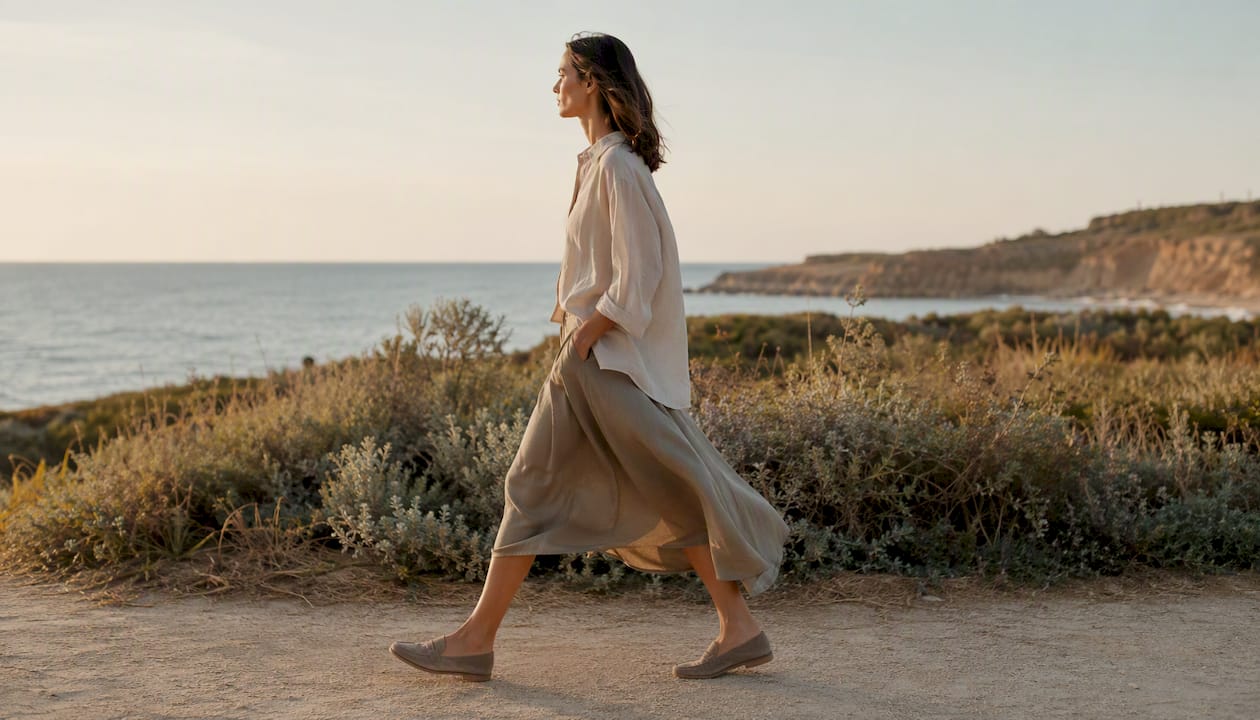
Midi skirt + fitted ribbed knit + suede penny loafers. Midi length with a slim loafer is the formula Vogue UK identifies as summer-friendly when the skirt is in a light fabric — linen, cotton voile, or a fluid crepe. A suede loafer in chestnut or tan keeps the palette warm.
-
Bermuda shorts + fitted body + backless loafers. The Bermuda short sits at the knee, which means the loafer needs to be low-profile — a backless or ruched style works well here because it reads as relaxed without losing shape. A crossbody bag keeps the look easy.
-
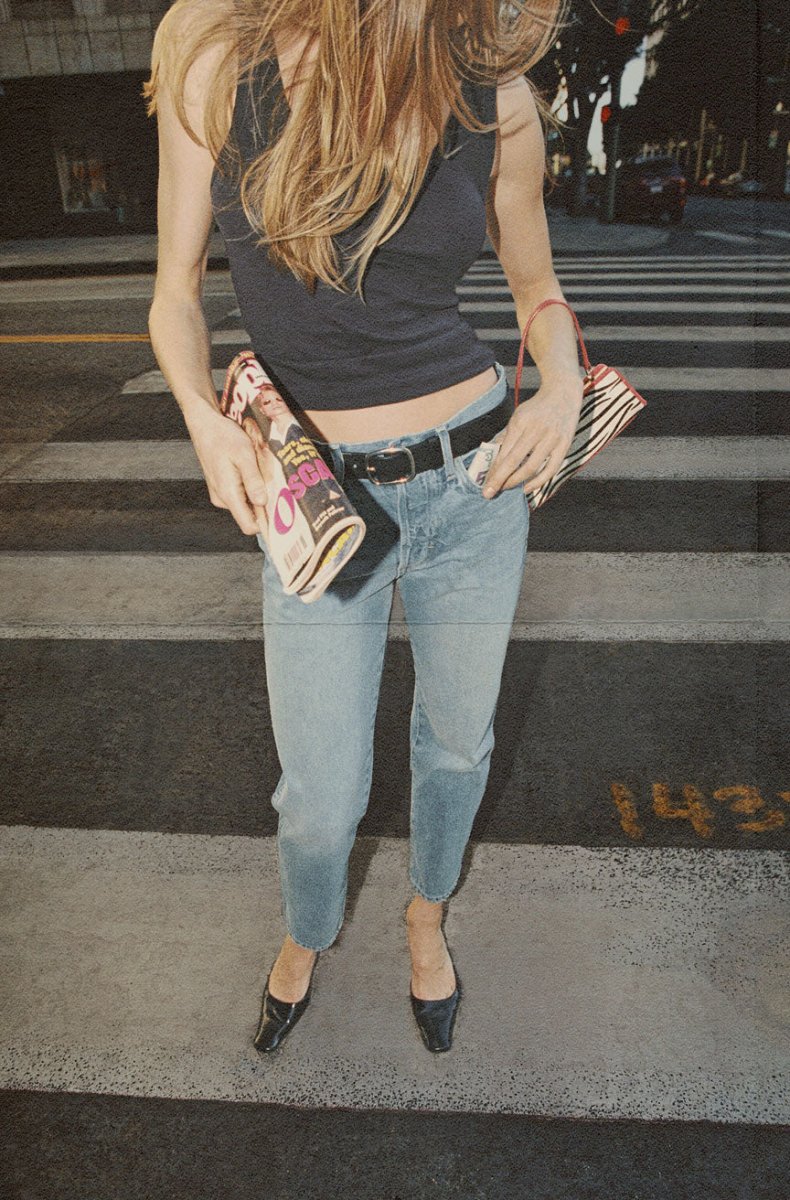
Slip dress + tonal loafers + white ankle socks. The sock is intentional, not an afterthought. White ankle socks with a slip dress and a loafer in a similar tone to the dress (nude, camel, or ivory) is a street-style formula that photographs well and wears even better in warm weather.
-
Quarter-zip knit + wide-leg trousers + loafers. A WhoWhatWear-endorsed formula for creative offices and casual Fridays. The quarter-zip reads smarter than a standard sweatshirt; wide trousers keep the proportions relaxed. Choose a loafer with a lug sole for a contemporary edge.
-
Tailored shorts + crisp shirt + penny loafers. Tailored shorts at mid-thigh with a tucked shirt and a classic penny loafer is the warm-weather office formula. A structured leather bag and a simple gold chain complete it without overloading.
-
Flowy maxi dress + flat suede loafers. Counter-intuitive but effective: a flat loafer under a maxi dress works when the dress has movement and the loafer is slim. Avoid chunky soles here — the volume fights the dress’s drape. The Second Female Lelou dress is the kind of fluid silhouette this formula calls for.
-
Jeans + elevated tee + loafers + structured bag. The simplest formula on this list, and the one that relies most on the loafer to do the work. Loafers elevate casual staples like jeans and tees when the accessories are considered — a quality leather bag and a good loafer are all this look needs.
Pro Tip: Chunky lug-soled loafers need a shorter hem to balance their weight. If you are wearing a midi skirt with a chunky loafer, add a slit or choose a style with movement — a static midi hem and a heavy sole can shorten the leg visually.
Which loafer silhouette suits which outfit?
The shape, sole, and material of a loafer change an outfit’s entire register. Here is a quick guide to the six most common silhouettes and where they work best.
-
Penny loafer (slim profile, low heel, leather upper): the most versatile silhouette. Works with tailored trousers, jeans, midi skirts, and blazer dresses. The clean toe and low profile suit both formal and casual contexts equally.
-
Tassel loafer (slim to medium profile, decorative tassel, often leather): reads slightly more dressed-up than a penny. Best with straight-leg jeans, cropped flares, and tailored shorts. The tassel adds personality without adding bulk.
-
Chunky or lug-soled loafer (thick rubber or stacked sole, often leather or suede): needs a shorter hem to balance its weight, per Vogue UK’s proportion guidance. Pairs well with mini skirts, tailored shorts, and cropped trousers. Avoid with flowing maxis or long midis.
-
Backless loafer (open heel, often a mule silhouette): relaxed and warm-weather-friendly. Best with Bermuda shorts, wide-leg linen trousers, and slip dresses. The open heel reads casual, so balance with a more structured top or bag.
-
Ruched or soft loafer (gathered leather or suede upper, softer construction): treat these like a ballet flat in terms of proportion — they suit everything from midi skirts to wide-leg trousers. Their softness works particularly well with fluid fabrics.
-
Suede or woven loafer (textured upper, often in earthy tones): the texture does the styling work. Suede in tan, chestnut, or brown reads less formal than polished leather and pairs naturally with linen, cotton, and knitwear. Woven styles suit warm-weather looks and add artisanal character.
How to wear loafers in 2026: what is new this season
The loafer’s current moment is not a trend spike — it is a consolidation. Street-style and editorial coverage from WhoWhatWear show a shift back toward slimmer, softer silhouettes alongside continued interest in ruched and textured designs. Here is what is working right now:
- Slim and soft silhouettes are back alongside chunky styles. The market is not choosing one over the other — both are relevant, and the choice depends on the outfit’s proportions rather than trend allegiance.
- Suede in warm neutrals (tan, chestnut, brown) is the warm-weather material of the moment. Vogue UK notes that suede and two-tone styles read as summer-friendly and less formal than polished leather.
- Backless and ruched styles remain strong. They work particularly well with the Bermuda short and linen trouser combinations that dominate warm-weather dressing.
- Sock styling is back as a deliberate choice. White ankle socks with loafers are a street-style staple; tonal crew socks in autumn and winter add warmth without looking accidental.
- Two-tone and contrast-stitch loafers are appearing across European collections, adding visual interest without requiring a bold colour commitment.
For warm months, the Second Female summer 2026 collection offers pieces that pair naturally with suede and woven loafers — fluid dresses and relaxed linen separates that suit the lighter loafer silhouettes trending now.
Pro Tip: For summer, choose suede in a lighter neutral rather than polished black leather. Suede breathes better, reads more relaxed, and works with the season’s linen and cotton fabrics in a way that patent or high-shine leather simply does not.
Proportions, hems and socks: the dos and don’ts
Most loafer styling mistakes come down to one of two things: the wrong hem length or an unconsidered sock choice. These rules resolve both.
Hem length:
- Ankle-grazing trousers are the loafer’s best friend — the exposed ankle elongates the leg and lets the shoe read clearly.
- Cropped flares work because the flare hem and the loafer toe balance each other; avoid a full-length flare that covers the shoe entirely.
- Mini skirts and shorts pair well with any loafer silhouette, but chunky soles need the shorter hem to avoid looking bottom-heavy.
- Midi skirts work with slim or soft loafers; add a slit or choose a fluid fabric if you are pairing a midi with a chunkier sole.
- Full-length wide-leg trousers suit slim and backless loafers; a chunky sole can disappear under the fabric and lose its effect.
Socks:
- Sockless works for backless and ruched styles in warm weather, and for slim loafers with tailored trousers year-round.
- White ankle socks with loafers are an intentional styling choice, not a compromise — Vogue UK confirms they remain a street-style favourite in summer pairings.
- Tonal crew socks (matching the trouser or skirt colour) in cooler months add warmth and look deliberate rather than accidental.
- Avoid sports socks or thick hiking socks — the bulk fights the loafer’s inherent refinement.
Body shape and balance:
- If you carry more volume through the hip, a slim loafer with an ankle-grazing trouser creates a long, unbroken line that flatters.
- For a petite frame, a low-profile loafer (slim penny or soft ruched style) keeps proportions balanced; a very chunky sole can overpower a smaller frame.
- A taller frame can carry a chunkier lug sole with ease — pair with a mini or tailored short to show the shoe off.
An editorial checklist for choosing quality loafers
A well-made loafer is a ten-year investment. A poorly made one is a six-month disappointment. These are the construction details worth checking before you buy.
- Full-grain leather upper: the most breathable and durable option. 7News confirms that full-grain leather outlasts corrected-grain or low-grade “genuine” leather, which is often coated and prone to cracking. Consistent stitch density across the upper is a reliable quality signal.
- Stacked leather heel: a stacked heel (layers of leather rather than a moulded rubber block) indicates considered construction and can be resoled.
- Genuine leather lining: a leather lining breathes, moulds to the foot over time, and resists odour better than synthetic alternatives.
- Sole type: leather soles are the most traditional and resoleable; rubber soles offer better grip and suit Australian conditions (wet pavements, uneven surfaces); lug soles add traction and a contemporary edge. For year-round Australian wear, a rubber or crepe sole is often the most practical.
- Goodyear welt construction: a Goodyear-welted loafer can be resoled multiple times, which is what makes Harper’s Bazaar Australia’s recommended pairs a genuine long-term investment. These typically need a 3–5 wear break-in period to conform to the foot.
- Fit at first wear: the shoe should feel snug but not tight across the widest part of the foot. Some stiffness across the vamp (the front of the shoe) is normal in full-grain leather; sharp pain at the heel or toe is not — avoid any pair that causes immediate discomfort.
For a deeper look at leather grades and what they mean for longevity, the YDA UK leather buyer’s guide is a useful reference.
Pro Tip: For Australian climates, prioritise a rubber or crepe sole over a leather sole for everyday wear. Leather soles are beautiful but slip on wet tiles and wear quickly on concrete — a rubber sole keeps the shoe in rotation year-round without sacrificing the upper’s quality.
Simple care tips to keep loafers looking good year after year
Quality loafers reward consistent, simple maintenance. These steps apply to both leather and suede.
- Clean after each wear: wipe leather loafers with a soft cloth to remove dust and surface dirt. For suede, use a suede brush in one direction to lift the nap.
- Condition leather regularly: a good leather conditioner (applied every 4–6 weeks in regular rotation) keeps the upper supple and prevents cracking. Avoid petroleum-based products on fine leather.
- Waterproof suede before first wear: a suede protector spray applied before the first outing creates a barrier against moisture and staining. Reapply every few months.
- Use shoe trees: cedar shoe trees absorb moisture, maintain the loafer’s shape, and prevent creasing across the vamp. This is especially important for full-grain leather.
- Rotate your pairs: wearing the same loafer every day accelerates sole wear and prevents the leather from drying out between wears. Two pairs in rotation last significantly longer than one worn daily.
- Avoid prolonged wet wear: if loafers get wet, stuff them with newspaper and allow them to dry naturally away from direct heat. Direct heat (radiators, sunlight) dries and cracks leather quickly.
- Check soles and heels regularly: a worn heel tip is inexpensive to replace at a cobbler; a fully worn-through heel is a more costly repair. Catching it early extends the shoe’s life considerably.
An editor’s perspective on loafers
There is a particular kind of confidence that comes from a shoe that requires no explanation. Loafers have that quality — they are neither trying too hard nor opting out. What I find most interesting, having followed European collections through Edito’s curation for some time, is how consistently French and Scandinavian designers return to the loafer as a wardrobe anchor rather than a seasonal accent. The Laurence Bras spring/summer 2026 collection is a case in point: fluid separates designed to be worn with flat, considered footwear. The loafer is not a trend in that context. It is a philosophy.
Edito’s curated edit: loafers and the pieces that complete them
Finding loafers that hold their shape, their colour, and their character across seasons is harder than it sounds — which is precisely where Edito’s curation earns its place. Edito selects from European labels with a genuine commitment to construction and wearability, which means the pieces in its edit are chosen to work together rather than in isolation.
The Second Female Wilda Top in Cream is a strong example: a versatile top that moves from a tailored trouser look to a summer skirt pairing without effort. Pair it with the Soeur Acapulco Shorts for a warm-weather loafer formula that is ready to wear. Edito ships across Australia with straightforward returns, so finding the right combination is a low-risk process. Browse the current edit at Edito to see what is in season now.
Sources
- How to Wear Loafers (Glamour)
- How to wear loafers in 2026 (7news)
- Summer loafer outfits (Vogue UK)
- Best loafers for women (Harper’s Bazaar Australia)
- 7 spring outfits with loafers (WhoWhatWear)
FAQ
What goes well with loafers for women?
Loafers pair well with tailored trousers, straight-leg jeans, midi skirts, Bermuda shorts, slip dresses, and blazer dresses. The key is matching the loafer’s sole weight to the outfit’s proportions — slim loafers suit longer hems, while chunky soles work best with shorter lengths.
How do you wear loafers in 2026?
Suede in warm neutrals, backless styles, and slim ruched silhouettes are the strongest directions in 2026, alongside a return to intentional sock styling. Pair suede loafers with linen separates or fluid dresses for warm weather; add tonal crew socks with tailored trousers in cooler months.
What kind of dress looks good with loafers?
Slip dresses, midi dresses in fluid fabrics, and blazer dresses all work well with loafers. A slim or soft loafer suits a maxi or midi silhouette; a chunky lug sole pairs better with a mini dress or a dress with a defined waist and shorter hem.
What are some quality loafers worth investing in?
Look for full-grain leather uppers, consistent stitch density, genuine leather linings, and Goodyear welt construction — these details indicate a loafer that can last 5–10 years with proper care. Edito’s curated European edit includes labels selected for exactly these construction qualities.
Recommended
- Soeur Spring Summer 2024 Collection | French Fashion Trends | Australia | Edito Boutique
- Laurence Bras Autumn Winter 2024 | French Fashion | Australia | Edito Boutique
- Soeur Autumn Winter 2026 | French Fashion | Australia | Edito Boutique
- Soeur Autumn Winter 2024 Collection | French Designer Fashion | Australia | Edito Boutique