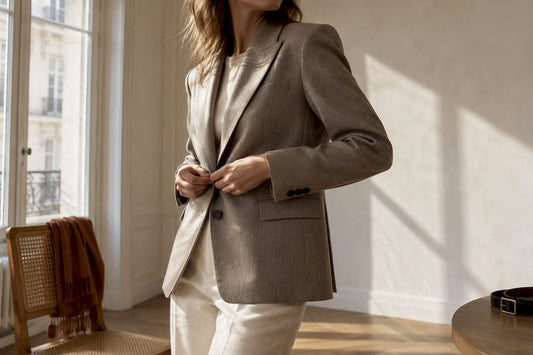

A blazer fits well when the shoulder seam sits exactly at your natural shoulder point, the sleeve ends at your wrist bone, the front closes without pulling or gaping, you can move freely through the arms and back, and the hem lands somewhere between hip and mid-thigh depending on the cut. Oversized and cropped silhouettes deliberately break several of these rules, and that is intentional, not a flaw.
TL;DR:
- Proper blazer fit depends on shoulder seam placement, sleeve length at the wrist bone, and the front closing smoothly without gaping or pulling.
- Movement tests, such as raising arms or sitting, reveal fit issues that static checks might miss, especially for shoulder and back width.
- Different body types require tailored adjustments in length, waist emphasis, and shoulder structure to achieve a flattering and comfortable fit.
- Sleeve and hem alterations are usually affordable and effective, while shoulder or back width issues often require trying a different size or cut.
- Knowing your measurements and testing for movement in motion helps ensure the blazer fits well for both style and comfort.
Table of Contents
- Four fit checks to run before you buy
- Blazer fit by body type and proportion
- Testing blazer fit properly, not just on the hanger
- Styling formulas that make any blazer fit look intentional
- Common blazer fit problems and how to fix them
- Fit expertise behind this guide
- Why fit matters more than ever in 2026
- Shop the fit: where to start with Edito
- FAQ
- Sources
Four fit checks to run before you buy
A blazer can look flawless on a hanger and fail every meaningful test the moment you put it on. Four checks catch nearly every common fit problem, and each takes seconds.
- Shoulder seam placement: the seam should sit precisely where your shoulder curves down into your arm, not before it (which creates a boxy overhang) and not behind it (which pulls the jacket off true and causes wrinkling across the upper back).
- Sleeve length: a tailored sleeve should finish right at the wrist bone, exposing perhaps half a centimetre of shirt cuff. According to sizing and proportion guidance for women’s clothing, blazer sleeves that stop short of this point read as too small, while sleeves that cover the wrist bone entirely tend to shorten the arm visually and swamp the hand.
- Torso and buttoning: when you close the front button, the fabric should lie flat. A diagonal pull line radiating from the button means the blazer is too tight through the bust or ribcage; visible gaping between the buttons means it’s too loose there. Structured, tailored blazers are built with almost no ease at the waist, while relaxed and boxy styles are deliberately looser throughout, so the same pull that would signal a problem in a fitted jacket is simply the design in an oversized one.
- Jacket length: most tailored blazers are cut to end around the hip bone or just below it, a length that works for most torso proportions. Petite frames and shorter torsos often look better in a slightly shorter length, finishing at or just above the hip, while longer torsos can carry a hem that extends further down the thigh without looking unbalanced, a distinction that measurement guidance for women’s clothing also flags as a key proportion consideration.
Beyond these four static checks, a handful of simple movements expose problems a mirror alone will miss. Cross your arms over your chest: if the back seam strains or the shoulders ride up, the blazer is cut too narrow through the upper back. Reach both arms forward as if typing, then raise them overhead: a well-cut sleeve allows this without the cuff riding halfway up your forearm. Sit down and lean forward slightly to see whether the jacket pulls tight across the shoulder blades. None of these checks require a tailor, just a few seconds of deliberate movement in the fitting room.
Blazer fit by body type and proportion
The four checks above describe correct fit on any frame, but how you apply them changes depending on your proportions. The right length, waist shaping and shoulder structure vary meaningfully from one body type to the next, and knowing which adjustments matter for yours saves a lot of trial and error.
- Petite frames generally suit a shorter blazer length, finishing at or just above the hip bone rather than extending into longline territory, which can visually shorten the leg and overwhelm a smaller frame. A nipped waist or cropped cut tends to flatter more than a boxy, oversized shape.
- Tall and long-torso frames can carry a longer blazer length without it looking excessive, and a cropped style, if chosen, works best paired with high-waisted trousers or a skirt to avoid visually shortening an already lean torso.
- Hourglass shapes benefit from blazers that preserve waist definition rather than skim past it. Tailoring that nips the waist in slightly, even by a centimetre or two, tends to make the biggest visible difference for this shape.
- Pear shapes are often balanced by a blazer with a touch more structure through the shoulder and a length that extends slightly past the widest point of the hip, which softens the contrast between shoulder and hip width rather than cutting across it.
- Inverted triangle and broader-shouldered frames generally look more balanced in blazers with softer, less padded shoulder construction and a smooth, closely set sleeve head, since heavy padding exaggerates width that’s already there.
- Fuller figures are better served by prioritising armhole shape and a generous sleeve cap over simply buying a larger overall size. Sizing up purely to accommodate the bust often leaves the shoulders, armholes and waist oversized elsewhere, which creates new fit problems instead of solving the original one.
Whatever your proportions, the underlying principle doesn’t change: a blazer should follow the lines of your body rather than fight them. Functional fit matters well beyond fashion, too. Anthropometric mismatch in fitted garments is a documented problem, and research from the University of Canberra found that 68% of female Australian Defence Force personnel reported ill-fitting body armour linked to musculoskeletal pain and interference with movement. Blazers carry lower stakes than protective equipment, but the same underlying lesson holds: garments cut without proper regard for women’s actual proportions create discomfort that no amount of styling can disguise.
If you regularly shop European labels, checking the brand’s own size chart before you buy saves considerable guesswork, since cut and sizing conventions vary noticeably between French, Spanish and other European ranges. Our size conversion guide for European designer labels walks through exactly how to measure yourself and translate that into the right size across the brands we carry, and our guidance on Hartford sizing covers the specifics for that label in particular.
Testing blazer fit properly, not just on the hanger
A blazer that looks correct while standing still can still fail the moment you move, sit or reach, so the real test happens in motion.
- Cross your arms firmly over your chest. Any sharp pulling across the upper back or shoulders signals a cut that’s too narrow there.
- Reach forward and up, mimicking typing, then lifting both arms overhead. Watch whether the sleeve cuff rides up your forearm, a sign the sleeve is too short or too tight to allow a normal range of motion.
- Sit down, then lean forward slightly. A jacket that strains across the back in this position will be uncomfortable for a full day of wear, even if it looked fine standing up.
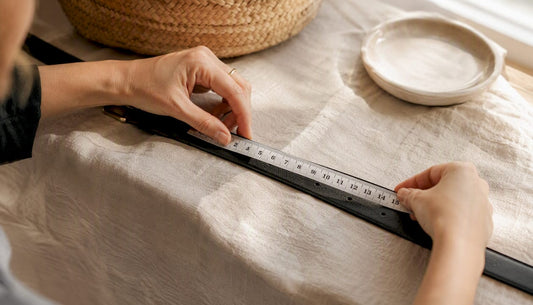
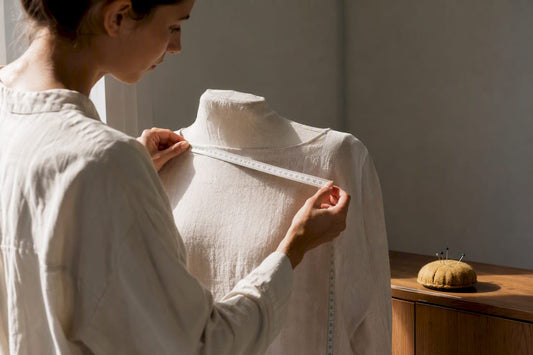
- Record your measurements (shoulder seam to shoulder seam, sleeve length from shoulder to wrist, and chest and waist circumference) and compare them against the brand’s own size chart rather than relying on a general size label, since cut varies considerably between labels.
Movement tests catch problems a static fitting cannot, which is why retail and tailoring guidance generally treats them as the more reliable measure of fit before purchase. How much ease you should expect also depends on the style: structured, fully tailored blazers are cut with close to no spare room through the body, relaxed styles allow a little more, and oversized blazers are deliberately generous everywhere, so a loose fit there isn’t a fault to correct. Fabric matters too. A blazer with a touch of stretch in the weave will move with you in ways a rigid, structured suiting fabric won’t, which changes how much visual ease you actually need for comfortable movement.
A small amount of ease through the shoulders and upper back is normal and necessary for a blazer to move with you rather than restrict you. Garments cut too close to the body for the sake of a sharp line can look correct in stillness and still fail every movement test that matters, a tension that occupational fit research highlights in a different but related context: fit that ignores how a body actually moves creates discomfort regardless of how precise the measurements look on paper.
If a jacket fails a movement test but fits perfectly everywhere else, that’s usually a case for alteration rather than a different size. If it fails in the shoulders or across the back specifically, no amount of tailoring will comfortably fix it, and sizing up or trying a different cut is the better path.
Styling formulas that make any blazer fit look intentional
Once you’ve confirmed the fit itself is correct, how you style a blazer determines whether that fit reads as deliberate or accidental. The formula changes depending on the silhouette you’re working with.
- Fitted, nipped-waist blazers pair naturally with tapered or straight-leg trousers, letting the jacket’s defined shape carry the silhouette without competition from a loose bottom.
- Oversized blazers need a slim base underneath, think fitted trousers or a slim skirt, so the proportion contrast looks considered rather than simply baggy throughout.
- Cropped blazers work best with high-waisted trousers, a high-waisted skirt, or over a dress, since the cropped hem needs something to visually meet rather than leaving a gap of exposed torso.
- Belting an oversized or relaxed blazer at the natural waist is a simple way to borrow the definition of a fitted silhouette without buying a different jacket, and it’s a technique stylists frequently suggest for exactly that reason. Our belt size guide covers how to measure for the right fit there.
Fabric changes how any of these formulas read in practice. Structured weaves such as hopsack and worsted suiting blends hold their shape and tailor cleanly into a defined waist, which is partly why outerwear trend coverage points to structured tailoring as the easier route to a refined silhouette. Linen and softer, more fluid weaves drape rather than hold a line, which suits a more relaxed, oversized approach but needs a different tailoring technique if you want it fitted. A blazer in a crisp white blouse worn underneath, our Alexandre blouse is one example of a fabric and colour pairing that works well against tailored suiting, adds a layer of visual contrast that makes the fit of the jacket itself read more clearly.
Pro Tip: If you’re unsure whether a blazer should be fitted or relaxed for your frame, try it belted first: if the belted version looks more balanced, size down or have the waist taken in; if it looks forced, the relaxed cut was the right call.
Through Brisbane’s warmer months, a lighter weave blazer worn open over a simple top does the work of both the structure and the coverage without the heat of a fully lined jacket, while cooler weeks suit a more structured, lined style that holds its shape through a full day at the office or travelling.
Common blazer fit problems and how to fix them
Most blazer fit complaints fall into a short list of recurring problems, and most have a clear fix, provided you know which issues are worth paying a tailor for and which aren’t.
- Shoulder overhang or pinching: this is the one alteration to avoid attempting cheaply, since moving a shoulder seam is a complex, structural change. Fit specialist guidance advises prioritising other, less invasive alterations first and treating shoulder problems as a sign to try a different size or cut rather than an easy fix.
- Sleeves too long or too short: sleeve shortening is one of the simplest and most cost-effective alterations available, and it’s usually worth doing rather than living with a cuff that sits wrong.
- Gaping at the button: this generally means the jacket is cut too loose through the bust or ribcage for your frame. A tailor can take in the side seams, though if the gap is significant, a smaller size is often the more reliable fix.
- Pulling across the back: this points to a cut that’s too narrow through the shoulders or upper back, the same category of problem as shoulder overhang, and best resolved by trying a different size rather than alteration.
- Hem sitting at the wrong length: shortening or lengthening a hem is a straightforward, affordable adjustment that reliably improves proportion once the rest of the fit is confirmed.
As a general rule, sleeve length and hem length are the two most worthwhile alterations because they’re affordable and make a visible difference, while shoulder and back width are the two to treat as deal breakers rather than projects, since altering them well is both difficult and costly. If a blazer needs more than one of these corrections at once, that’s usually the clearer signal to exchange it for a different size rather than commit to multiple rounds of tailoring. For readers who want a closer look at how fabric and structure interact with fit before committing to alterations, this guide to unstructured blazer fit from tailoring specialists RON & RICH covers the construction side of the question well.
Fit expertise behind this guide
This guide draws on fit-first editorial standards and the broader expertise we bring to curating European designer fashion for Australian women. Getting blazer fit right matters more with certain constructions than others: a single-breasted, lightly structured blazer behaves differently on the body than a double-breasted or fully structured one, and the checks above apply to both, just with slightly different tolerances for ease.
Three pieces from our current edit illustrate the fit principles covered here in practice. The Fique Blazer shows a tailored shoulder line and waist shaping that reward the checks described above, while the Martha Blouse in White and Chorus Blouse in White/Black demonstrate how a well-cut layering piece should sit under a blazer without adding bulk through the shoulders or sleeves. We also stock the Bash blazer by ba&sh as a further example of considered European tailoring within our edit.
Customers are often advised on European sizing conventions, as cut and sizing can vary between French and European labels, with try-on guidance and straightforward return policies commonly supporting the process when a size isn’t quite right.

Why fit matters more than ever in 2026
Fit has become the real story in tailoring this year, more than any single trend. Current outerwear coverage points to relaxed tailoring holding its ground alongside a renewed appetite for hourglass, more cinched blazer shapes, two silhouettes that ask completely different things of the same four-point fit check. A relaxed blazer earns its ease deliberately; an hourglass one earns its precision the same way. Neither is more correct than the other.
What doesn’t change is the underlying standard: comfort, proportion and the quiet confidence of a jacket that moves the way you do. A blazer chosen for your actual shape, rather than for the shape on the model, is the one you’ll reach for long after the trend that sold it to you has moved on.
— Mickael Martin
Shop the fit: where to start with Edito
Finding a blazer that fits well without weeks of alterations starts with choosing the right cut for your frame from the outset, which is exactly what our curated edit of European tailoring is built for. We select pieces for considered construction, from shoulder shaping to sleeve finish, so the fit checks in this guide hold true straight off the rack more often than not.

- Browse the Fique Blazer for an example of structured European tailoring with defined waist shaping.
- Explore our full clothing collection to compare fitted, relaxed and cropped silhouettes side by side.
- Pair your blazer with pieces from our tops and pants ranges to build the proportion formulas covered in this guide.
If you’re shopping remotely and want extra confidence before committing, tools like the virtual try-on features covered in this overview of virtual fitting rooms can help bridge the gap between an online listing and how a cut will actually sit on you.
FAQ
How should a blazer fit on a woman?
A well-fitting blazer has shoulder seams that sit exactly at your natural shoulder point, sleeves ending at the wrist bone, a front that closes without gaping or pulling, and enough room through the back and arms to move freely. The right proportions also depend on your torso length and the style, since oversized and cropped blazers are designed to deviate from these rules deliberately.
Are blazers still in style in 2026?
Yes, blazers remain a core outerwear piece, with current trend coverage showing relaxed tailoring continuing alongside a renewed interest in more fitted, hourglass-shaped blazers. Both silhouettes are current, so the better question is which fit suits your frame and the occasion.
What body types look best in a blazer?
Every body type can wear a blazer well, provided the cut, length and shoulder structure are matched to that frame rather than chosen generically. Petite frames generally suit shorter lengths and a nipped waist, hourglass shapes benefit from waist definition, and broader shoulders look more balanced in softer, less padded shoulder construction.
Should a blazer fit tight or loose?
Neither tight nor loose is inherently correct, it depends on the style: tailored blazers are cut with very little ease through the waist, while relaxed and oversized styles are designed with deliberate extra room throughout. The real test isn’t tightness but movement, since a blazer that restricts your arms or pulls across the back when you move is poorly fitted regardless of how it looks standing still.
Sources
- SizeChart: Women’s clothing proportions and measurement guidance (Australia)
- Kerry Pietrobon Consulting — fit specialist profile
- Fashion Weekly — Outerwear trends in Australia: coats, jackets and how to wear them
- Are female soldiers satisfied with the fit and function of body armour? — University of Canberra research