
The most versatile blazer outfit pairs a tailored jacket with a plain T-shirt and straight-leg or wide-leg jeans, a formula that moves from desk to dinner with one shoe swap. For a wardrobe that covers both ends of the 2026 blazer story, a classic, sharply tailored neutral blazer anchors the versatile outfit formula many rely on, while a cropped, structured blazer brings the proportion this season’s trend reports keep pointing to. Together, they cover casual weekends, the office, and evenings out across every season.
TL;DR:
- The shoulder seam of a blazer must sit exactly at the edge of the shoulder for proper fit, with other adjustments being secondary.
- Linen and cotton blazers are ideal for warm weather, while wool and tweed work better in cooler seasons, each layered appropriately.
- Pairing an oversized blazer with fitted bottoms or belted styles can create a balanced silhouette and prevent a shapeless look.
- Cropped blazers work best with high-waisted trousers or skirts, while a longline or belted blazer can streamline taller or fuller torsos.
- Building a capsule wardrobe with one classic neutral blazer and one trend-forward cropped style covers most outfit needs for years.
Table of Contents
- 10 blazer outfit ideas women can copy right now
- Blazer types and when to wear them
- Fit and proportion rules that actually work
- Fabrics and layering for every season
- Styling tricks and quick swaps
- Tips for styling blazers for different body types
- Edito’s perspective: build a blazer-led capsule wardrobe
- Shop the edit: Holly Blazer and Fique Blazer
- Sources
- FAQ
10 blazer outfit ideas women can copy right now
A blazer earns its place in a wardrobe when it can do more than one job. These ten formulas cover the full spread, from Saturday errands to a black-tie invitation, and each one leans on a proportion trick rather than a new purchase.
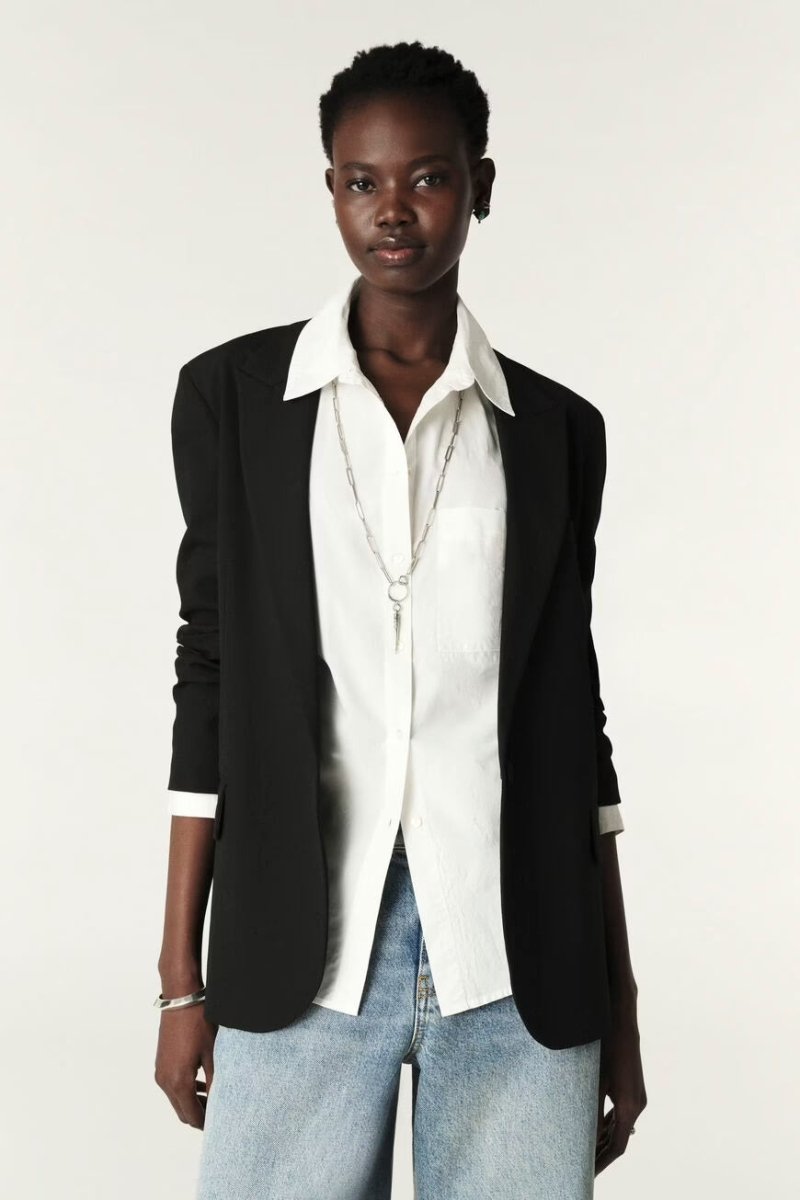
- Blazer, tee, straight-leg jeans. This is the formula stylists return to again and again because the plain tee keeps things relaxed while the jeans give the blazer somewhere structured to land. Wear the Holly Blazer here for a neutral that goes with almost any denim wash.
- Blazer as a dress. Belt an oversized blazer at the natural waist, add sheer tights and boots, and the jacket becomes the entire outfit. Check the hem hits mid-thigh before you commit; anything longer starts to look like you forgot your trousers.
- Blazer over a midi dress. Slip a fitted blazer over a slim midi and you get office-appropriate coverage without losing the dress’s shape. A cropped style like the Fique Blazer works particularly well here since it stops at the hip rather than swamping the silhouette.
- Oversized blazer, wide-leg trousers. Two loose pieces together sound risky, but a defined shoulder and a cinched sleeve keep the proportions readable. Roll the cuffs twice to show a slice of wrist.
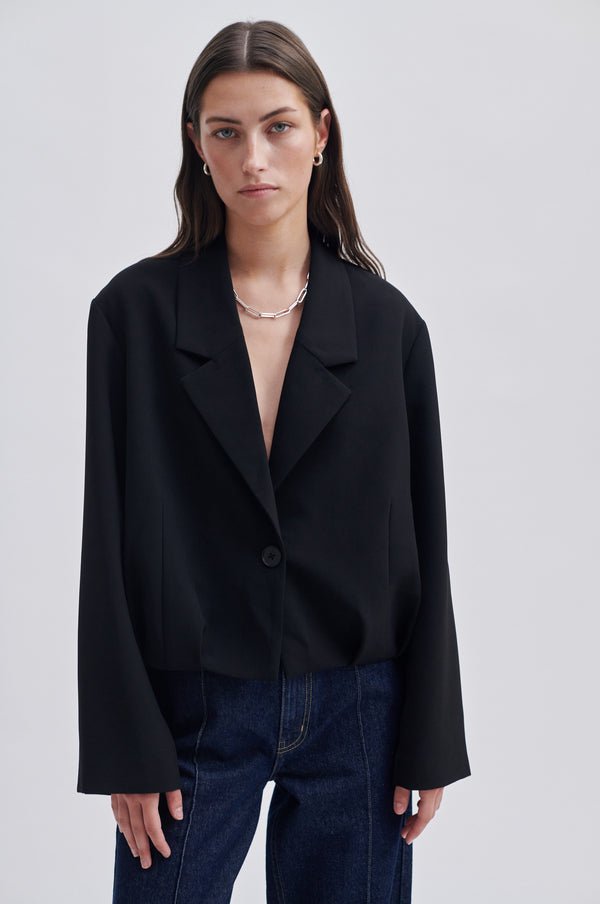
- Cropped blazer, high-waisted trousers. The waistband disappears under the jacket, so the outfit reads as one clean line from bust to ankle. This pairing suits the Fique Blazer’s shorter cut better than a longline coat-style jacket.
- Blazer, bermuda shorts, loafers. Bermuda shorts under a blazer read smart rather than sporty, especially with knee-high socks in cooler months or bare legs in Queensland summer.
- Tuxedo blazer, satin camisole, tailored pants. Swap the tee for a slip of silk or satin and the same daytime formula becomes evening-ready without any extra effort.
- Blazer over a sweatshirt. Layering tailoring over something soft is one of the easiest ways to dress down a sharp jacket, and it keeps you warm without reaching for a coat.
- Monochrome blazer and trouser suiting. One colour head to toe, broken up only by shoe or bag, is the cleanest way to look put together with zero decision fatigue on a Monday morning.
- Blazer over a satin or pleated skirt. The structure on top balances the movement below, and it is a reliable formula for anything from a work function to a long lunch.
Pro Tip: Keep one blazer in your everyday rotation buttoned and one permanently open. A closed jacket reads formal; the same jacket worn open over a tee looks like you didn’t try, which is exactly the point.
Blazer types and when to wear them
Not every blazer does the same job, and knowing the silhouette differences saves you from buying three jackets that all solve the same problem.
- Cropped: stops at or above the hip; pairs best with high-waisted trousers, wide-leg jeans, or a midi skirt.
- Oversized: broad shoulder, roomy body; needs a slim bottom or a belt to avoid swallowing your frame.
- Belted: waist definition built in; works over almost anything, from jeans to a slip dress.
- Collarless: cleaner, more minimal neckline; suits layering over knits or a simple camisole.
- Double-breasted: more formal by nature; best with tailored trousers or a pencil skirt.
- Leather or linen: leather for a statement evening piece, linen for warm-weather tailoring that breathes.
Blazer trends for 2026 are splitting two ways: neat, waist-defined jackets on one side, and relaxed, broad-shouldered oversized styles on the other. Both directions are legitimate, which is really good news if you already own one and are wondering whether it’s “in.”
Fit and proportion rules that actually work
The shoulder seam is the one non-negotiable fit point on any blazer. It should sit right at the edge of your shoulder, not creeping down your arm or pulling up towards your neck. Everything else, length, sleeve, waist, can be adjusted; a shoulder that’s wrong on a jacket usually can’t be.
- If the blazer is oversized, pair it with something fitted below the waist to keep the outfit from looking shapeless.
- If the blazer is fitted, wide-leg trousers or a fuller skirt balance the sharpness.
- Belt an oversized blazer at the natural waist to create shape instantly.
- Roll the sleeves once or twice to show wrist and shorten a jacket that runs slightly long.
Pro Tip: Stand sideways in front of a mirror with the blazer buttoned. If you can’t see a gap between the lapel and your chest, size up rather than forcing it closed.
Fabrics and layering for every season
Fabric choice decides whether a blazer works with your climate, not just your outfit. Linen and lightweight cotton blends carry you through warmer months, especially paired with a silk camisole or worn over bare skin. Wool, tweed, and suede take over once temperatures drop, layered over a fine-knit jumper or a fitted shirt for extra warmth without bulk.
- Warm weather: linen or cotton blend, worn over a camisole or slip dress.
- Cool weather: wool, tweed, or suede, layered over a knit or shirt.
- Statement piece: leather, best worn as the outfit’s single focal point.
- Care: brush wool blazers after wear, air out between uses, and have tailoring pressed rather than home-ironed to protect the canvas underneath.
Styling tricks and quick swaps
None of these cost anything beyond five minutes and a mirror.
- Roll or push up the sleeves to relax a stiff, boardroom-formal blazer.
- Belt an oversized blazer with something narrow at the waist; a wide belt overwhelms a lightweight fabric.
- Flip the collar up for a sharper, slightly editorial edge.
- Drape the blazer over your shoulders, sleeves unworn, for an effortless dinner-out finish.
- Swap sneakers for heels, or a tote for a mini bag, to shift the same outfit from casual to dressed-up in seconds.
Pro Tip: A blazer draped rather than worn only works if it’s structured enough to hold its shape. A soft, unlined jacket will slide off within the hour.
Tips for styling blazers for different body types
A blazer should follow the line of your shoulders and taper in at the point where you want visual waist definition, wherever that falls on your frame. If you’re petite, a cropped blazer avoids the jacket eating into your leg line, and rolling the sleeve keeps proportions in check. If you carry more length through your torso, a longline or belted style creates a horizontal break that shortens the eye’s journey down.
For a fuller bust, a single-button or open front avoids strain across the chest, while a shawl or notch lapel draws the eye outward rather than down. For narrower shoulders, structured shoulder seams or a slight shoulder pad add width without looking exaggerated. If you’re broader through the hips, a blazer that ends just above or well below the widest point, rather than right at it, tends to sit more comfortably; pairing it with wide-leg trousers or a flowing skirt keeps the silhouette balanced rather than boxy.
None of this is about hiding anything. It’s about choosing the cut that makes the jacket sit the way it was actually designed to, which is really the whole point of tailoring.
Edito’s perspective: build a blazer-led capsule wardrobe
Buy one classic and one directional blazer, and you’ve solved most of your outfit decisions for the next several years. A tailored neutral blazer handles work, travel, and anything requiring a bit of polish; a cropped or belted style covers the trend-forward looks and weekend wear. Capsule wardrobe thinking backs this up: fewer, better pieces that combine easily reduce decision fatigue far more than a closet full of one-off buys ever will.
— Mickael Martin
Shop the edit: Holly Blazer and Fique Blazer
Edito is the alternative to sifting through fast-fashion racks for a blazer that actually holds its shape after six wears. The Holly Blazer is the classic, sharply tailored neutral that anchors nearly every formula above, jeans and a tee, tailored trousers, a satin skirt for evening. The Fique Blazer brings the cropped, structured proportion that 2026’s trend reports keep circling back to, ideal for high-waisted trousers or layering over a midi dress.
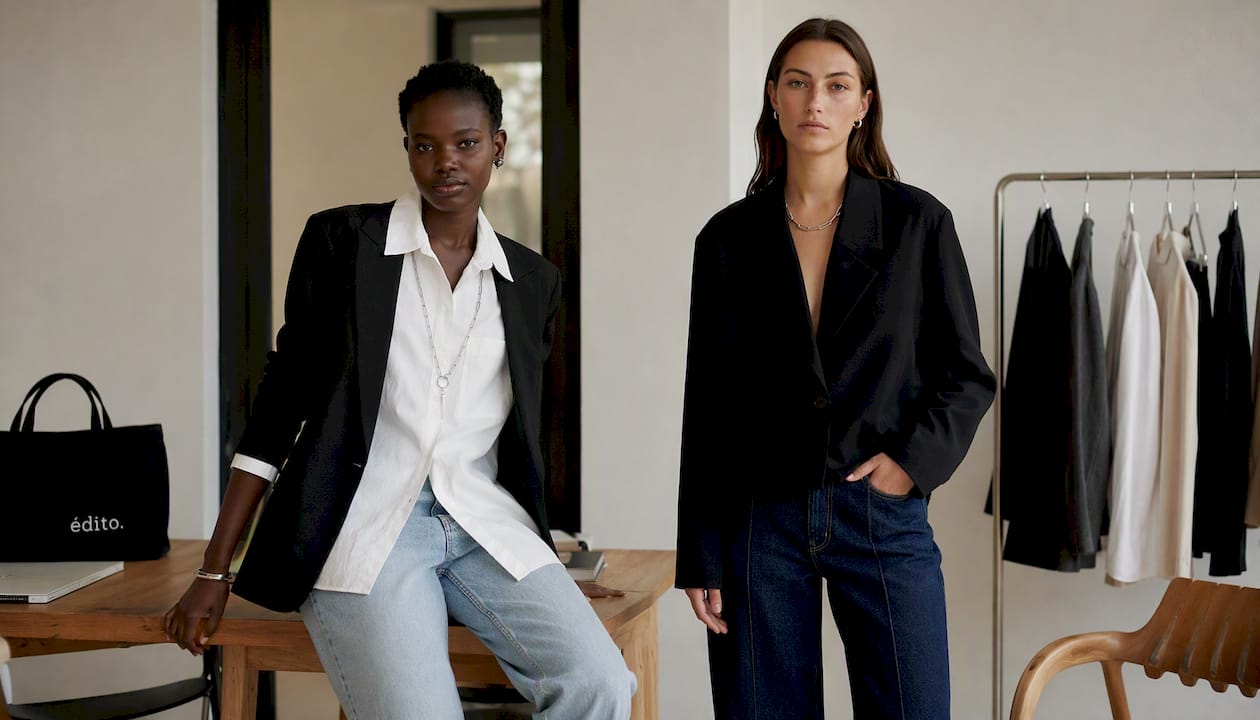
Both are curated from European labels chosen for craftsmanship and cost-per-wear, not seasonal turnover. Browse the wider clothing collection for the tees, tops, and pants that complete these looks, or start with the two blazers above and build outward. If you want the full formula in one place, the investment pieces guide walks through why one well-made blazer earns its price over years of wear. Head to the product pages now to check sizing and place an order.
Sources
- The cinched-waist blazer is replacing oversized styles this autumn (Elle)
- How to style a blazer (Capsule Wardrobe Style)
- How to style a blazer in 11 ways (Glamour)
- Five summer blazer trends for 2026 (WhoWhatWear)
FAQ
What looks good with a blazer?
A plain T-shirt and straight-leg or wide-leg jeans is the most reliable pairing, since it balances the blazer’s structure against something relaxed. Midi skirts, tailored shorts, and wide-leg trousers all work too, depending on how formal you need the outfit to be.
What are the blazer trends for 2026?
Blazer trends this year split into two directions: neat, waist-defined tailoring and relaxed, broad-shouldered oversized styles. Linen and cream blazers also feature strongly for warmer-season dressing.
What kind of tops should I wear with a blazer?
A plain T-shirt, silk camisole, or fine knit all work well underneath a blazer, since each keeps the layer beneath simple while the jacket does the styling work. For evening, swap in a satin camisole for the same formula with more polish.
What is the rule of wearing a blazer?
The shoulder seam has to sit at the edge of your shoulder, not sliding down your arm or pulling towards your neck. Beyond that, balance is the main rule: pair an oversized blazer with fitted bottoms, or a fitted blazer with something looser below.
Which Edito blazer should I buy first?
If you only buy one, the Holly Blazer is the safer starting point since its classic tailoring works across the widest range of outfits. The Fique Blazer is worth adding once you want a more directional, cropped silhouette for weekend or evening looks.