
Balance is the whole trick to styling knitwear well: pair a fitted piece with something loose, mix a soft knit against a rigid or smooth texture, and define your waist when a silhouette starts reading shapeless. A cardigan over slim jeans and loafers reads polished in seconds. A fine roll neck tucked under a blazer with tailored trousers does the same for the office. A cardigan like the Hailey Cardigan in Blue works either way.
TL;DR:
- Layer fine-gauge merino or silk blends under structured outer layers to add warmth without bulk, avoiding pairing two chunky knits together.
- Use proportion by pairing slim knits with loose trousers or oversized cardigans with fitted bases to keep outfits balanced and shapely.
- Tucking, belting, and sleeve-rolling are essential fit fixes that elevate knitwear and prevent a frumpy or overly casual appearance.
- Fold knitwear instead of hanging it and dry flat to maintain shape, stitch integrity, and prevent stretching over time.
- Select versatile, well-constructed pieces like the Hailey Cardigan in Blue, which can be styled multiple ways while adhering to fit and layering principles.
Table of Contents
- Core styling principles for knitwear
- Which knitwear works for which outfit?
- Outfit formulas: quick looks to copy by occasion
- Layering techniques that add warmth without bulk
- Styling hacks, fit fixes and how to avoid looking frumpy
- Care, storage and small maintenance tips to keep knits looking their best
- Edito perspective: building a knitwear-first capsule wardrobe
- How to style knitwear when the rules stop working for you
- Edito pick: the Hailey Cardigan in Blue
- Sources
- FAQ
Core styling principles for knitwear
Knitwear rewards a handful of dependable rules more than any single trend. Get these right and almost every combination in your wardrobe starts working harder.
Proportion is the anchor rule. Pairing a slim piece with something loose, or vice versa, stops an outfit reading as either shapeless or overly tight. A cropped jumper wants a high-waisted, wider-leg trouser; an oversized cardigan wants a fitted base layer underneath it.
Texture contrast matters just as much. Soft knit against rigid or smooth materials, think leather, denim, a structured trouser, gives an outfit visual depth that all-soft combinations lack. Professional styling guidance consistently lists proportion, texture contrast and gauge selection as the three organising principles behind knitwear that actually looks considered.
Colour needs a decision, not a guess. Monochrome tonal layering feels elevated and calm; a single contrasting accent (a bold scarf, a bright shoe) feels current without overwhelming the outfit.
- Tight top, loose bottom (or the reverse), never both loose or both fitted
- Soft knit paired with one structured element: a blazer, belt, or leather bag
- One colour decision per outfit: either tonal or one contrast accent, not both
Pro Tip: If a knit is doing all the visual work, keep everything else quiet. If the knit is plain, let your trousers, shoes or accessories carry the personality.
Which knitwear works for which outfit?
Not every knit belongs in every layering position, and picking the wrong gauge is usually why an outfit falls flat.
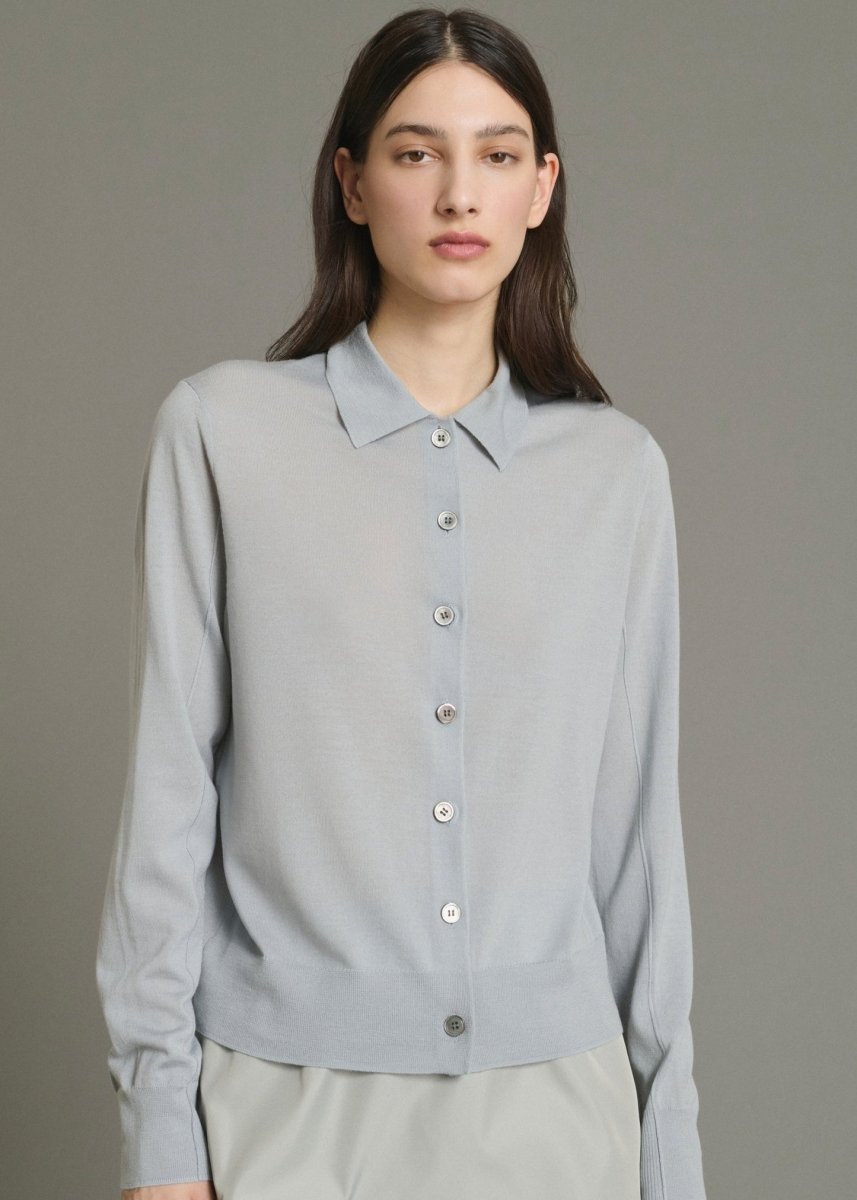
Fine-gauge knits, particularly merino and merino-silk blends, are built for smart looks and layering under a blazer or coat. They sit close to the body without adding bulk, and they regulate temperature well enough to work across a mild Australian day into a cooler evening.
Rib and pointelle knits bring texture without weight, useful for transitional weather when a heavier knit feels like overkill. Cable and chunky knits are outer-layer pieces by design. They add visual volume, so pair them with something slim below the waist to keep proportions in check.
- Fine-gauge merino or silk blend: under blazers, smart-casual layering, warmer days
- Rib and pointelle: shoulder-season texture, worn alone or as a light mid-layer
- Cable and chunky knits: outer layer only, balanced with slim trousers or a skirt
- Cardigans, coatigans and knit polos: cardigans soften a look, coatigans replace a jacket entirely, knit polos add structure at the neckline
Outfit formulas: quick looks to copy by occasion
Outfit formulas work because they’re short recipes, three or four items you can replicate without overthinking it. Here are four to keep on hand.
- Everyday casual: a relaxed knit, straight-leg denim, loafers, and one structured bag. Roll the sleeves once for a less precious finish.
- Smart casual or office: fine-gauge knit tucked into tailored trousers, a blazer over the top, ballet flats or a low heel. This is the formula for smart casual dressing that still reads office-appropriate without a single blazer button done up.
- Weekend market or travel: an oversized knit, leggings or soft trousers, and a flat, comfortable shoe. Prioritise texture here since comfort is doing most of the work.
- Day to night swap: change one or two pieces, not the whole outfit. Swap flats for a heeled boot, add a slip skirt over trousers, or throw a structured jacket over the same knit you wore all day.
Vogue’s seasonal styling coverage backs the same principle from the runway side, noting that layering, colour pairing and texture mixing are the fastest ways to modernise a knitwear look without buying anything new. A tonal look, camel knit, camel trouser, reads expensive; a single contrast accent, like emerald or burgundy against neutral knitwear, reads current.
Layering techniques that add warmth without bulk
The rule that prevents the marshmallow effect is simple: start thin, build weight. A fine merino or silk base, a mid-weight knit, then a structured outer layer, coat, blazer, or coatigan, keeps warmth without volume piling up in the wrong places.
Guides on layering are consistent on one point: avoid pairing two similarly weighted knits. Two chunky knits together will always look bulky, no matter how good each piece is alone.
Length does real work here too. A cropped knit over a longer base layer keeps the silhouette clean; a short jacket over a longer knit does the same in reverse. When layering shirts under knitwear, leave the collar out over a crew neck, or tuck it fully under a roll neck, half-in-half-out reads unfinished.
- Base: fine merino or silk blend, close to the body
- Mid: a slightly heavier knit, cardigan or vest
- Outer: one structured piece, coat, blazer or coatigan
- Avoid: two chunky knits worn together, or two identical necklines stacked
Pro Tip: A fine merino piece like the Travel Crew Sweater in Barley works as either your base or your only layer, which is exactly what makes trans-seasonal dressing easier to plan.
Styling hacks, fit fixes and how to avoid looking frumpy
A few small adjustments separate a knit that looks intentional from one that looks like loungewear. The French tuck, tucking just the front section into your waistband, works on lighter knits; heavier cable knits need a full tuck or a belt instead, since a partial tuck adds bulk rather than removing it.
Belting over a knit, especially an oversized cardigan or coatigan, creates a waist where the garment has none. Rolling sleeves to just below the elbow and letting a shirt cuff peek out from underneath both read as deliberate, polished choices.
Fit diagnostics matter more than most people realise. A knit that’s lost its shape usually shows it at the shoulder seam (should sit at your actual shoulder, not down your arm), the cuffs (should hold gentle tension, not gape), and the stitch density (loose, see-through knitting is what creates the so-called pyjama effect).
- French tuck for lighter knits, full tuck or belt for chunky ones
- Belt over an oversized cardigan to define the waist instantly
- Roll sleeves and expose a shirt cuff for a finished look
- Check shoulder seam placement and cuff tension before buying
Care, storage and small maintenance tips to keep knits looking their best
Fold knitwear rather than hanging it. Hangers stretch the shoulders over time, which is the fastest way to lose the shape that makes a knit look expensive in the first place.
Wash by fibre, not habit. Merino and cashmere want a cold hand wash or wool cycle and should always dry flat, never on a hanger or over a radiator. Cotton blends are more forgiving but still benefit from a gentler cycle.
- Fold, don’t hang, especially for anything with weight
- Dry flat for merino, cashmere and wool blends
- De-pill with a fabric comb; take genuine repairs to a mending service
- Check for loose threads before wear, not after a snag has spread
Edito perspective: building a knitwear-first capsule wardrobe
Edito selects knitwear for how it holds up after a season of wear, not just how it photographs on day one. That means checking stitch density, shoulder construction and fibre quality before a piece earns a place in the edit.
A well-chosen cardigan anchors several looks at once: over denim on a Saturday, over tailored trousers for the office, belted for evening. That versatility is what a capsule wardrobe is actually for.
- Prioritise fibre and construction over trend prints or seasonal colours
- Invest in pieces that layer at least three different ways
- Check shoulder seam and cuff before buying, not after
How to style knitwear when the rules stop working for you
Most knitwear advice treats proportion as decoration, something you add once the outfit’s already decided. That’s backwards. Proportion should be the first decision you make, before colour, before which cardigan looks nicest on the hanger. Get the tight-loose balance wrong and no amount of styling trickery, tucking, belting, sleeve-rolling, will fix it.
The conventional advice oversells volume. Oversized knitwear looks effortless in editorial photography and shapeless on an actual body in an actual office. If you’re going oversized up top, something below the waist needs to be doing the opposite job, or the whole outfit reads as one soft shape with no structure at all.
What I’d prioritise first, above trend pieces, above colour matching, is fit diagnostics: shoulder seam placement, cuff tension, stitch density. A knit that fails those three tests will never style well, regardless of how good the formula around it is.
— Mickael Martin
Edito pick: the Hailey Cardigan in Blue
The Hailey Cardigan in Blue follows every principle covered here: enough structure to belt or tuck, a gauge that layers without bulk, and a colour that works tonal or as a contrast piece against neutrals.
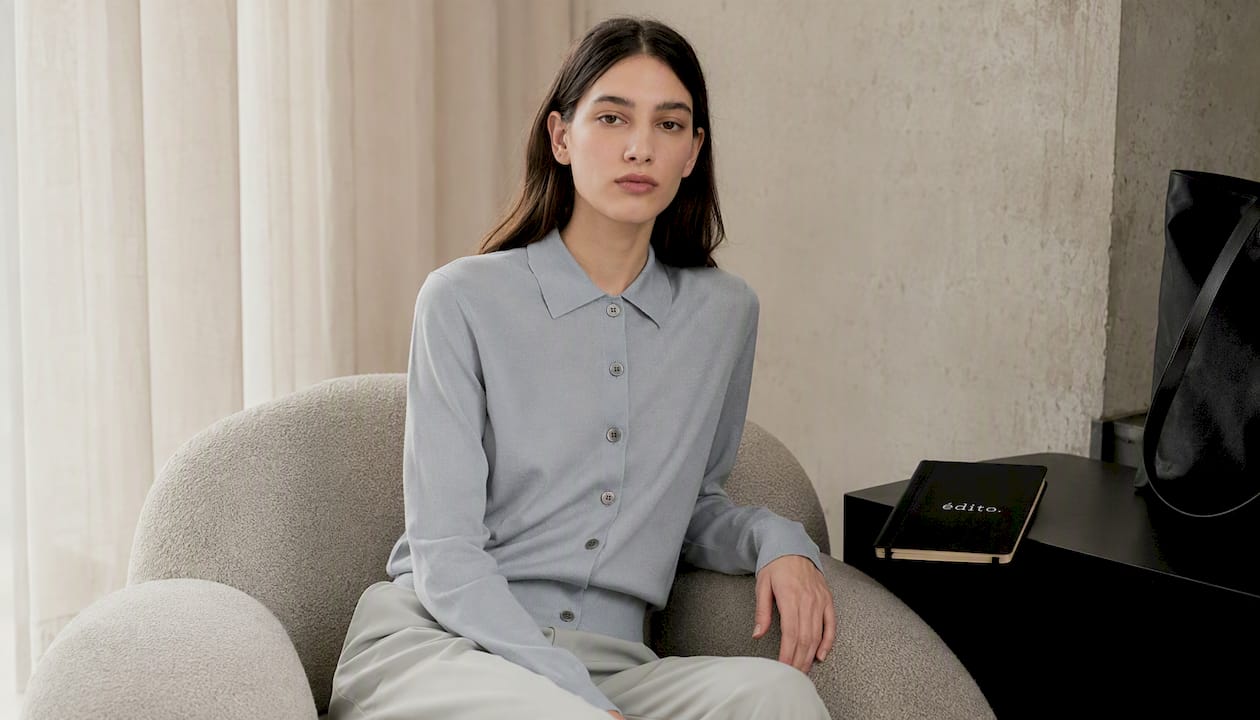
Three ways to wear it: belted over a slip dress for evening, open over a fine knit and tailored trousers for the office, or thrown over denim and a plain tee for the everyday formula covered earlier. Check the fit through the shoulder before sizing up, and remember the layering rule from above: pair it with a slimmer knit or shirt underneath rather than another heavy layer, so the cardigan stays the statement piece rather than adding to the bulk. Browse the full Hailey Cardigan in Blue product page for fabric composition and sizing notes before you buy.
Sources
- How to layer your knitwear this season—9 cozy-chic outfit ideas | Vogue
- How to style knitted tops: a complete guide for every season, fit & occasion | Knitseek
- How to look expensive in knitwear: stylist secrets — MioLook
- How to layer knitwear without looking bulky | eAura
FAQ
What Is the 3-3-3 Rule for Clothes?
It’s a capsule wardrobe method: three tops, three bottoms and three pairs of shoes worn on rotation for a set period, usually a month, to reduce decision fatigue and get more mileage from fewer pieces. Applied to knitwear, it means choosing two or three versatile knits, like a fine merino base and one structured cardigan, that can be restyled across a working week.
What Is the Knitter’s Curse?
It’s a term used among hand knitters for the compulsion to keep making one more project rather than finishing and wearing what’s already made. In a styling context, the same idea applies to buying knitwear: chasing the next trend piece instead of properly using and re-styling what’s already in your wardrobe.
How Do I Stop Sweaters Looking Frumpy?
Balance proportion, tight with loose, and check three fit points before wearing: the shoulder seam should sit at your actual shoulder, cuffs should hold gentle tension, and the knit itself should have decent stitch density rather than a loose, see-through weave, since looser knitting is what creates the shapeless, pyjama-like look. A belt or structured accessory instantly offsets a soft knit’s shapelessness.
What Knitwear Styles Are Trending Now?
Current styling coverage points to layering, tonal colour dressing and unexpected contrast pairings as the main directions, rather than any single silhouette. Runway coverage from late 2025 shows knits worn in considered layers with a deliberate colour decision, tonal or contrasting, rather than styled as a single standalone piece.
Can You Layer Two Knits Together?
Yes, but only when the weights differ. Pair a fine merino or silk-blend base with a heavier cardigan or vest on top; two similarly chunky knits worn together will always look bulky, regardless of how well each piece fits individually.