
The fastest way to build day to night outfits is to anchor your look around one versatile, mid-formality piece, then make two deliberate swaps, usually shoes and a single accessory, rather than changing your whole outfit. MasterClass and Edito’s own styling philosophy both point the same way: fewer, better pieces, chosen for their ability to shift register with almost no effort. Expect one or two swaps, never a full change.
TL;DR:
- The key to effortless day-to-night outfits is anchoring around a versatile mid-formality piece and making two deliberate swaps, usually shoes and accessories.
- Pieces like the little black dress, structured blazer, silk blouse, wide-leg trousers, and tailored jumpsuit are best suited for seamless transition with minimal adjustments.
- Six proven formulas, such as swapping flats for heels on an LBD or switching sneakers for ankle boots on a shirtdress, can be adapted quickly for most occasions.
- A small kit of five swaps—shoes, bag, jewelry, outer layer, and a beauty touch—enables quick transformation without full outfit changes.
- Building a wardrobe around three multi-functional pieces, like a shirt dress, a shirt, and a skirt, maximizes outfit options and reduces decision fatigue.
Table of Contents
- What pieces actually work for day to night outfits?
- Six day-to-night outfit formulas you can copy tonight
- What should be in your day-to-night swap kit?
- How Edito’s pieces put these formulas into practice
- Why fewer, better anchor pieces beat a bigger wardrobe
- A three-piece capsule that actually earns its place in your wardrobe
- Sources
- FAQ
What pieces actually work for day to night outfits?
Not every garment can do double duty. The pieces that reliably carry you from a 9am meeting to an 8pm dinner share a few traits: clean lines, a fabric that doesn’t crease into oblivion, and a cut that reads as polished rather than casual or overdressed.
Who What Wear names the little black dress as the single most versatile item in a woman’s wardrobe, and for good reason. It asks nothing of you except a change of shoes and jewellery. Beyond the LBD, five other staples earn their place in a genuinely transitional wardrobe:
- The little black dress (LBD), worn with flats and a blazer by day, becomes evening-ready the moment you remove the blazer and add heels.
- A structured blazer, thrown over almost anything, adds authority at the office and can be shed entirely once the sun goes down.
- Wide-leg trousers, paired with a fitted knit by day, only need a silk camisole and heeled sandal to read as dinner-appropriate. Edito’s guide to styling wide-leg trousers covers the proportions worth knowing.
- A silk or satin blouse softens tailoring instantly, and its sheen does most of the evening work on its own.
- A tailored jumpsuit covers day meetings in loafers and slides into evening with a heeled boot and a bold lip.
- Neutral, quality shoes in a heel height you can actually walk in matter more than any single dress. They are the hinge the whole formula swings on.
If you’re over 50 and building around these staples, favour a slightly longer hemline on the LBD, a blazer with structured shoulders rather than an oversized cut, and trousers that sit at a proper waist rather than low. The formula stays identical; only the proportions shift.
Six day-to-night outfit formulas you can copy tonight
Stylists increasingly recommend building an outfit from the middle out, choosing a mid-formality anchor and layering or swapping outward, rather than starting from a “day look” and undoing it piece by piece, according to OutfitTrends. These six formulas apply that logic directly.
- The LBD pivot. Day: LBD, blazer, flats. Night: lose the blazer, add heels and one statement earring. Works for almost any body shape; the only caution is choosing an LBD with enough structure to stand alone once the blazer’s gone.
- The blazer and cami stack. Blazer, silk cami, wide-leg trousers by day. At night, swap flats for heels and carry a metallic bag. Best for women who want tailoring without a dress; watch the cami’s neckline doesn’t read as too casual under fluorescent office lighting.
- The tailored jumpsuit switch. Loafers by day, a heeled boot and bold lip by night. One piece, zero decisions, though jumpsuits demand a proper fit through the shoulder or the whole look sags.
- The dark denim upgrade. A knit and loafers by day; a blazer and heel by night turn the same denim formal enough for most bars and casual dinners. Choose a dark, uncreased wash. Pale or distressed denim rarely survives the transition.
- The midi skirt and knit combo. Sandals or loafers by day, strappy heels and a clutch by night. This one flatters almost every figure, though a fuller midi skirt needs a fitted top to avoid looking bulky.
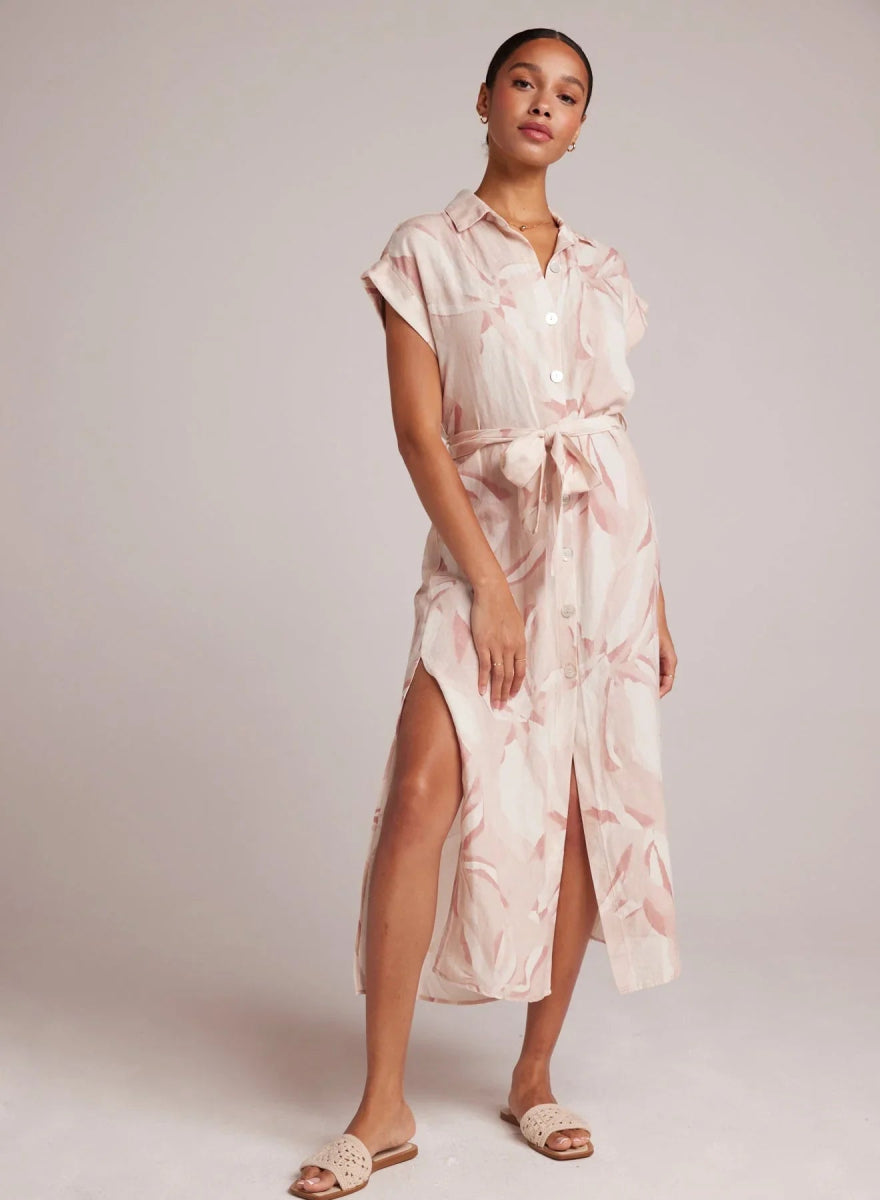
- The shirtdress switch. Sneakers by day, an ankle boot and tonal jewellery by night. The most age-inclusive formula on this list, and one where the Button Front Belted Shirt Dress does exactly this job well.
Pro Tip: Pick one formula and wear it twice in the same week before adding a second. Repetition is how you learn where your own proportions need adjusting, not how many outfits you own.
What should be in your day-to-night swap kit?
Five swaps do almost all the heavy lifting, and knowing them in advance means you’re never caught deciding at 5pm.
- Shoes, from flat to heeled or from sneaker to boot, change posture and formality faster than anything else you own.
- Bag, swapping a structured tote for a small clutch or crossbody, signals evening immediately.
- Jewellery, one hero piece such as a statement earring or cuff, does more than several small pieces combined.
- Outer layer, removing a blazer or cardigan (or adding a sleek topper) resets the whole silhouette.
- One beauty touch, a bold lip or a swipe of extra mascara, finishes the look without a full redo.
A compact “night kit” makes this realistic on a genuinely busy day: lightweight earrings that won’t dig in after ten hours, foldable flats or a slim heel, a lipstick, a mini deodorant, and a single hairpin for a quick twist. Luxyora’s step-by-step approach to day-to-night dressing treats outerwear as what it calls a stealth styling weapon, and that framing holds. Not every jacket packs well, so favour structured but compact toppers that survive a tote bag without creasing.
Pro Tip: Test any “packable” jacket by scrunching it in your hand for ten seconds. If it springs back without deep creases, it earns a place in the kit.
Global apparel spending trends show consumers gravitating toward pieces that work across more occasions rather than single-use buys, a shift that makes the swap-kit approach more than a styling trick. It’s a genuinely economical way to dress.
How Edito’s pieces put these formulas into practice
Two examples show how this plays out with real garments rather than abstractions.
The Button Front Belted Shirt Dress works exactly like Formula 6. By day, layer it over a fine knit with loafers and let the belt sit loose. By night, cinch the belt properly, add a heeled sandal and one bold earring, and the same dress reads as considered evening wear rather than office-adjacent.
The Darcy Shirt in Night paired with the Holly Skirt in Night demonstrates the two-piece version of the same principle. Tucked in with loafers and a tote, it’s a clean desk-to-dinner outfit. Partially untucked, worn with a heel and a small clutch, it shifts registers without a single extra garment.
Both pieces work because of how they’re cut and how the fabric behaves:
- Breathable, well-draping fabric moves rather than clings, which matters as much at 6pm as it does at 9am.
- Tailoring through the shoulder and waist means the piece holds its shape whether it’s belted tight or left loose.
- A neutral, adaptable palette (night tones, soft pink) means the accessories do the talking, not the garment.
Why fewer, better anchor pieces beat a bigger wardrobe
The mistake most women make with their wardrobes isn’t buying too little. It’s buying too many pieces that only do one job. A dress that works for one occasion and nothing else earns its keep once or twice a season; an anchor piece cut well enough to swing from desk to dinner earns it weekly.
European tailoring, particularly the way French and European labels cut through the shoulder and waist, tends to hold its shape through exactly this kind of stretching and belting and layering that a formula-led wardrobe demands. That’s not a coincidence. It’s a design choice, and it’s why a handful of well-chosen pieces will always outperform a closet full of near-misses.
Try one formula, worn properly, for a full week. Notice how much decision fatigue disappears once you’re not reinventing an outfit from scratch every evening.
— Mickael Martin
A three-piece capsule that actually earns its place in your wardrobe
Edito’s edit for day-to-night dressing runs on exactly the pieces discussed above, chosen because each one does more than one job well.

The Button Front Belted Shirt Dress anchors the capsule on its own, thanks to a belt that lets you dress it up or down in seconds. The Darcy Shirt in Night brings the tuck-in, untuck-out flexibility that makes a shirt genuinely transitional rather than just office wear. Paired with the Holly Skirt in Night, the two build a complete desk-to-dinner outfit without a single extra garment required. Together, the three pieces cover the formulas above with room to mix and match as the week demands.
If you’d rather build the whole wardrobe around this idea, Edito’s guide to a work capsule wardrobe and its take on French capsule wardrobe building both extend this same anchor-and-swap thinking further. Start with the shirt dress, add the shirt and skirt combination, and see how far three pieces actually go.
Sources
- How to Seamlessly Transition Your Outfit From Day to Night
- 5 Genius Day-to-Night Outfit Ideas | Who What Wear
- Apparel market worldwide
- 20 Chic Day to Night Outfit Ideas for Seamless Transitions
FAQ
What is the 3-3-3 rule for outfits?
The 3-3-3 rule is a capsule wardrobe method: three tops, three bottoms and three pairs of shoes, mixed to create multiple outfits from a small, versatile set of pieces. It follows the same logic as day-to-night formulas, fewer pieces chosen for maximum crossover.
How do I take an outfit from day to night?
Anchor your look on one mid-formality piece, then make two swaps, usually shoes plus one accessory such as jewellery or a bag, rather than changing the whole outfit. Removing a blazer or adding a bold lip finishes the transition in under five minutes.
What should a 50-year-old woman wear for a night out?
The same formulas work at any age, with adjustments to proportion: a slightly longer hemline on an LBD, structured rather than oversized blazers, and trousers that sit at the natural waist. A tailored jumpsuit or shirtdress, like the Button Front Belted Shirt Dress, tends to be especially age-inclusive because it flatters through cut rather than tightness.
What is the perfect outfit for a date night?
A tailored jumpsuit or an LBD worn with heels and one statement piece of jewellery covers most date-night settings without overdressing. Choose fabric with a soft drape, silk, satin or a fine knit, so the outfit moves naturally rather than looking stiff under evening light.