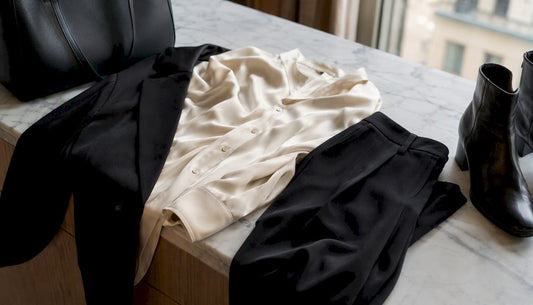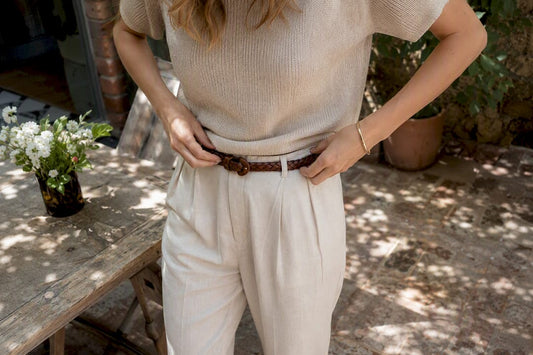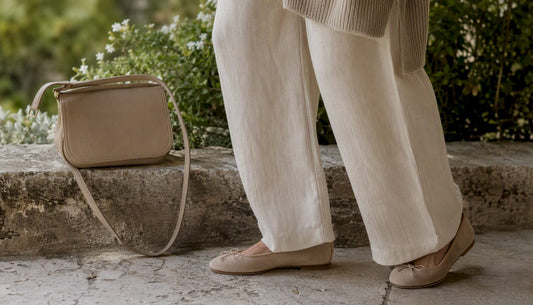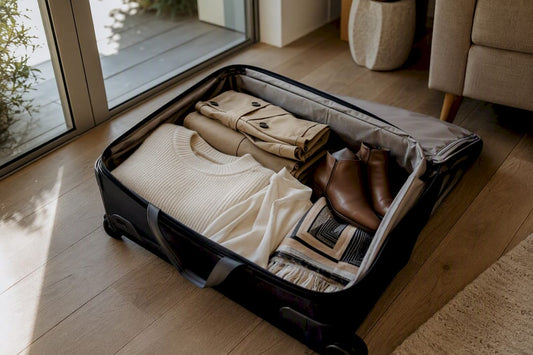

The formula that works for almost any winery visit is smart casual, comfortable shoes and layers you can add or shed as the day warms. Think a linen dress or tailored pant, a pair of loafers rather than heels, and a light jacket for the cellar. This is the same principle behind any considered European wardrobe: fewer, better pieces that move with you.
TL;DR:
- Wear comfortable, breathable fabrics like linen or cotton that handle sun, dust, and spills well during a full day at the vineyard.
- Opt for flat shoes such as loafers, ankle boots, or sneakers to navigate uneven ground and prevent injuries.
- Layer outfits with light jackets or scarves to adapt to temperature changes from morning to afternoon, especially in spring and autumn.
- Keep accessories minimal with wide-brim hats and sunglasses for sun protection, and avoid heavy perfumes that interfere with tasting experiences.
- Pack practical, light bags like crossbody styles that leave your hands free for tasting and walking on varied terrain.
Table of Contents
- Winery outfit ideas you can copy in minutes
- Season-by-season outfit ideas for the vineyard
- Footwear and terrain: the decisions that make or break a winery day
- What not to wear (and tasting-room etiquette that matters)
- Stylist notes: building an effortless winery capsule wardrobe
- Accessories worth packing for a day at the cellar door
- Dressing for tastings, tours and long lunches
- Balancing style and comfort during wine tasting
- Bags that actually work at a winery
- Urban wineries versus rural vineyards: what actually changes
- Shop the look: Edito picks for winery-ready outfits
- A stylist’s honest take on dressing for the vineyard
- Sources
- FAQ
Winery outfit ideas you can copy in minutes
Building winery outfit ideas from scratch every time is unnecessary. Most successful vineyard looks follow one of a handful of formulas, and once you know them, getting dressed for a day of tastings takes five minutes, not fifty.
The trick is choosing fabrics that handle sun, dust and the odd splash of red without complaint. Linen and cotton both breathe well and photograph beautifully against vine rows, and their slight looseness forgives the walking, standing and occasional gravel scramble a winery day demands. Relaxed tailoring, rather than anything fitted or stiff, tends to outperform structured pieces once you have been on your feet for three hours.
A few formulas worth keeping on hand:
- Midi dress + denim jacket + loafers, for a look that needs almost no thought.
- Wide-leg pant + fitted tee + lightweight blazer, for a smarter tasting room or lunch.
- Linen shirt (untucked) + tailored shorts + leather sneakers, for warmer months.
- Slip dress + cardigan + ankle boots, for cooler shoulder-season days.
- Jeans + silk cami + structured jacket, for a polished but relaxed option.
The Cap Sleeve Button Front Dress in White slots straight into the first formula as your “midi dress,” while the Audrey Pant covers the wide-leg option for anyone who prefers separates. Both work from a neutral base, which means you can repeat one outfit skeleton across an entire long weekend without anyone noticing.
Season-by-season outfit ideas for the vineyard
Winery days rarely sit at one temperature. Cool mornings often give way to warmer afternoons, making layering essential., which is exactly why layering matters more here than almost any other outing on your calendar.
- Spring. Start with a light jacket or cardigan over a dress or shirt, then peel it off as the sun climbs. A trench or denim jacket over a linen dress covers the swing from a crisp start to a mild midday, and both fold easily into a bag once you no longer need them.
- Summer. Breathable linen and cotton earn their keep here. Choose loose silhouettes, sun protection up top, and low-heeled sandals or leather sneakers rather than anything that traps heat. Save strappy heels for dinner reservations, not the vine rows.
- Autumn. Vintage season brings richer, warmer colours into play. Ankle boots handle damp ground better than sneakers, a scarf adds both warmth and polish, and a water-resistant outer layer is worth packing even if the forecast looks kind.
- Winter. Warm base layers under a coat or insulated jacket keep you comfortable outdoors, but barrel rooms are another story. Cellar spaces are often kept cool to protect the wine., so a jacket you can keep on indoors, or at least a warm scarf, saves you from shivering through a tasting.
Across every season, the goal is the same: dress for the coldest and warmest parts of the day, not the average.
Footwear and terrain: the decisions that make or break a winery day
Vineyard ground is rarely as tidy as the photos suggest. Expect gravel driveways, uneven grass between vine rows, the occasional cobbled courtyard, and cellar floors that can turn slick when wine or water spills. Even manicured properties keep sections of soft earth and loose stone underfoot, which rules out anything with a delicate sole.
The safest bets:
- Leather loafers, which handle gravel and cellar floors without looking out of place at lunch.
- Low block heels, for a touch more polish without the instability of a stiletto.
- Ankle boots, particularly useful once autumn or winter dampness sets in.
- Leather sneakers, the most forgiving option for a full day of walking.
Flats and closed, low-heeled shoes are consistently recommended for exactly this reason: they protect your feet from spills and uneven ground while still reading as considered rather than sloppy. Our guide to loafers outfit ideas has more ways to style them beyond the vineyard.
Pro Tip: Break in new shoes before your visit, and check the sole has some grip. A smooth leather sole on wet cobblestones or a cellar floor is how good days end with a twisted ankle.
What not to wear (and tasting-room etiquette that matters)
A few habits can quietly undo an otherwise good winery outfit. Strong perfume is the biggest offender: heavy fragrance interferes with your ability, and everyone else’s, to actually smell the wine, which somewhat defeats the point of the visit.
Skip these:
- Stilettos or any heel that sinks into gravel or lawn.
- Thongs or flip-flops, which offer no protection from spills or uneven ground.
- Brand-new white shoes you are not prepared to see stained by a splash of shiraz.
- Anything overly formal, like a full gown, or anything too casual, like gym wear or swimwear.
Smart casual remains the golden rule at most cellar doors, and jeans are generally welcome. The one exception is dining at an on-site restaurant or attending a private tasting, where guests are often expected to dress a notch smarter than the standard tasting-room baseline.
Stylist notes: building an effortless winery capsule wardrobe
A well-chosen capsule removes the guesswork from every vineyard trip. Five pieces cover almost any visit: a neutral dress, a tailored pant, a lightweight jacket, one pair of reliable shoes, and a crossbody bag. Building this kind of small, considered set can noticeably cut the stress of packing for a weekend away, because every piece already works with the others.
Fabric choice decides whether the capsule actually earns its keep. Natural fibres like linen, cotton and fine wool blends handle sun, movement and the odd cool cellar without losing their shape, which is precisely why European designer pieces suit this brief. They are cut with the kind of relaxed tailoring that photographs well against vines and still holds its structure at a long lunch.
A capsule built around one dress, one tailored pant, one jacket and one dependable shoe removes the daily decision entirely. You already know it works. You are just choosing the arrangement.
[author_bio]
[brand_signal]
Accessories worth packing for a day at the cellar door
The right accessories do double duty at a winery: they protect you from the elements and finish the outfit without any extra effort. A wide-brim hat is the standout choice, shielding your face from sun during vineyard walks while adding a relaxed, holiday-adjacent polish to even a simple linen dress. Sunglasses are non-negotiable for the same reason, particularly at midday when you are moving between bright rows and darker barrel rooms.
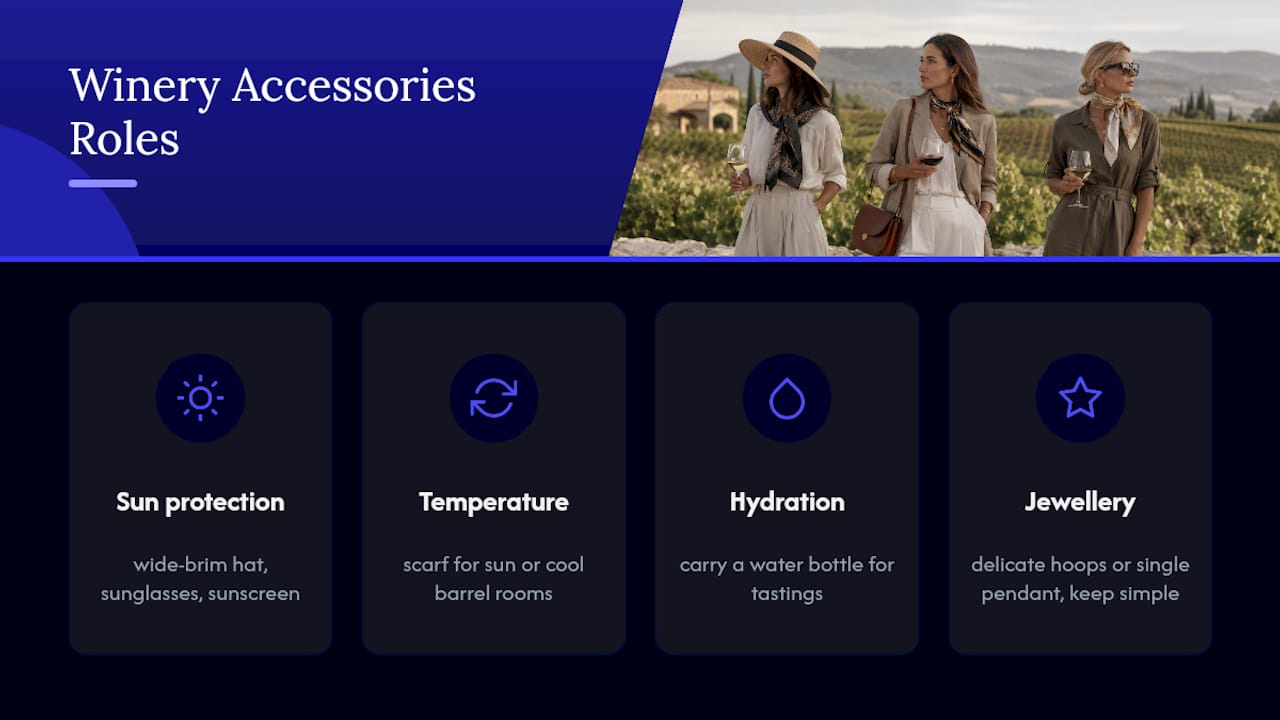
A scarf is the quiet hero of vineyard dressing. Light and silky in summer, it protects shoulders from sun; in wool or a heavier weave come autumn and winter, it becomes genuine warmth for the walk between cellar door and car. It also solves the temperature swing between an outdoor tasting and an air-conditioned or deliberately cool barrel room in one lightweight layer.
Practical checklists for winery days consistently include sunscreen and a water bottle alongside the obvious style choices, and it is worth taking that seriously. A midday tasting session under direct sun with no hat or sunscreen is a mistake you will feel by the second cellar door.
Jewellery should stay simple. Delicate gold hoops or a single pendant read as considered without competing for attention against the scenery, and nothing you would mourn losing among vine rows or gravel. Save statement pieces for dinner, once the day’s walking is done.
Dressing for tastings, tours and long lunches
Not every winery event calls for the same outfit, even within a single day. A standing tasting at the cellar door is the most forgiving setting: smart casual, comfortable shoes, and a light layer cover it completely. You are likely to be on your feet, moving between barrels or tasting stations, so anything restrictive works against you.
A guided vineyard tour adds another layer of practicality. Expect uneven ground, sometimes a short walk through the rows themselves, so flat or low-heeled shoes matter even more here than at a standing tasting. A denim or linen jacket earns its place, since tours often move between open vineyard and cooler indoor cellar spaces within the same hour.
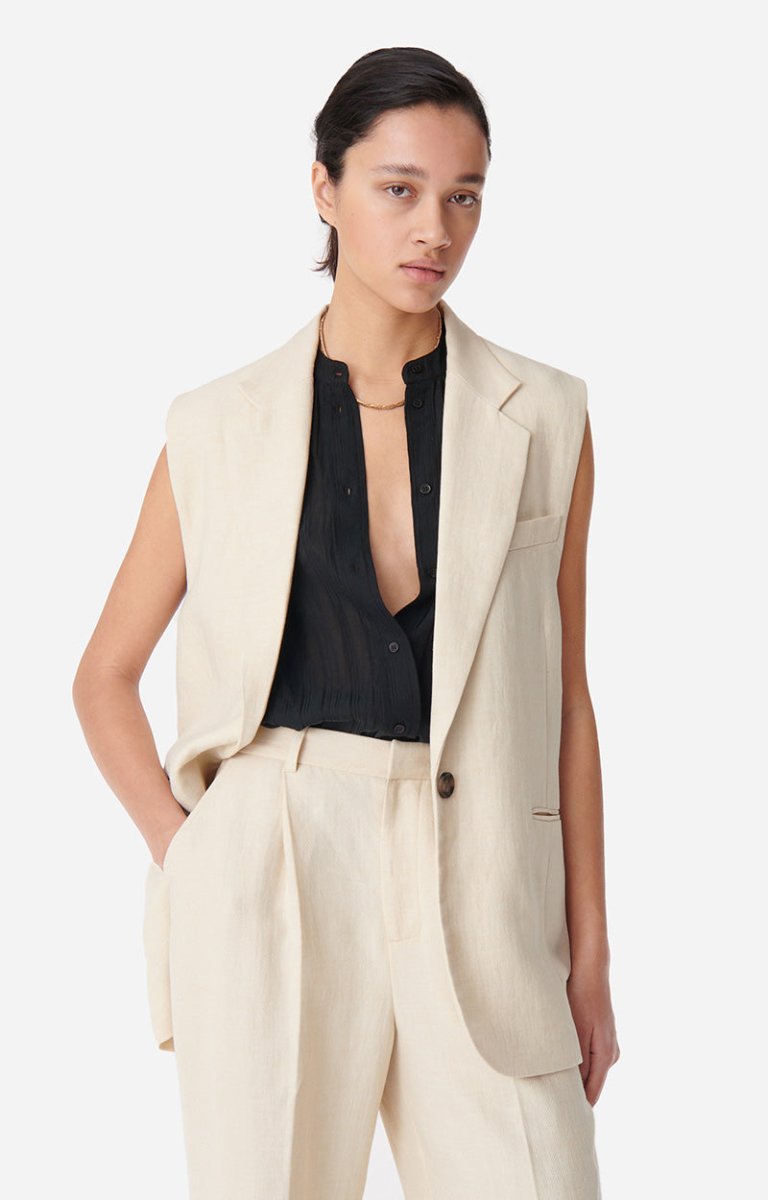
Winery restaurants and long lunches are where the dress code shifts. Exclusive tasting events and on-site dining typically call for a step up from the standard smart-casual baseline, so this is the moment to swap loafers for a low block heel, add a blazer, or choose the tailored pant over jeans. The Christen Jacket is built for exactly this transition, sharp enough for lunch, still comfortable enough for the walk back to the car.
If your day covers all three, tour in the morning, lunch in the afternoon, pack the smarter layer rather than wear it from the start. You will thank yourself by the second vineyard row.
Balancing style and comfort during wine tasting
Comfort and style are not actually in competition at a winery, they just need to be sequenced correctly. Choosing practical shoes first, then building the rest of the outfit around them, avoids the common mistake of picking a beautiful shoe that becomes unbearable by the second tasting room.
Work from the ground up. Once your footwear is settled, the rest of the outfit has far more flexibility, since a relaxed dress or wide-leg pant will forgive a long day standing in a way a fitted pencil skirt will not.
Fabric weight matters just as much as cut. A stiff, non-stretch fabric that looks sharp for the first hour becomes restrictive by the third glass. Linen, cotton and soft knits move with you through cellar visits, uneven ground and the inevitable extended chat with a winemaker who wants to tell you about the vintage.
Temperature control deserves the same attention as silhouette. Carrying, not wearing, your jacket for the first half hour of a warm morning, then adding it back on when you step into a cool barrel room, is a small habit that keeps you comfortable without ever looking underdressed. Layers you can adjust without changing your whole outfit are the real secret to looking put together for six hours straight.
Bags that actually work at a winery
A winery day is not the moment for a bag that needs both hands. You will be holding a wine glass, sometimes a small purchase, occasionally a hat you have taken off, and a bag that forces you to set something down every few minutes gets old fast.
A crossbody bag is the clear favourite for good reason. It sits close to the body, leaves both hands free for tasting and walking uneven ground, and holds the essentials without adding bulk. Winery packing advice consistently points to a small crossbody or hands-free bag as the practical choice over a structured tote or handbag with a short handle.
A structured tote still has its place if you are visiting multiple cellar doors and expect to bring bottles home, but treat it as a car accessory rather than something you carry through the vines. Leave it in the boot between stops.
For evening dinners at an on-site restaurant, a small clutch or mini bag can replace the crossbody once the walking is done, since dinner rarely demands the same hands-free practicality as an afternoon of tastings and tours.
Whatever you choose, keep the essentials to a genuine minimum: phone, cards, sunglasses, lip balm, perhaps a folded scarf. A winery day rewards a light load.
Urban wineries versus rural vineyards: what actually changes
Where you are visiting changes more of the outfit than most people expect. An urban winery, the kind tucked into a converted warehouse or city fringe, usually means polished concrete or timber floors, which frees you to wear a slightly dressier shoe, a low heel or a smart loafer, without worrying about gravel or grass.
A rural vineyard is a different proposition entirely. Expect gravel driveways, grass between the vine rows, and sometimes a short unpaved walk from car park to cellar door. This is where flat, closed shoes stop being optional, and where a jacket you can tie around your waist or bag becomes genuinely useful rather than decorative.
Distance also shapes the outfit. A single urban winery visit rarely stretches past two hours, so you can afford a slightly less practical shoe. A full day touring multiple rural vineyards, by contrast, rewards the same shoes and layering strategy from morning tasting to late-afternoon cellar visit, since you will not have the chance to change between stops.
If your day mixes both, an inner-city degustation lunch followed by a countryside tasting the next day, pack for the more demanding setting and simply dress it down for the urban leg. It is far easier to remove a jacket in the city than to wish you had brought sturdier shoes to the vineyard.
Shop the look: Edito picks for winery-ready outfits
If you would rather start from a few reliable pieces than build an outfit from scratch, a carefully curated European edit can do the thinking for you. Each piece below maps to one of the formulas above, so you can walk out the door in minutes rather than second-guessing yourself over breakfast.

The Cap Sleeve Button Front Dress in White is the warm-day dress from the outfit formulas above, light enough for a summer tasting and easily dressed up with a low heel for an on-site lunch. The Christen Jacket is your layering solution for spring and autumn visits, cream-toned so it sits comfortably over almost anything else in your capsule and structured enough to smarten up a winery restaurant booking. The Audrey Pant covers the tailored separates route, a wide-leg cut that moves easily through a day of standing and walking while still reading as considered rather than casual. Size true to fit across all three and check Edito’s size guide before ordering if you are between sizes, since European sizing can run slightly differently to what you are used to. Together, the three pieces cover a spring tour, a summer tasting and an autumn cellar-door lunch without needing anything else added to the mix.
A stylist’s honest take on dressing for the vineyard
Comfort and polish are not opposites at a winery, but I think most people over-plan the “look” and under-plan the walk. The outfit that actually works all day is the one where you forget what you are wearing by the second tasting, because the shoes do not hurt and the jacket is exactly warm enough.
European tailoring earns its place here precisely because it is built for real movement, not just photographs. A well-cut linen dress or a relaxed wide-leg pant forgives a long lunch and an uneven vine row in the same afternoon. If you want a shortcut to that ease, Edito’s collection is a good place to start.
— Mickael Martin
Sources
- What to wear on a Yarra Valley wine tour and what to leave at home — Chillout Wine Tours
- What to wear on a Barossa Valley wine tour — Barossa Wine Tours R Us
- Dress for success at Sobel’s wine tastings
FAQ
What should a woman wear to a winery?
Smart casual is the safest baseline: a linen dress, jeans or tailored pants, closed-toe flats or low heels, and a light jacket you can add or remove as the temperature shifts through the day.
What is the 3-3-3 rule for clothes?
Definitions vary, but it commonly refers to a mini capsule of three tops, three bottoms and three pairs of shoes built to mix into multiple outfits, a useful principle when packing for a winery weekend.
What not to wear to a winery?
Avoid stilettos, thongs or flip-flops, brand-new white shoes you would hate to stain, and strong perfume, which can interfere with everyone’s ability to properly taste the wine.
Are jeans okay to wear to a winery?
Yes, jeans are generally acceptable at most cellar doors under the standard smart-casual dress code, though you may want to dress them up slightly for an on-site restaurant or private tasting.