
The most reliable starting points are above-the-knee or a lower-calf midi for petite frames, knee-length to midi for average height, and midi to maxi for taller women, though the label on a product page matters far less than two quick checks. First, does the hem land at an intentional point rather than the widest part of the calf? Second, have you tried it with the shoes you actually intend to wear? The sections below explain how to measure, adjust and choose with confidence.
TL;DR:
- Choosing a dress length depends on your height, body proportions, and the intended occasion, not just the label or general category.
- Measuring from the base of your neck to your desired hem and testing the look with actual shoes ensures the hem lands at an intentional point.
- Petite women should aim for above-the-knee or low calf midi lengths, while taller women can wear mini through maxi with enough fabric and proper tailoring.
- Adjustments like waist definition, side splits, or tailored hems help modify the visual landing point without changing the overall style.
- Shoe choice significantly impacts perceived length, with close-fitting shoes and nude shades helping extend the leg line visually.
Table of Contents
- Common dress lengths explained: mini through maxi
- Best dress lengths by height group: petite, average and tall
- How to measure dress length and test the hem properly
- Choosing a length for your proportions, occasion and comfort
- Edito’s approach to hem and proportion in its curated edit
- Dress length and body shape: pear, apple and hourglass
- Seasonal factors that influence dress length
- Styling tricks to balance proportion with length and accessories
- Finding the length that feels right for you
- Edito’s curated dresses and skirts for testing hem and proportion
- Where these styling and measurement guidelines come from
- Sources
- FAQ
Common dress lengths explained: mini through maxi
Before you can choose a length, it helps to know what each name actually promises once a garment is on the body, because the same word can mean slightly different things between labels. Mini typically finishes well above the knee, often mid-thigh. Above-knee sits just at or a few centimetres above the kneecap. Knee-length grazes the centre of the knee, a classic, versatile point that suits most occasions. Midi covers the widest territory, generally landing anywhere from mid-calf to just above the ankle, which is precisely why it causes the most confusion when shopping online. Tea-length (sometimes called calf-length) sits between knee and ankle, historically associated with more tailored or vintage-inspired silhouettes. Maxi runs to the ankle or floor.
Retailers most commonly measure centre-back length, taken from the base of the neck down to the hem, and this figure is a far more dependable guide than the length category itself. A made-to-measure formal dress guide shows that centre-back length varies meaningfully by size even within the same style, which is why checking the seller’s measurement convention before ordering matters more than trusting the label alone.
Model height and sample size also shape how a dress photographs. A midi that falls elegantly below the knee on a 178 centimetre model may land several centimetres lower on a shorter frame, simply through proportion.
A few quick definitions worth keeping in mind while browsing:
- Mini: mid-thigh to just above the knee, casual and playful.
- Knee-length: sits at the centre of the kneecap, the most broadly flattering default.
- Midi: mid-calf to above the ankle, the category requiring the most careful measurement.
- Maxi: ankle to floor, often photographed differently depending on model height.
Best dress lengths by height group: petite, average and tall
Height alone never tells the full story. Professional styling analyses separate height from body proportion, examining the relationship between torso and leg length rather than treating height as a single fixed variable, according to a styling course framework. Two women of identical height can need quite different hemlines because one carries more length in the torso and the other in the legs. Still, height groups offer a sensible starting point for narrowing choices before fine-tuning for proportion.
- Petite (roughly 164 centimetres and under): favour above-the-knee hems or a midi that finishes on the lower calf or just above the ankle. A styling feature for petite shoppers suggests pairing these lengths with a defined waist, a V-neck or vertical detailing to lengthen the visual line, and notes that a higher waist placement can create the illusion of longer legs.
- Average height (approximately 165 to 170 centimetres): this group has the most flexibility, since knee-length, midi and even cropped maxi styles tend to sit close to their intended landing point. Waist placement and fabric weight become the main levers: a fitted waist with a fluid fabric reads lighter than a boxier cut in a stiff material.
- Tall (170 centimetres and above): mini, midi and maxi can all work, but each needs enough fabric through the body and hem to avoid looking abbreviated. Checking seam allowance and skirt panel width on a product page helps confirm a style was cut with longer frames in mind, rather than simply being the same pattern in a longer length.
There is no single correct length tied to a height bracket. A body shape guide notes that mini, midi and maxi dresses can all suit petite frames once proportion and intentional hem placement are considered, which is a useful reminder before ruling out an entire category.
Small adjustments solve most proportion problems without reaching for a different garment altogether. A thin belt at the natural waist, a 3 to 5 centimetre hem taken up by a tailor, or a side split added to a midi are all modest changes that preserve a dress’s design while shifting where it visually lands, a point echoed in coverage of home alteration and tailoring skills. Shoe choice does the rest, which the measurement section below covers in practical terms.
Pro Tip: Try a midi with a fitted waist before dismissing the length entirely. A loose, unstructured midi often reads as swamping, while the same hem with waist definition can suit almost any height.
How to measure dress length and test the hem properly
Guesswork from a product photo rarely matches reality once a dress arrives, so a short measuring routine removes most of the risk before you commit to a purchase — see this hair extension length guide for finding your perfect match for a useful analogy in getting lengths right.
- Take your own centre-back measurement. Measure from the base of your neck straight down your spine to where you want the hem to sit; this is the same convention most retailers use, so comparing it directly to a listed centre-back length is the most reliable way to predict fit.
- Check the model’s height and sample size. A body shape guide points out that comparing your own height to the model’s, alongside the garment’s measurement in centimetres, gives a far more accurate prediction than relying on the length category alone.
- Do the shoe test before deciding. Put on the shoes you intend to wear, stand naturally, then sit and walk a few steps to see how the hem moves and where it settles. Shoes genuinely change the result: slimline flats, loafers and low heels can preserve the leg line just as effectively as a heel, according to ABC’s styling coverage, which makes comfortable footwear a legitimate alternative rather than a compromise.
Product pages that list centre-back length by size, as seen in formalwear sizing documentation, remove most of the ambiguity if you take five minutes to compare your own number against theirs.
Choosing a length for your proportions, occasion and comfort
Once you know your approximate height bracket, the next filter is proportion rather than height itself. If most of your height sits in the torso, a higher waist placement or empire seam can balance the leg line regardless of hem length. If your legs carry more of your height, a natural or slightly dropped waist tends to look more settled.
Occasion narrows the choice further:
- Work: knee-length or just-below-knee hems move easily between desk and meetings without restricting your stride.
- Casual: above-knee to midi gives the most freedom of movement for errands, brunch or a Brisbane weekend market.
- Formal: midi to floor-length suits evening events, though a side split or slight A-line keeps the hem from restricting your steps on stairs or a dance floor.
Comfort deserves equal weight to appearance. Sit down in the dress before buying, not just in front of a mirror standing still, since many midi and maxi styles tighten noticeably across the lap when seated. A side split, a slightly flared skirt panel or stretch through the waist all protect ease of movement without sacrificing the line you were after.
Pro Tip: If you are torn between two lengths for the same event, choose the shorter option and add a layer, such as a tailored jacket or cardigan. It is far easier to dress a shorter hem up than to make a floor-length gown feel appropriate for a casual lunch.
Edito’s approach to hem and proportion in its curated edit
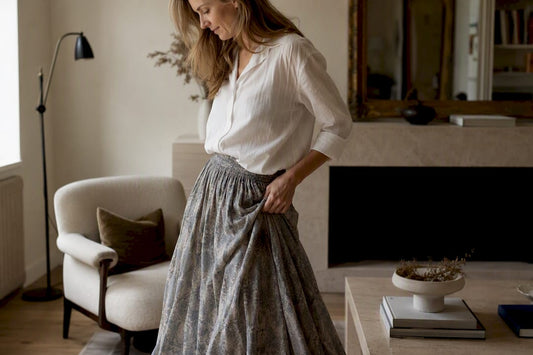
The selection of pieces in this edit evaluates proportion alongside fabric and cut, favouring garments with clear, well-documented measurements to help shoppers predict fit before ordering. The Lili Skirt in Light Navy and the Lili Skirt in Light Grey are useful examples to study hem placement against, since both sit at a considered midi length that can be tested against the centre-back measurement method described above.
A few practical pairings worth trying:
- Style either Lili Skirt with ballet flats or a low loafer for a daytime landing point that keeps the leg line unbroken, following the footwear logic covered in styling without heels.
- Add a fitted top with a defined waist, such as the approach shown in the Short Sleeve Belted Dress in Cream, to anchor the proportion above the hem.
- A small hem adjustment of a few centimetres through a local tailor can shift either skirt’s landing point without altering its design.
Dress length and body shape: pear, apple and hourglass
Body shape sits alongside height as a second filter, since the same hem can read quite differently depending on where a figure carries its width. Pear shapes, carrying more width through the hip and thigh, often suit an A-line or fit-and-flare midi that skims rather than clings, with the hem landing just below or above the knee to avoid drawing the eye to the widest part of the leg. Apple shapes, carrying width through the midsection, tend to suit an empire waist or a slightly raised seam, paired with a knee-length or midi hem that keeps the overall silhouette elongated rather than boxy. Hourglass shapes, with a defined waist relative to hip and bust, can wear fitted styles at almost any length, from knee to maxi, since the waist definition does most of the proportional work regardless of hem.
None of these shapes dictate a single correct length any more than height does. The same body shape guidance that separates height from silhouette also notes that fit through the waist and hip often matters more than the length itself. A pear shape in a well-cut midi can look just as balanced as an hourglass figure in the same hem, provided the waist and hip shaping suit the individual body underneath. Treat shape as a second filter after height, not a replacement for it, and use fabric structure (a slight A-line versus a straight column) to fine-tune further.
Seasonal factors that influence dress length
Climate and occasion calendar both shift which lengths feel practical through the year, particularly across Australia’s long warm-weather stretch. Through summer, above-knee and knee-length styles in lighter fabrics suit humid Queensland afternoons far better than heavier midi or maxi cuts, which can feel restrictive in high heat even when they look elegant. A midi in a breathable fabric such as linen or viscose offers a middle ground for warmer months when a shorter hem feels too casual for the occasion.
Cooler months make longer lengths more comfortable to wear without additional layering underneath. A maxi or tea-length dress in a heavier weave works well through Brisbane’s milder winter, often paired with boots or a longer coat that complements rather than competes with the hem. Transitional seasons reward midi lengths precisely because they adapt most easily, taking a light knit or jacket on cooler days and shedding it when temperatures lift.
Fabric weight matters as much as the hem itself when matching a dress to the season. A floor-length style in a fluid, lightweight fabric can still suit a warm evening event, while the same length in a structured or heavier fabric reads more appropriate for a cooler formal occasion. When shopping Edito’s dresses by season, checking the fabric composition alongside the length gives a more complete picture than the hem measurement alone.

Styling tricks to balance proportion with length and accessories
Length is only one lever for creating visual balance. Vertical detailing, such as a seam running down the bodice or a row of buttons, draws the eye up and down rather than across, which can make a shorter frame read taller regardless of hem choice. Monochrome dressing, where the dress and shoes sit in a similar tone, extends the visible leg line further than contrasting colours, a point worth remembering for petite frames choosing between a midi and a shorter hem.
Waist placement remains one of the most reliable tools available. A higher waist seam shortens the visual distance to the hip, effectively lengthening the leg line beneath it, which is particularly useful when working with a midi or maxi on a shorter frame. Accessories reinforce the same effect: a long pendant necklace or a scarf worn vertically draws the eye downward, while oversized horizontal accessories, such as a wide belt sitting low on the hip, can shorten the appearance of the torso if used carelessly.
Footwear remains the final adjustment. Nude or skin-toned shoes that closely match your own skin tone create the most seamless transition from hem to foot, extending the leg line further than a contrasting colour would. Pointed-toe flats or loafers achieve a similar effect to a heel without the trade-off in comfort, a detail worth testing with any of the lengths discussed earlier in this guide.

Finding the length that feels right for you
Rules help you narrow the field, but the dress that actually works is the one you feel settled in once you have tried it, sat in it and walked across a room. A small alteration or a different shoe can resolve a proportion issue far more reliably than chasing a new length altogether, so treat tailoring as part of the process rather than a last resort.
— Mickael Martin
Edito’s curated dresses and skirts for testing hem and proportion
Edito’s edit of French and European designer pieces is built around exactly this kind of proportion-first thinking, with clear measurements and quality fabrics that hold their shape rather than stretching out of place by midday.

The Lili Skirt in Light Navy and Lili Skirt in Light Grey are both practical starting points for testing the midi length against your own centre-back measurement, whether you are shopping online or visiting the Brisbane boutique in person. Browse the full dresses collection to compare lengths side by side, or explore tops and knitwear, bags and shoes to build a complete outfit once you have settled on a hem that suits your proportions.
Where these styling and measurement guidelines come from
This guide draws on Australian styling resources covering silhouette analysis, body shape guidance and footwear’s effect on proportion.
Sources
- Body Shape Guides | Style Sense
- Best summer dresses for petite women | Mamamia
- Fashion styling for your silhouette | Macquarie Community College
FAQ
What dress length should I wear based on my height?
Petite heights generally suit above-the-knee or a midi finishing on the lower calf, average heights have the most flexibility across knee-length and midi, and taller frames can wear mini through maxi provided the garment has enough length through its panels. Proportion between torso and legs matters as much as height itself, so treat these as starting points rather than fixed rules.
What length dress suits a petite woman around 5’2"?
Above-the-knee hems or a midi finishing just above the ankle tend to work well, especially paired with a defined waist or vertical detailing to lengthen the line, as suggested in styling coverage for petite shoppers. A higher waist placement is a simple way to create the impression of longer legs beneath the hem.
How long should my dress be if I’m around 5’4"?
At this height, knee-length to midi hems are generally the most adaptable, since they tend to land close to their intended point without the risk of an awkward mid-calf break. Testing the hem with the shoes you plan to wear remains the most reliable way to confirm the final landing point before committing to a purchase.
How do I check if a midi length will suit my height?
Measure from the base of your neck to your desired hem point and compare it against the garment’s listed centre-back length, then try the dress with your intended shoes and sit down to check movement. A midi that avoids landing at the widest part of the calf tends to read as intentional on most heights, according to petite styling guidance.
Does shoe choice really change how a dress length looks?
Yes, footwear shifts the visual line of a hem noticeably, and slimline flats, loafers or low heels can preserve the leg line as effectively as a higher heel. ABC’s styling coverage confirms that comfortable, close-fitting shoes are a genuine alternative rather than a compromise on proportion.