
Essentiel Antwerp is a Belgian label that sizes its women’s clothing on the European system, so the number or letter on the tag is only the beginning of the answer. The brand itself says that fit may vary by style or personal preference, which means the reliable method is to take three body measurements, compare them with the chart in centimetres, and then check the measurements on the individual product page. This guide walks you through that process, with the full chart, a worked example and the questions Australian shoppers most often ask.
TL;DR
- Essentiel Antwerp sizes are based on European sizing: EU 34 is XS, EU 36 is S, EU 38 is M, EU 40 is L and EU 42 is XL.
- Measure your bust, waist and hips in centimetres and compare them with the brand’s chart, rather than relying on the letter alone.
- The brand states that fit varies by style, so read the product page measurements and the garment’s cut before you choose a size.
- If you land between two sizes, let the cut decide: more structured pieces reward the closer size, while draped or layered pieces reward the roomier one.
- Still unsure? Our team at Edito can help you work through it before you order.
Table of Contents
- Is Essentiel Antwerp true to size?
- The Essentiel Antwerp size chart, translated for Australia
- Body measurements by size
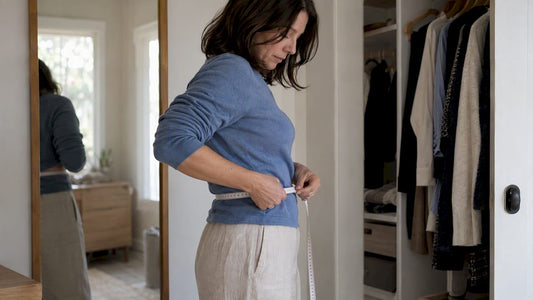
- How to take your measurements
- A worked example: when your measurements fall across sizes
- Check the product page, not just the general chart
- Choosing a size by garment type
- Sizing for Australian seasons and lifestyle
- Our perspective: size to the garment, not the label
- Shop the Essentiel Antwerp edit at Edito
- A short checklist before you order
- FAQ
- Sources
Is Essentiel Antwerp true to size?
The honest answer is that it is true to its own chart, and that chart is European. Essentiel Antwerp states that its sizes are based on European sizing and that fit may vary by style or personal preference. That is a fair description of how most designer labels work: a fitted shirt, a gathered dress and a boxy knit are cut with different amounts of ease, so the same size can feel quite different across them.
For an Australian shopper, this changes the question. Rather than asking “Am I a 10 or a 12 here?”, it is more useful to ask “Which of the brand’s measurement ranges do I fall into, and how much room does this particular garment give me?” Both answers are easy to find once you know where to look.
A note on the brand: Essentiel Antwerp comes from Antwerp, in Belgium, and is known for colour, print and embellishment rather than quiet minimalism. That affects fit in a practical way. Statement pieces are often designed to be worn with a degree of volume or drama, so a precise number matters less than understanding the silhouette.
The Essentiel Antwerp size chart, translated for Australia
The brand’s own chart pairs each European size with a letter size and a numeric label, then lists the French, Italian, UK and US equivalents. The table below reproduces the women’s clothing conversions from the official size guide.
| EU size | Letter size | Brand number | France | Italy | UK | US |
|---|---|---|---|---|---|---|
| 32 | XXS | 00 | 34 | 36 | 4 | 2 |
| 34 | XS | 0 | 36 | 38 | 6 | 4 |
| 36 | S | 1 | 38 | 40 | 8 | 6 |
| 38 | M | 2 | 40 | 42 | 10 | 8 |
| 40 | L | 3 | 42 | 44 | 12 | 10 |
| 42 | XL | 4 | 44 | 46 | 14 | 12 |
| 44 | XXL | 5 | 46 | 48 | 16 | 14 |
Notice that the chart does not include an Australian column. Australian dress sizes are not standardised across labels, and each retailer’s own numbering can differ, so we recommend that you do not convert by memory from a number you wear at a high-street store. Use the letter size and, above all, your measurements. If you want a broader method for moving between systems, our guide on converting European designer sizes by measuring first explains the approach in more detail.
Body measurements by size
The measurement table is where the sizing becomes precise. These are body measurements, not garment measurements, and the brand gives them in centimetres. The figures below come from the same official chart.
| EU size | Letter size | Bust (cm) | Waist (cm) | Hips (cm) |
|---|---|---|---|---|
| 32 | XXS | 76–80 | 56–60 | 84–88 |
| 34 | XS | 80–84 | 60–64 | 88–92 |
| 36 | S | 84–88 | 64–68 | 92–96 |
| 38 | M | 88–92 | 68–72 | 96–100 |
| 40 | L | 92–96 | 72–76 | 100–104 |
| 42 | XL | 96–100 | 76–80 | 104–108 |
Each range is four centimetres wide, and each size steps up by four centimetres at the bust, waist and hips. That regularity helps when you fall near an edge: if your hips measure 96 cm, for instance, you sit on the boundary between S and M, and the cut of the garment becomes the deciding factor.
How to take your measurements
A soft tape measure, a mirror and a few minutes are all you need. The brand’s instructions are straightforward, and we have added a few practical notes from our own experience of helping customers choose.
- Bust. Measure under the arms, around the fullest part of the chest, as the brand directs. Keep the tape level across your back.
- Waist. Measure around your natural waistline, above the hip bones. The brand’s guidance is not to pull the tape too tight, so let it sit snugly without compressing.
- Hips. Measure around the fullest part of the hips and buttocks, again keeping the tape parallel to the floor.
- Write all three down. Compare each with the table above. If they fall into different sizes, note which one is which.
Take your measurements in light, close-fitting clothing, or none, and stand naturally rather than holding your breath. It is also worth measuring at the time of day you usually dress, since many women find their waist measurement shifts slightly through the day.
A worked example: when your measurements fall across sizes
Most women are not one size throughout, and designer European cuts are made for a particular proportion. Suppose your bust is 86 cm, your waist 70 cm and your hips 98 cm. On the chart, your bust sits in S (84–88), while your waist and hips sit in M (68–72 and 96–100).
Here is how we would think it through:
- For a dress with a defined waist or a fitted bodice, consider the size that suits the area that is hardest to alter. Waists and hips are generally harder to adjust than a slightly generous bust, so M may be the more comfortable starting point.
- For a shirt or blouse, the bust and shoulders do most of the work, and the waist is often looser, so S may be the better choice.
- For trousers or a skirt, go by the waist and hips, which points to M.
- For knitwear, consider how you want it to sit. A close fit suggests the smaller size, while a relaxed drape suggests the larger.
This is general fitting logic rather than a rule from the brand, and individual garments will differ. That is exactly why the next step, reading the product page, matters.
Check the product page, not just the general chart
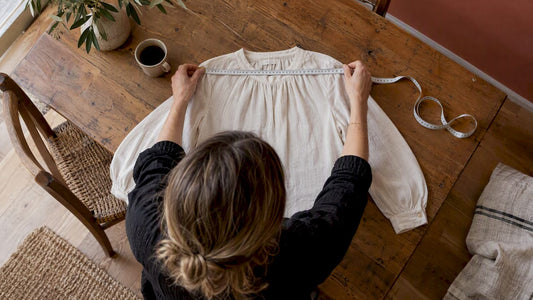
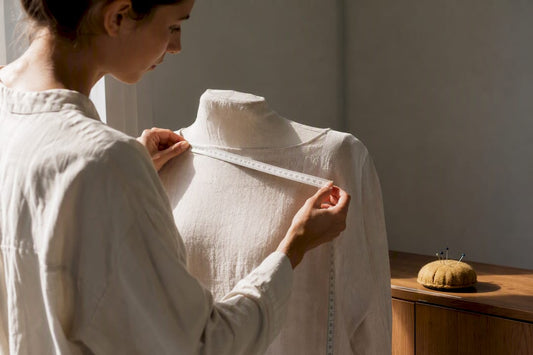
The general guide gives you your body’s range. It does not tell you how much ease a given style has been designed with. The brand’s FAQ says that specific product measurements appear on almost every product page, in addition to the general size guide. If you can find a garment measurement, such as the length or the width across the chest, compare it with a piece you already own and like. A flat measurement of a favourite shirt, laid beside the product’s figure, tells you more than any chart can.
When you browse our Essentiel Antwerp collection, look at the cut as well as the size: whether the garment is gathered, cropped, structured, oversized or cut on the bias will change what size is right for you. If a description or measurement leaves you unsure, ask us before you order.

Choosing a size by garment type
Because fit varies by style, it helps to think in terms of categories. The notes below are fitting principles we use when advising customers, not claims about specific Essentiel Antwerp garments, so always confirm with the product page.
Dresses
Dresses with a pronounced print or a gathered or tiered skirt often carry volume through the body, and a smaller size can look sharper while a larger one reads as more relaxed. A defined waist, a smocked bodice or a wrap closure changes the calculation again. Choose by the part of the dress that is cut closest to the body. You can browse the full range in our dresses collection.
Tops and shirts
For tops, bust and shoulder fit lead. A shirt that is intended to sit loosely can be worn in either of two adjacent sizes depending on the look you want, whereas a fine fitted top is less forgiving. Our tops collection brings together the current shirts, tees and sleeveless styles. If you want a feel for the range, the Jidole T-shirt in Navy and the Jop Sleeveless Top in Multicolour are good places to start, and the product pages are where you will find size availability.

Trousers
The brand’s size guide notes that its trousers and denim use waist sizes, and that certain models come in different lengths, shown with an L in the size, for example 30L32, meaning waist 30 and length 32, as stated in the official chart notes. Measure your waist and hips, and check the length option on the product page. Our pants collection is the place to compare styles.
Knitwear and layering
Knitwear is the category where personal preference matters most. In an Australian climate, where you may be layering a light knit over a dress for a cool Brisbane evening in winter, or draping it over your shoulders for air-conditioned offices in summer, you may prefer a roomier fit than the chart suggests. Consider what you will wear underneath, and size for the layering you actually do.
Sizing for Australian seasons and lifestyle
European collections are designed around a Northern Hemisphere calendar, which means that the pieces arriving in a given season may be in different weights than the weather outside your door. A few thoughts on how that affects choosing a size:
- Summer pieces in a humid climate. In Queensland’s humidity, fabric that clings can be uncomfortable. If a lightweight top or dress sits between two sizes, many women prefer the one that lets air move.
- Transitional layers. Brisbane winters are mild by European standards, so lightweight jackets and knits tend to be worn over a single layer. Size for that layer, not for a heavy winter wardrobe.
- Occasion dressing. For a wedding, a Melbourne Cup lunch or a racing-carnival event, where you will be seated, standing and moving for hours, give yourself room to sit comfortably before settling on the closer size.
If you like to follow what each season brings, our editorial pages on the Essentiel Antwerp Summer 2026 collection and the Autumn 2026 collection show how the pieces are styled.
Our perspective: size to the garment, not the label
At Edito, we curate European designer fashion for Australian women, and sizing is the question that comes up most often when a customer moves from familiar high-street labels to a European house. Our view is simple. A European size is a measurement system, not a verdict on your body, and the number printed on a tag says very little about how a garment will live on you.

What we encourage instead is the habit of the French and Belgian wardrobe: think of la coupe, the cut, before you think of the size. A well-cut piece with a clear silhouette will look intentional at a slightly relaxed fit and precise at a closer one, and either can be right depending on how you want to feel in it. Essentiel Antwerp, with its bold prints, colour and embellishment, is a good example of a label where character comes from the design, so we suggest choosing the size that lets the piece do its work, rather than the size that matches a number you wore elsewhere.
Our practical advice is to measure once, write the figures somewhere you will find them, and compare them with the brand’s centimetre ranges each time you shop. Combine that with the garment measurements on the product page and, if you are still uncertain, ask us. We would rather help you choose the right size the first time than have you guess.
— Mickael Martin
Shop the Essentiel Antwerp edit at Edito
We stock a curated selection of Essentiel Antwerp alongside other French and European labels, and we ship Australia-wide from our Brisbane boutique. Begin with the Essentiel Antwerp collection to see what is in, or browse by category in clothing and accessories. For something small to complete an outfit, the Jortensia brooch in terracotta is a one-size accessory that needs no measuring at all. For more on the brand’s world, visit our Essentiel Antwerp stories page.
A short checklist before you order
- Measure your bust, waist and hips in centimetres.
- Find each measurement in the brand’s chart and note the size for each.
- Open the product page and read the garment measurements and description.
- Decide how you want the piece to sit: close, as designed, or relaxed.
- If two sizes seem right, choose by the cut: the closer size for structured pieces, the roomier one for draped or layered pieces.
- If you remain unsure, contact us or the brand’s customer service, which the official FAQ recommends for customers who are still hesitating.
FAQ
Does Essentiel Antwerp run small or large?
The brand does not describe its sizing as either small or large. It says that its sizes are based on European sizing and that fit may vary by style or personal preference. Compare your measurements with the chart and the product page rather than relying on a general impression.
What is Essentiel Antwerp size 38 in Australian sizes?
The brand’s chart lists EU 38 as M, with a UK 10 and a US 8 equivalent, and gives body measurements of bust 88–92 cm, waist 68–72 cm and hips 96–100 cm, according to the official size guide. Because the chart has no Australian column and Australian sizing varies by label, use those centimetre ranges as your guide.
Where can I find the measurements for a specific garment?
The brand’s FAQ says that product-specific measurements are available on almost every product page. Look there for details such as length, and compare them with a similar garment you own.
What if I am between two sizes?
Look at which measurement is hardest to compromise on and at the cut of the garment. Structured, fitted pieces usually suit the size that matches your waist and hips, while looser or layered pieces may be better in the roomier size. If you are still unsure, ask our team before ordering.
Are the size charts the same for clothing and trousers?
Not quite. Clothing uses the EU, letter and number sizes shown above, while the brand’s trousers and denim use waist sizes, with some styles offered in different lengths, as set out in the official size guide.