
The most reliable way to get the right EU size from an AU size is to match your foot length in centimetres against a proper chart, since a women’s AU 8 typically converts to an EU 39, though brand variance means that figure is only a starting point. Measuring your feet properly, rather than assuming your usual AU number translates directly, is the surest path to a confident fit when ordering European footwear.
TL;DR:
- Trace each foot while standing in usual socks, measure from heel to longest toe, and use the larger measurement because feet can differ.
- Measure in late afternoon or evening, when feet have naturally swollen, and allow about 1.5 centimetres beyond toe length for walking room.
- EU sizing often lacks half sizes, so round up between two numbers; brand lasts, widths, and toe shapes can still change the fit.
- Check the listed foot length and fit notes for each style, then consider ordering adjacent sizes when returns are free, especially from unfamiliar brands.
Table of Contents
- AU to EU shoe size chart for women and men
- Quick AU to EU conversions you can check in seconds
- How to measure your foot in centimetres at home
- Why the conversion is never perfectly exact
- Fit advice for buying European shoes from Australia
- How we guide you to the right EU size
- A note on measuring before you invest in European footwear
- Edito’s curated shoes, sized with confidence
- FAQ
- Sources
AU to EU shoe size chart for women and men
Converting between sizing systems becomes far simpler once you have foot length in centimetres as your anchor point, because AU, UK and EU numbers are really just different labels placed over the same physical measurement. Australian adult sizing commonly follows UK sizing, and most conversion tables map that AU/UK figure across to its EU and centimetre equivalents.
These figures sit within the broader range public conversion tables list for AU sizes between 4 and 12.5, and they should be treated as approximate rather than exact. EU sizing often skips half sizes altogether, so a foot measuring between two EU whole numbers usually means rounding up to protect toe room rather than rounding down to save a few millimetres. Brand variance is the other factor worth flagging here: two European labels can use different lasts for what is nominally the same EU number, which is why checking a brand’s own size notes alongside this chart gives the most dependable result.
Quick AU to EU conversions you can check in seconds
When you already know your usual AU size and just need a fast lookup, these rules of thumb cover the most common range without requiring the full chart.
- AU 6 women sits close to EU 37, and AU 7 generally lands on EU 38.
- AU 8 women generally convert to an EU size around 39, with AU 9 moving to about EU 40.
- AU 10 women usually matches EU 41, following the same one-size-up pattern.
- For men, AU and UK numbers align, so AU 8 is EU 42 and AU 10 is EU 44.
- When your foot measurement falls between two EU sizes, round up rather than down to avoid cramping your toes.
These shortcuts work well for a quick estimate, but a centimetre measurement remains the safer reference whenever you’re ordering a style you haven’t tried before.
How to measure your foot in centimetres at home
Getting an accurate centimetre measurement takes a few minutes and removes most of the guesswork from ordering European sizes online. Podiatry Australia recommends tracing the foot and measuring from heel to longest toe as the most consistent method for buying shoes without trying them on first.
- Place a sheet of paper on a hard floor and stand on it with your full weight, wearing the socks you’d typically wear with the shoe.
- Trace around your foot, keeping the pen upright against your skin for an accurate outline.
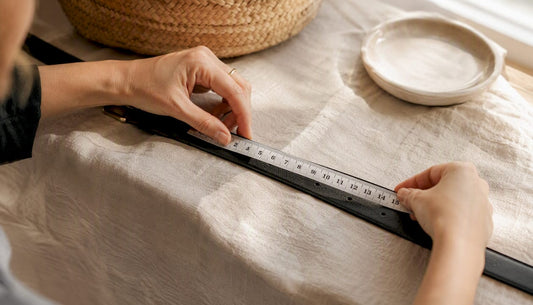
- Measure the longest distance from the back of the heel to the tip of the longest toe, in centimetres.
- Repeat for both feet and use the larger measurement, since most people have one foot slightly longer than the other.
- Measure in the late afternoon or evening, when feet have naturally swollen slightly from the day’s activity.
Pro Tip: Add around 1.5 centimetres of space beyond your measured foot length when choosing a size, since Podiatry Australia recommends this allowance to stop your toes hitting the front of the shoe during normal walking.
Why the conversion is never perfectly exact
Australian adult sizing follows the UK scale in practice, which is straightforward enough until you cross into the European system, where sizes are built around an entirely different idea. EU sizes derive from the length of the shoe’s last measured in Paris points, with one Paris point equal to two-thirds of a centimetre, and this is precisely why no single AU to EU formula holds true across every brand.
Because EU sizing rarely includes half sizes, a foot that measures neatly between two whole numbers forces a rounding decision, and rounding up is almost always the safer call. Width and last shape add another layer of variation: a narrow Italian last and a roomier Spanish or French cut can produce noticeably different fits at the same labelled EU size, and a pointed toe or an open sandal style will feel tighter than a rounded closed shoe even when the size number is identical.

Fit advice for buying European shoes from Australia
A few practical habits make a real difference once you’ve settled on a converted size, particularly when a style is new to you or the brand is one you haven’t worn before.
- Always size to your larger foot rather than averaging between the two.
- Check that your heel sits snugly without lifting when you walk, and that your toes have room to spread naturally.
- Size up half a size if the shoe’s last runs narrow, rather than switching to a wider style you haven’t tried.
- Confirm the returns window before ordering, and order two adjacent sizes when returns are free so you can send back whichever doesn’t fit.
- Read any last or fit notes listed on the product page, since these often flag whether a style runs small, true to size, or generous.
Warmer Australian conditions and long days on your feet, whether travelling or at work, can mean your usual size feels snugger by evening, so factoring in a little extra room is worth the small trade-off in a looser morning fit.
How we guide you to the right EU size
As a Brisbane based destination for curated French and European designer fashion, we pay close attention to the detail that makes a purchase feel right from the first wear, and footwear is where sizing confidence matters most. Each shoe style on our site carries foot-length guidance alongside the standard EU size, so you can check your centimetre measurement against the specific last used for that design rather than relying on the number alone. Our Bala Shoes in Khaki, Amalie Mules in Brown and Joan Heel in Brunt Umber each list their own fit notes, since a mule and a structured heel can sit quite differently on the same foot.

A note on measuring before you invest in European footwear
Designer shoes are an investment worth getting right the first time, and that starts with an honest centimetre measurement rather than a guess based on your usual AU number. Australian summers bring a degree of foot swelling that’s worth accounting for, particularly with structured styles that offer little give. Measure properly, check the brand’s own fit notes, and the rest of the process becomes far simpler.
— Mickael Martin
Edito’s curated shoes, sized with confidence
Once you know your measurement, choosing from our curated edit of European shoes becomes a far more straightforward decision. We’ve selected each style, from the Bala Shoes in Khaki to the Amalie Mules in Brown and the Joan Heel in Brunt Umber, for the quality and craftsmanship that define our broader shoes collection.

Check the foot-length guidance listed on each product page before you order, and reach out if you’d like a hand choosing between sizes.
FAQ
Is shoe size different in Australia to Europe?
Yes, Australian sizing follows the UK scale, which uses a different numbering system to Europe’s EU sizing. A woman’s AU 8 generally converts to an EU 39, though checking the brand’s own chart is always worthwhile.
Is it better to buy shoes a size bigger?
Sizing up slightly is often safer than sizing down, particularly for narrow lasts or styles without half sizes in EU numbering. Podiatry Australia recommends allowing about 1.5 centimetres of space beyond your longest toe for comfortable movement.
How do you measure your shoe size at home?
Trace your foot on paper while standing, then measure from the back of your heel to your longest toe in centimetres, repeating for both feet. Use the larger of the two measurements and measure in the afternoon or evening, when your feet have naturally swollen from the day.
Is a 38 a size 7 or 8?
An EU 38 generally corresponds to an AU women’s size 7, based on standard conversion tables mapping AU sizes through to EU and centimetre equivalents. Brand variance means it’s worth confirming against your measured foot length rather than relying on the number alone.
Sources
- Podiatry Australia — incorrectly fitted shoes
- Shoe Size Guide — AU, US, UK and EU conversions
- International Shoe Sizes — Australian conversions