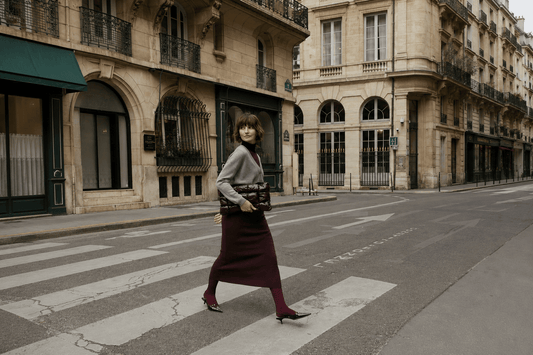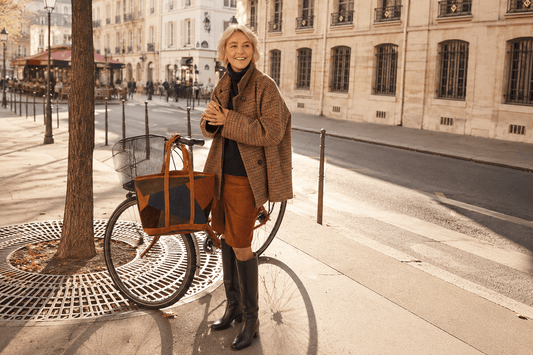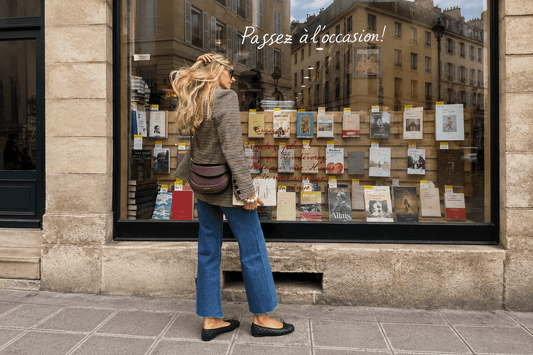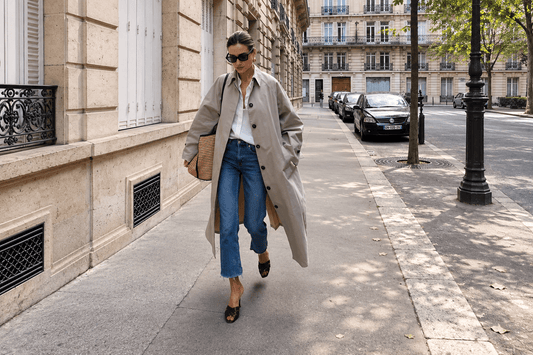

A French wardrobe is built on a short list of well-made pieces, worn often and worn differently: a crisp white shirt, straight dark or pale denim, a tailored blazer, a fine knit, a simple dress, tailored trousers, a flat shoe and one good bag. The list is modest. What sets it apart is the quality of each piece and the discipline of repeating them. This guide sets out those staples, explains why each earns its place, and adapts them to Australian seasons, because a Parisian winter coat does little for a Brisbane June.
TL;DR
- French dressing is a uniforme of repeatable, high-quality basics, not a costume of berets and stripes.
- Eight pieces carry most of the work: white shirt, denim, blazer, knitwear, a simple dress, tailored trousers, flat shoes and a considered bag.
- In Australia, fabric weight matters more than the label: choose cotton, linen, silk and fine merino so each piece works across more than one season.
- Buy fewer, better pieces in a restrained palette so everything combines without effort.
Table of Contents
- What “French wardrobe staples” really means
- The eight staples, one by one
- A palette that makes everything work together
- Adapting the French wardrobe to Australian seasons
- How to find the gaps in what you already own
- Our perspective: why we edit, not accumulate
- Start your staples at Edito
- Frequently asked questions
- Sources
What “French wardrobe staples” really means
Search for the phrase and you will find plenty of lists headed by the same cliché: the beret, the Breton stripe, the red lip. These are souvenirs of Paris, not a wardrobe. The women who inspired the idea tend to own a small number of garments, chosen for cut, cloth and longevity, and they wear them until they soften and take on character.
That philosophy, a considered edit rather than a large collection, is the real French staple. Each piece has to do three things: fit well, feel good against the skin, and combine with at least four or five other things you already own. If you want the cultural background to this way of dressing, our guide to why French women look effortlessly stylish explores the attitude behind the clothes, and The Complete Guide to Parisian Style goes further into the details.
A note on geography, because it matters to us. French style is one thread in a wider European tradition. Sœur, Sessùn, BA&SH and Vanessa Bruno are French labels. Sita Murt is Spanish, from Catalonia, and Essentiel Antwerp is Belgian. The sensibility overlaps, but the heritage differs, and we think it is worth saying so.
The eight staples, one by one
1. The white shirt
No piece appears on more French lists, and for good reason. A white shirt works open over a camisole in summer, buttoned beneath a knit in winter, and half tucked into denim on a Saturday. The French way is to keep it slightly undone and never overly pressed: the collar is allowed to relax.
What to look for: a substantial cotton poplin or a fluid, slightly textured weave that is not see-through, sleeves long enough to roll, and a shoulder that sits properly. Our Saphir Shirt in White is the kind of piece we mean, and the wider tops collection carries other shirts and blouses in a similar spirit.

2. Denim that behaves
French denim is rarely extreme. Think straight or gently relaxed legs, a clean hem, and a wash that is either deep indigo or a soft, pale neutral. Pale denim reads fresher in Queensland heat, while dark denim sharpens quickly for dinner.
If you are choosing one pair, take a straight leg at ankle length: it works with flats, loafers, sandals and boots. The Harry Jean in Chalk is a light-toned option that suits warmer months and pairs easily with navy, black or tan.
3. A tailored blazer
The blazer is the French answer to formality: it makes jeans look intentional and a slip dress look practical. The best are cut with a slightly relaxed shoulder and a longer line, rather than a stiff, corporate silhouette.
For Australia, the lining and fabric weight decide how often you will wear it. A lightly lined or unlined blazer in wool blend, linen or a crepe-like fabric works from April to September in most of the country, and over the shoulders on an air-conditioned summer evening. Heavy, fully lined wool belongs to Melbourne and Canberra winters.
4. Fine knitwear
A good knit is the staple that most improves with quality. A fine-gauge crew or V-neck in merino, cashmere or a cotton blend can be worn alone, under a blazer or tied over the shoulders. Choose charcoal, navy, camel, cream or a deep green over novelty colours.
Brisbane readers often assume knitwear is irrelevant, but the numbers say otherwise. According to the Bureau of Meteorology’s Brisbane climate statistics, the mean July minimum is around 9.5°C and the mean maximum around 20.4°C. Mornings and evenings in winter call for a proper layer, and a lightweight knit is exactly right. Browse our current selection of knitwear when the season turns.
5. A simple dress
The French dress is rarely fussy. It is often a midi or knee-length shape in a print that looks quiet from a distance, a solid colour, or a fabric with some movement. The point is that it can go from the office to lunch to a wedding guest outing by changing the shoes and the jacket.
Choose a cut that works without a belt, in a fabric that does not cling in humidity: viscose blends, cotton, silk and linen all suit Queensland summers. Our dresses collection is where we would start.
6. Tailored trousers
Tailored trousers are the quiet workhorse. A high waist, a straight or slightly wide leg, and a clean front make them equally good with a tucked shirt, a fitted knit or a silk camisole. Ecru, black, navy and stone are the most versatile.
The Erell Trousers from BA&SH, a French label, show how a soft neutral can carry across seasons, and you can see further options in the pants collection.

7. A flat or low shoe
The ballet flat, the loafer, the simple leather sandal and the ankle boot are the footwear most associated with French dressing, because they allow you to walk. A French woman’s day involves a lot of walking, and so does an Australian woman’s weekend in the city or at a market.
Buy the best leather you can, in black, tan or a neutral that matches your bag. A low block heel is the sensible step up for evenings. Explore our shoes when you are ready.
8. One considered bag
A structured leather shoulder bag or a roomy tote is the finishing staple. It should be large enough for daily life, plain enough to go with everything, and sturdy enough to age well. In summer, a woven basket bag adds texture. Our accessories collection covers scarves and smaller pieces too, and we keep bags in the same restrained spirit.
A palette that makes everything work together
The reason a French wardrobe seems effortless is the colour discipline beneath it. Most capsules revolve around three or four base colours: navy, black or charcoal, cream or white, and a warm neutral like camel or stone. A single accent, perhaps a deep red, an olive or a soft blue, then runs through the rest.
This is not about dullness. It is arithmetic: eight pieces in a coherent palette produce far more combinations than twelve pieces in unrelated colours. You can see the full logic in our guide to building a French capsule wardrobe.
| Staple | Warm-weather version | Cooler-weather version |
|---|---|---|
| White shirt | Cotton poplin or linen blend, sleeves rolled | Layered under a knit or blazer |
| Denim | Pale, chalky wash, straight leg | Deep indigo, with boots |
| Blazer | Unlined linen or crepe | Wool blend, longer line |
| Knitwear | Fine cotton, short sleeve or light crew | Merino or cashmere crew |
| Dress | Midi in cotton, viscose or silk | Same dress with knit and boots |
| Trousers | Ecru or stone, wide leg | Navy or black, tailored |
| Shoes | Leather sandal, flat | Loafer or ankle boot |
| Bag | Woven tote or soft leather | Structured shoulder bag |
Adapting the French wardrobe to Australian seasons
The Parisian list is written for four cool-to-cold seasons. Most Australian women live with something different: long, warm summers, short winters, and swings between humid days and air-conditioned offices. A few adjustments make the philosophy work here.
Choose cloth before colour. Natural fibres such as cotton, linen, silk and merino breathe better in humidity and make your staples last into the shoulder seasons. Heavy synthetics and thick wool rarely earn their place north of Sydney.
Think in layers, not coats. The trench coat appears on nearly every Parisian list, but in Brisbane a lightweight trench or a long, unlined blazer does the same job for fewer weeks of the year. In southern states, a wool coat enters the picture, and it is worth investing in.
Let one piece cross two seasons. A pale pair of trousers in a mid-weight fabric, a fine knit that can be worn alone in autumn, a silk shirt that works with a jacket in winter: each of these halves your need for separate seasonal wardrobes.
Remember the occasion calendar. Race days, long lunches, Christmas parties, a weekend away on the Sunshine Coast or a work event in the city: the same staples dress up or down by changing accessories, shoes and one layer.

How to find the gaps in what you already own
Before you buy anything, take stock. The most useful exercise is to lay out the eight staples and mark which you already own in a version you genuinely wear. Most women find they have three or four, and that the real gaps are not what they expected: perhaps a good blazer, or a pair of trousers that fits at the waist and hips.
If you would like help with this process, stylist Wendy Pilch has built a platform that lets you assess your closet, organise it and identify the missing pieces before you shop. It is a sensible step for anyone who suspects she owns a lot yet wears little.
Then apply a few tests to anything new:
- Can I wear it with at least four things I own?
- Does the fabric suit the climate I live in for most of the year?
- Will I still like the shape in three years?
- Can I imagine it worn with flats and with a heel?
- Does the fit work without alterations, or is the tailoring worth it?
A piece that earns four yeses usually belongs in the capsule. Our guide to modernising French designer classics shows how to refresh pieces you already have rather than replacing them.
Our perspective: why we edit, not accumulate
At Edito, we choose European labels for the integrity of their cut, cloth and craftsmanship, and we aim to describe each by its true country and heritage. That is why a Sœur blazer and a Sita Murt dress can sit in the same wardrobe without pretending to share a passport. The French staples, to us, are an approach rather than a product list: buy with intent, wear with ease, and let quality do the talking.
We also think Australian women deserve advice that reflects where they live. A French list copied word for word ignores humidity, summer heat and the pace of an Australian week. The better answer is to keep the philosophy and change the fabric. When you start with a few excellent pieces, such as a shirt that fits, trousers that move and a knit you reach for every cold morning, the rest of the wardrobe becomes easier to assemble.
If you would like to see the labels behind this way of dressing, our overview of French fashion brands available in Australia is a good place to begin.
— Mickael Martin
Start your staples at Edito
If you are ready to build the core of your wardrobe, begin with our French fashion collection or browse all clothing. We ship across Australia, and Brisbane customers are welcome to try pieces in the boutique. For outfit ideas using the pieces above, see our six outfit formulas for French fashion in Australia.

Frequently asked questions
What are the most essential French wardrobe staples?
The most consistent items are a white shirt, well-cut denim, a tailored blazer, fine knitwear, a simple dress, tailored trousers, flat shoes and a quality bag. Trench coats and striped tops appear often too, though they are more seasonal in Australia. Start with the pieces you would wear weekly.
Are Parisian wardrobe essentials the same as French ones?
In practice, the terms are used interchangeably. Parisian style is a particular, urban version of French dressing, usually neat, neutral and walkable. The core list of shirt, denim, blazer, knit and flat shoes is shared.
How many pieces does a French capsule wardrobe need?
There is no official number, and the count depends on your lifestyle. Many women begin with eight to ten pieces in a tight palette, then add by season. What matters is that each piece combines with several others.
Can I wear a French-style wardrobe in Brisbane’s climate?
Yes, with the right fabrics. Choose cotton, linen, silk and light merino, favour pale or neutral tones, and keep one or two layers for cooler mornings. Brisbane’s winter evenings, with average July minimums near 9.5°C, are well suited to a fine knit and a light blazer.