
The most versatile shoe families for a midi dress are strappy sandals or heels, ballet flats or Mary Janes, ankle boots and trainers. Each flatters the midi silhouette in its own way, and the rule that governs all four is simple: match the shoe to the occasion and hemline, then use tonal continuity between shoe and leg to lengthen the line. Specific pairings and two Edito picks follow below.
TL;DR:
- For silk or satin wedding and evening dresses, choose a pointed slingback or fine heeled sandal; matte leather avoids competing with the fabric’s sheen.
- Cotton, linen, and knit midis suit rounded flats, loafers, or clean trainers; keep the hem just above footwear to prevent ankle bunching.
- With ankle boots, show an inch of ankle; choose a block heel for stability, and favor boots when hems fall lower or weather cools.
- Build a capsule with two or three shoe types: sandals for warmth, flats or loafers for daily wear, and one boot for cool weather.
Table of Contents
- Practical pairings for every midi dress silhouette
- A quick checklist for choosing the right shoe
- Edito styling notes: fabric, finish and a capsule that works
- Choosing shoes for the Australian climate and lifestyle
- Footwear brands and designers to pair with a midi dress
- Styling shoes with European fabrics and patterns
- A short note on why the midi rewards careful choices
- Edito picks: shop the look
- FAQ
- Sources
Practical pairings for every midi dress silhouette
A midi dress sits in that elegant middle ground between a maxi and a mini, which means the shoe underneath carries real weight in how the whole outfit reads. Some styles need a lift to avoid looking shapeless; others ask for something flatter and more relaxed to keep the mood easy. Here is how each major shoe family performs against the midi dress, with a styling note you can put to work straight away.
- Strappy sandals or heels: best for evening or wedding-guest midis in silk or satin; a pointed or almond toe keeps the line sleek, and a slingback with a pointed toe is one of the most reliable ways to elongate the leg for formal occasions.
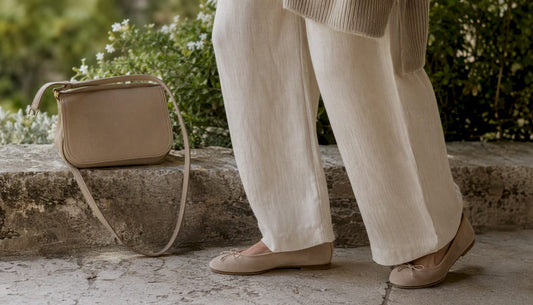
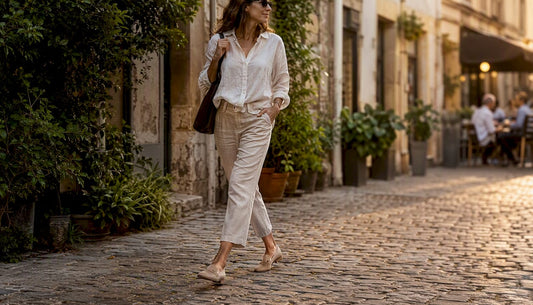
- Ballet flats or Mary Janes: suit cotton, linen or jersey midis for daytime; keep the toe rounded and soft, and let the hem sit just above the shoe to avoid bunching fabric at the ankle.
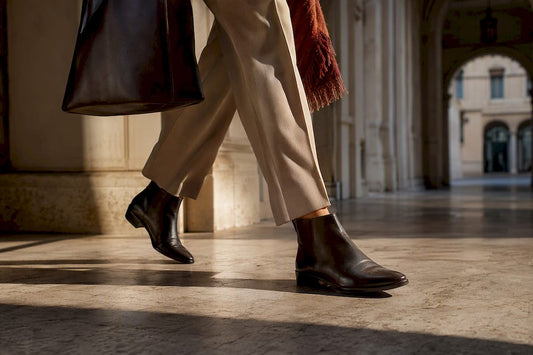
- Ankle boots: ideal for autumn and winter midis with a bias cut or soft drape; choose a mid-block heel over a stiletto for stability, and show an inch of ankle so the boot does not chop the leg line in half.
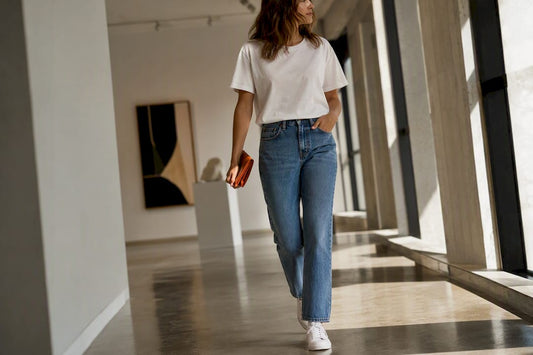
- Trainers: the easiest weekend option for knit or denim-adjacent midis; a clean white leather trainer reads more considered than a chunky sports style and keeps the outfit looking deliberate rather than accidental.
- Loafers: a smart middle ground between flats and heels for office or brunch midis; a penny loafer or a slightly heeled version adds polish without tipping into formal territory, and our loafers styling guide runs through a dozen ways to wear them.
- Espadrilles: the natural partner for summer midis in linen or cotton voile; the woven jute sole adds texture and breathes in the heat, making it a strong pick for warmer months.
- Mules: a quick slip-on option for transitional weather; a block-heel mule in a neutral leather works with both tailored and softly draped midis.
- Clogs: an unexpected but comfortable choice for casual, textured midis, especially in knit or corduroy; the wooden sole adds a crafted, European edge.
- Kitten heels: a refined option when a full stiletto feels like too much; they lift the silhouette for office or cocktail settings without sacrificing comfort over a long day.
Riding boots, cowboy boots and sock boots also deserve a mention for cooler months. Autumn round-ups consistently show that specific boot styles can update a midi dress for the season, and investing in one well-made pair, whether in burgundy or black leather, extends a summer dress well into the cooler part of the year. The same silhouette that wore sandals in February can carry sock boots in June with barely any other change.
The toe shape matters more than most people realise. A rounded toe softens a structured midi and suits daytime dressing, while a pointed or almond toe does the opposite work, adding length and formality. Heel height follows a similar logic: lower and blockier for daywear and movement, higher and finer for evening, when the dress itself is already doing less of the practical work.
A quick checklist for choosing the right shoe
Rather than guessing, run through this short sequence whenever you are dressing a midi for a specific outing.
- Identify the occasion first: office, weekend, wedding or evening sets the formality ceiling before anything else.
- Read the dress silhouette: a fluid, bias-cut midi wants a shoe with some polish; a structured or A-line midi can carry a flatter, sportier shoe.
- Decide heel or flat: evening and wedding-guest looks lean towards a heel; office and weekend looks generally favour a flat or a low block heel.
- Match the toe shape to the mood: pointed for elegance and length, rounded for softness and ease.
- Check tonal continuity: a shoe close to your skin tone or the dress colour keeps the leg line unbroken and the outfit looking taller.
For the office, a knit midi with a kitten heel or a loafer reads polished without trying too hard. For a weekend brunch, the same dress in cotton pairs easily with a clean trainer. For a wedding, a silk or satin midi calls for a pointed slingback. For evening, a strappy sandal in a tone close to your own skin keeps the focus on the dress rather than the footwear.
On proportion: showing around an inch of ankle between hem and shoe keeps the leg line intact, whichever shoe you choose. Boots tend to win over sandals once the hem sits lower or the weather turns, since a full boot shaft balances a longer, heavier dress better than an exposed ankle does.
Pro Tip: When in doubt, choose the shoe that is one notch more formal than the dress fabric suggests. It is easier to dress a midi down with accessories than to rescue an underdressed pairing.
Edito styling notes: fabric, finish and a capsule that works
Fabric decides more of the shoe conversation than most people expect. A silk or satin midi, like our Minary Midi Dress in Ecru, calls for a matte leather or a soft slingback rather than glossy patent, which can fight with the fabric’s own sheen. A textured knit, such as our Asymetrical Knit Dress in White, sits happily with a woven espadrille or a structured loafer, since both add contrast without competing for attention.
A useful capsule: one midi, three shoes. Pair either dress with trainers for casual days, a loafer for the office and a slingback or ankle boot for evening, and you cover three occasions from a single piece in your wardrobe.
Styling notes by Mickael Martin.
Choosing shoes for the Australian climate and lifestyle
Warmer, more humid periods of the year make breathable choices such as espadrilles, leather sandals and lightweight flats the natural daily default for a midi dress, especially through spring and summer when evenings stay mild enough for an open shoe. Brisbane’s shorter, milder winter means heavier boots rarely need to come out for long, but a single pair of ankle boots still earns its place for the handful of genuinely cool weeks and for air-conditioned indoor events where a sandal feels underdressed.
Humidity also affects shoe choice in a practical sense: a breathable sandal or a natural-fibre espadrille copes better with warmer days than a fully closed trainer, which can feel heavy by the afternoon. For anyone building a capsule wardrobe around a handful of midi dresses, the smartest approach leans on two or three shoe types rather than a full rotation, a sandal for warmth, a loafer or ballet flat for everyday versatility, and one boot for the cooler snap, so the wardrobe stays functional without excess.

Layering for the occasional cold morning works better through a light jacket or cardigan than through heavier footwear, since Australian weather rarely demands the insulated boots that suit a European winter. The result is a simpler, lighter shoe rotation than a four-season wardrobe would need elsewhere.
Footwear brands and designers to pair with a midi dress
Our curated edit leans towards European designer labels known for quality construction and lasting wearability, and the same principles that guide our clothing selection apply to the shoes we recommend alongside it. A well-made leather ballet flat or loafer from a considered European maker tends to hold its shape and finish far longer than a mass-produced equivalent, which matters when a shoe is doing double duty across office, weekend and evening wear.
When building a shoe wardrobe to sit alongside pieces such as Sœur, Sessùn, BA&SH, Vanessa Bruno, Sita Murt or Essentiel Antwerp, the same values apply: clean lines, durable materials and a finish that reads as considered rather than disposable. A matte leather slingback or a well-cut ankle boot in a neutral tone will outlast several seasons of trend-led footwear and pairs just as easily with a silk midi as with a knit one. Our clothing collection and accessories edit are both built around that same philosophy of fewer, better pieces.
Styling shoes with European fabrics and patterns
European and French midi dresses often bring fabric and pattern choices that ask for specific footwear decisions. A fluid silk or satin dress, prone to catching light and movement, suits a shoe with a similarly refined finish: a matte leather pump, a fine slingback or a simple kitten heel, never anything too glossy or too casual, which can read as mismatched against the fabric’s own polish.
A textured knit or bias-cut jersey midi, by contrast, carries more visual interest in the fabric itself, so the shoe can afford to be simpler: a clean loafer, a woven espadrille or a rounded ballet flat lets the dress do the talking. Printed or patterned midis, common in European collections, generally pair best with a solid, neutral shoe rather than another pattern, which keeps the eye moving to the dress rather than competing for attention at the ankle. For anyone shopping warm-weather patterned pieces, seasonal outfit inspiration from vacation and resort edits offers a useful reference point for how sandals and espadrilles sit against bolder prints.

A short note on why the midi rewards careful choices
A midi dress leaves just enough leg visible to make the shoe matter, which is exactly why tonal matching and one considered Edito pairing go further than a wardrobe full of options.
— Mickael Martin
Edito picks: shop the look

Our Minary Midi Dress in Ecru pairs naturally with a matte leather slingback, a kitten heel or a pointed flat, each keeping the silk’s soft drape in focus. Our Asymetrical Knit Dress in White suits a woven espadrille, a clean loafer or a classic trainer, depending on how casual the day calls for.
- Minary Midi Dress in Ecru: slingback, kitten heel or pointed flat
- Asymetrical Knit Dress in White: espadrille, loafer or trainer
Browse our full dresses collection to find the next piece worth building a shoe capsule around.
FAQ
What footwear works best under a midi dress?
Strappy sandals, ballet flats, ankle boots and trainers each suit a midi dress depending on the occasion and fabric. A good general rule is to match shoe formality to the dress fabric, silk and satin lean towards a heel, while cotton and knit suit a flatter shoe.
Will midi dresses still be fashionable in 2026?
Midi dresses remain a wardrobe staple because the silhouette works across seasons and body types, pairing easily with both flats and heels. Their continued popularity comes down to versatility rather than a passing trend cycle.
Which shoe styles are falling out of favour?
Trend cycles shift quickly, and very narrow, exaggerated toe shapes or overly matched head-to-toe outfits have lost favour to more considered, tonal pairings. A tonally matched shoe close to the leg or dress colour tends to look more current than a strongly contrasting statement shoe.
What shoes suit a midi dress for a wedding?
A pointed slingback or a fine heeled sandal in a tone close to your skin works well for a wedding-guest midi, particularly in silk or satin. Pointed toes and slingback styles are consistently recommended for formal, elongating effect at dressier occasions.
Sources
- What Shoes to Wear With a Midi-Dress to Look Instantly Put Together This Spring | Glamour
- 9 Stylish midi dress-and-boot pairings to nail autumn dressing | Elle
- Tonal dressing | Styled by Sally