
For most clothing, modern lyocell, the fibre known by the branded name TENCEL™, is the better all-round choice, while standard viscose still earns its place when a garment needs a very fluid drape at a lower price. The gap comes down to solvent recovery, wet strength and where each fibre performs best on the body. Everything below explains why, garment by garment.
TL;DR:
- Lyocell (TENCEL™) retains more shape and durability when damp, making it better suited for structured garments that require longevity.
- Viscose generally feels softer with a more fluid drape, ideal for occasion wear where drape is more important than wash durability.
- Lyocell’s environmentally friendly production recovers over 99.8% of solvent, resulting in a lower environmental impact than generic viscose.
- Proper care involves gentle washing, flat drying, and avoiding harsh detergents to maintain fiber integrity and prolong garment life.
- Choose lyocell for daily wear, especially in trousers and denim, and viscose for soft, flowing pieces or occasion wear, based on lifespan and care considerations.
Table of Contents
- Tencel vs viscose: the key differences at a glance
- How lyocell and viscose are actually made
- What these fibres feel like and how they wear
- Which fabric has the lighter environmental footprint?
- Caring for viscose and lyocell so they actually last
- Choosing the right fibre for the garment in front of you
- How Edito thinks about fabric when curating a wardrobe
- An editor’s take on fibre labels and shopper trade-offs
- Edito picks that put this comparison into practice
- Sources
- FAQ
Tencel vs viscose: the key differences at a glance
Both fibres start life as wood pulp and end up as soft, breathable cellulosic fabric, but the path each takes changes how they behave on the body and in the wash. Lyocell (TENCEL™) is made using a closed-loop solvent system, while viscose relies on an older xanthation process involving carbon disulphide. That difference in chemistry shows up directly in how the finished fabric performs.
- Wet strength: Lyocell holds its shape when damp; standard viscose loses a noticeable amount of strength and can distort.
- Hand feel: Viscose tends to feel slightly softer and more fluid straight off the bolt; lyocell feels smooth and slightly cooler.
- Moisture management: Both absorb moisture well, but lyocell wicks and dries a touch faster.
- Wrinkle and pilling behaviour: Viscose creases more readily; lyocell resists pilling better but can fibrillate if handled roughly when wet.
- Price position: Viscose is generally the cheaper fibre to produce; lyocell sits at a mid-to-premium price point reflecting its more contained production process.
Quick stat: Lenzing reports its TENCEL™ Lyocell process recovers nearly all of the solvent used, with recovery rates exceeding 99.8%, a figure that helps explain why the fibre consistently scores lower in environmental impact studies than generic viscose.
For structured trousers or anything you’ll wear on repeat through a Brisbane summer, lyocell’s stability is worth the extra spend. For a soft, occasion-only blouse where drape matters more than durability, viscose still does a fine job.
How lyocell and viscose are actually made
The manufacturing process is where these two fibres genuinely part ways, and it explains almost every performance difference that follows. Viscose production dissolves wood pulp using a chemical called carbon disulfide in a process known as xanthation, then regenerates the cellulose into fibre. It’s an effective, decades-old method, but it produces effluent that requires careful treatment, and not every mill treats it to the same standard.
Lyocell takes a different route. Lenzing’s process dissolves pulp directly in a solvent called NMMO, then recovers and reuses that solvent in a closed loop rather than washing it away as waste. This is the mechanical reason lyocell tends to rank better on environmental scorecards: less solvent lost, less to treat, less to release.
A few production notes worth knowing before you shop:
- TENCEL™ is Lenzing’s branded lyocell made under this closed-loop system.
- LENZING™ ECOVERO™ is a viscose variant, not lyocell, but one made with a lower-impact process than generic viscose.
- Certification (FSC-sourced pulp, for instance) verifies the wood came from a responsibly managed forest, which is separate from the fibre-processing question.
Knowing which term describes the process (lyocell) versus the branded product name (TENCEL™) helps you read a garment label properly rather than assuming all “eco” viscose is the same thing.
What these fibres feel like and how they wear
Fibre chemistry translates into everyday consequences the moment you put a garment on and, more importantly, the moment you wash it. Dry, viscose and lyocell have broadly similar tensile strength. Wet, they diverge sharply: lyocell retains significantly more of its strength and dimensional stability than standard viscose, which is why it holds its shape through repeated washing while viscose garments are more prone to stretching or shrinking unevenly.
Moisture regain is high in both fibres, which is why both feel cool and breathable in humid weather, but lyocell’s slightly faster drying time gives it an edge for activewear and travel pieces. That wet-strength advantage is also why lyocell has become a preferred fibre in premium denim and performance-adjacent clothing, where a garment needs to survive years of washing without losing its structure.
Pilling and fibrillation are the other practical concern. Viscose pills less dramatically but wrinkles more. Lyocell resists pilling well but can develop a slight fuzzy surface, called fibrillation, if it’s agitated too roughly while wet.
- Structured trousers and tailored blazers: lyocell for shape retention.
- Flowing dresses and occasion blouses: viscose for softer drape.
- Denim blends and travel pieces: lyocell for wet strength and quicker drying.
Pro Tip: Check the fibre content on the label before you check the price tag. A “silky” feel can come from either fibre, but only the label tells you which one you’re actually committing to caring for.
Which fabric has the lighter environmental footprint?
Lyocell generally comes out ahead on lifecycle assessments, though the picture has more nuance than a simple “greener fibre” headline suggests. Peer-reviewed life cycle assessment work comparing man-made cellulosic fibres consistently places modern lyocell below generic viscose across several impact categories, largely thanks to that closed-loop solvent recovery. Sustainability researchers also point out that the manufacturing phase accounts for most of a garment’s climate footprint, so choosing a lower-impact fibre at the production stage genuinely moves the needle on a wardrobe’s overall footprint.
Not all viscose is equal, either. LENZING™ ECOVERO™ sits between generic viscose and lyocell, with the manufacturer citing substantially reduced carbon and water impacts compared to conventional viscose based on their own production data. Where the fibre is milled matters too: industry reviews note that manufacturing location strongly influences environmental outcomes, with some European-produced viscose performing better than viscose from mills without strong effluent treatment.
Certifications are how you verify any of this rather than take a swing tag’s word for it:
- FSC: confirms the wood pulp came from responsibly managed forests.
- OEKO-TEX: screens for harmful substances in the finished textile.
- EU Ecolabel: covers a broader set of environmental criteria across the product’s life.
- TÜV Austria: the mark to look for if a brand claims a garment is compostable or biodegradable.
That last point matters because both viscose and lyocell are biodegradable in soil, freshwater and marine environments, but biodegradable in a lab test and compostable as a finished, dyed, finished garment are different claims. Third-party certification is what separates a genuine claim from a nice-sounding one. Treat any tag that says simply “eco fabric” with a raised eyebrow. Treat one that names FSC, OEKO-TEX or TÜV Austria specifically as one you can trust.
Caring for viscose and lyocell so they actually last
Both fibres are more delicate wet than dry, so the washing step is where most damage happens.
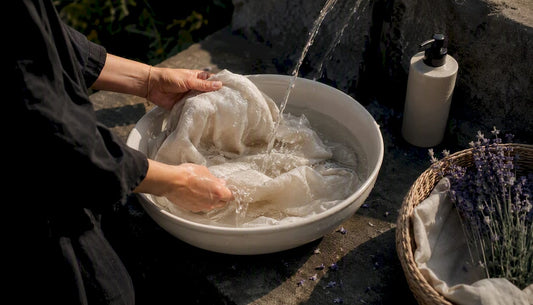
- Wash cool and gentle. Use a low-pH detergent, a gentle or hand-wash cycle, and avoid harsh alkaline products that weaken the cellulose structure over time.
- Skip the aggressive spin. Excess agitation while wet is what causes lyocell to fibrillate and viscose to stretch out of shape.
- Dry flat, not tumbled. Lay garments flat to dry and iron on a moderate steam setting while still slightly damp for the smoothest finish.
- Store on padded hangers or folded. This prevents the stretching that thin wire hangers cause over a season of wear.
- Reach for a professional cleaner for structured pieces, beading or anything with a complex lining, and mend small snags early before they run.
For fabrics that need similarly careful handling, the same low-agitation principles used for caring for silk garments apply here too.
Choosing the right fibre for the garment in front of you
The decision gets simple once you separate three questions: how hard will this garment work, how much do you want to spend, and how much care are you genuinely willing to give it?
- Everyday trousers and blazers: lyocell, for its wet strength and shape retention through repeated wear.
- Occasion dresses and evening blouses: viscose is perfectly suited here, where fluid drape matters more than decades of durability.
- Denim and travel separates: lyocell, again for the wet-strength advantage under stress.
- Linings: either fibre works, though lyocell resists distortion better in high-friction areas.
- Blended fabrics: a lyocell-cotton or viscose-linen blend can be a smart compromise, borrowing structure from one fibre and softness from the other.
If sustainability sits high on your list, prioritise garments naming TENCEL™ or LENZING™ ECOVERO™ specifically rather than an unbranded “viscose” or “rayon” label, since the branded fibres carry verifiable production standards behind them. This is also where the older term rayon is worth clarifying: rayon is the broad category, viscose is the most common type of rayon, and lyocell is a distinct, newer type of rayon made differently again.
How Edito thinks about fabric when curating a wardrobe
When Edito selects pieces for its curated collection, fabric composition is never an afterthought. Quality, longevity and seasonal suitability all factor into which European labels and garments make the cut, because a beautifully cut dress in the wrong fabric won’t earn its place in a real wardrobe.
For a genuine capsule wardrobe, a lyocell piece is worth the investment in your hardest-working categories: tailored trousers, layering tops, anything that needs to survive weekly wear across an Australian season. Viscose still has a home in your wardrobe for the pieces that only need to perform for an evening. Before buying, it’s worth reading fabric details on the product page the same way you’d check a wine label, because that’s where the real story sits, not on the swing tag.

An editor’s take on fibre labels and shopper trade-offs
Lyocell is the sensible default for most of my own wardrobe decisions, not because viscose is a poor fibre, but because it demands more forgiveness than most people are willing to give it in the wash. Viscose earns its keep on the pieces that only need to look good, not survive years of Tuesdays. Check the certification, not just the marketing copy, and let the garment’s job dictate the fibre, not the other way around. Edito’s own edit, below, shows what that looks like in practice.
— Mickael Martin
Edito picks that put this comparison into practice
Reading about fibre science is one thing; seeing it in a garment you can actually wear is another. The Nica Pants show off exactly the structure and shape retention this article argues lyocell-style fabrics deliver, tailored trousers that need to hold their line through a full week of wear. The Cotton Cashmere Tee in White demonstrates how a blended fabric can borrow the best of two fibres, softness from cashmere, structure from cotton, a compromise worth considering when a single fibre doesn’t tick every box. And the Lya Satin Top in Cream is the fluid, drape-forward piece where a viscose-family fabric is entirely the right call, exactly the occasion-wear use case this guide points to.

Before you buy, check the label for the specific fibre name (TENCEL™, ECOVERO™, or simply “viscose”), and revisit the care notes above so the piece earns its place in your wardrobe for years, not one season. A curated edit of European and French designer labels can make a fibre-first approach easier to shop, without needing to decode a swing tag alone. Browse the full clothing collection, or head straight to dresses, tops and pants to find your next fabric-smart piece, with knitwear, bags and shoes rounding out the edit at Edito.
Sources
- Biodegradability of cellulose fibers, films and particles: a review
- Life cycle assessment of man-made cellulose fibres
- Technology and production processes for viscose, modal and lyocell (Lenzing)
FAQ
What are the downsides of Tencel?
Lyocell fabric can fibrillate, developing a slightly fuzzy surface, if it’s washed roughly or with harsh alkaline detergents, and it typically costs more than standard viscose. It’s also less widely available in ultra-budget clothing, since the closed-loop production process is more involved than conventional viscose manufacturing.
Is Tencel just plastic?
No. Lyocell is made from wood pulp cellulose, not petroleum-based plastic, using a solvent process that’s chemically distinct from viscose manufacturing. It’s a regenerated natural fibre, in the same broad family as viscose and modal, not a synthetic like polyester.
Is viscose basically plastic?
No, though the confusion is understandable given how synthetic some viscose can feel. Viscose is also made from wood pulp cellulose via the xanthation process, and research confirms it’s biodegradable in soil and marine environments, unlike true synthetic fibres.
Is Tencel just rayon?
Tencel is a type of rayon, specifically a branded lyocell, but it’s not the same as standard viscose rayon. Rayon is the umbrella category for regenerated cellulose fibres; lyocell and viscose are two different manufacturing methods within that category, with lyocell using a closed-loop solvent process instead of viscose’s xanthation route.
Does Edito stock Tencel or viscose pieces?
Edito’s curated edit includes pieces from European labels made with a range of fabrics, including cellulosic fibres like viscose and lyocell, chosen for quality and seasonal suitability. Specific fabric content is listed on each product page, so check the label details before buying.