
Make any maxi look intentional by controlling three levers: proportion, structure, and shoes matched to the hem. Get those right and everything else, from jewellery to hair, becomes finishing detail rather than damage control. The sections ahead walk through each lever with practical checks and reusable formulas.
TL;DR:
- Properly defining the waist with a belt or structured layer prevents a boxy appearance, especially when wearing a fitted or column maxi dress.
- Selection of fabric should follow the drape test, favoring jersey or viscose for flexibility, linen for breathability, or ponte and silk for structure and polish.
- Shoes should match the hem length, with flats and sneakers for ankle-grazing hems and heels or knee boots for full-length, pooling hems.
- Accessories must be minimal and proportional, with a statement piece carrying visual weight to avoid clutter.
- For versatility, build a capsule wardrobe with two shoes, two layers, and two accessories, ensuring transition from day to night and seasonal changes.
Table of Contents
- How do you make a maxi dress look flattering?
- Layering and proportion: the one-rule approach to avoid boxy looks
- Styling for body types and height: quick formulas
- Shoes and accessories that change the mood
- Occasion and seasonal outfit formulas
- Common maxi dress mistakes and quick fixes
- Edito Boutique on tailoring, fabric care and a mini capsule
- Hairstyle and makeup that match your maxi
- Taking a maxi dress from day to night
- Why proportion, structure and shoes are the three game-changers
- Edito picks that work across a season of maxi outfits
- Sources
- FAQ
How do you make a maxi dress look flattering?
The right silhouette does most of the flattering work before you even reach for accessories. A wrap maxi crosses at the waist and suits women who want built-in definition without a belt. An A-line maxi skims the hip and flares gently, forgiving through the midsection while still showing shape. A column dress runs straight from shoulder to hem and rewards a defined waist, structured jacket or belt to stop it reading as a sheet. Tiered maxis add volume through ruffles or gathered panels, which suits women who want movement and don’t need waist emphasis to feel put together.
Fabric decides whether that silhouette actually works on your body, not just on the hanger. Stylists recommend the drape test: hold the fabric against your torso and watch whether it falls smoothly or clings to the hip and stomach. Jersey and viscose move with the body and suit most shapes. Linen wrinkles more but breathes beautifully in Australian summer heat. Ponte holds structure and photographs well for evening. Silk drapes with the most polish but needs a slip underneath to avoid clinging.
Neckline matters more than most women assume:
- A V-neck elongates the torso and gives jewellery somewhere to sit.
- A square neck suits structured layers and works well with statement earrings.
- A high neck balances a fuller skirt and often needs no necklace at all.
- An off-shoulder style shifts visual weight upward, useful if you want attention away from the hem.
Layering and proportion: the one-rule approach to avoid boxy looks
The rule that fixes most boxy maxi outfits is simple: your outer layer must either define the waist or run long and streamlined. Anything that cuts off at mid-thigh tends to read as boxy, because it interrupts the eye’s line right where the body is widest against the fabric.
That gives you two reliable choices:
- A cropped jacket or cardigan that stops above the waist and lets the dress fall clean underneath.
- A longline coat or duster that runs close to the dress’s own length, keeping the silhouette continuous rather than chopped.
Structured tailoring (a blazer, a fitted trench) sharpens a soft dress for the office or a formal event. Relaxed outerwear (a denim jacket, a linen kimono) softens a fitted column dress for everyday wear. Mixing textures adds interest without adding bulk: leather over chiffon, denim over linen, a knit layer over a slippery viscose maxi all read as deliberate rather than mismatched. Puffed or structured shoulders can also balance a very full skirt.
Pro Tip: If you’re unsure whether a layer works, do the walk test in it. If the jacket hem and dress hem fight each other when you move, go longer or shorter, not in between.
Styling for body types and height: quick formulas
Body-shape advice works best as a formula you can repeat, not a theory to memorise. Here’s a shape by shape starting point:
- Petite: choose a hem that grazes the ankle rather than pooling on the floor, keep prints smaller in scale, and wear a slight heel or ankle boot to lengthen the leg line.
- Pear: define the shoulder with a structured collar or statement sleeve, then let a wrap or A-line skirt do the rest without adding hip volume.
- Apple: an empire waistline or wrap style that skims rather than clings through the midriff works better than anything belted tight at the natural waist.
- Hourglass: belt or wrap at the narrowest point of the torso to show the waist you already have, in a medium-weight fabric that holds its shape.
- Rectangle: build curve with a tiered skirt, a belt at the waist and a textured fabric like broderie or ribbed knit that adds dimension.
- Inverted triangle: add volume low, through a fuller skirt or tiered hem, and keep shoulder detail minimal so the eye travels down rather than staying up top.
Shoes and accessories that change the mood
Shoes are the fastest way to shift a maxi from casual to formal, and the hem length tells you which ones will actually work. A hem that grazes the top of the foot suits flats, sneakers or block heels. A shorter, ankle-baring hem opens the door to strappy heels or ankle boots. Full-length hems that pool slightly need a heel with some height to lift the fabric off the ground, or knee boots in cooler months.
- Keep bags proportional: a structured midsize bag for a fuller skirt, a small crossbody for a fitted column dress.
- Let one piece carry the drama. A single statement accessory, whether earrings or a bold bag, reads as intentional; several competing pieces read as cluttered.
- Place necklaces to match the neckline. A pendant works with a V-neck; skip the necklace entirely on a high or off-shoulder style and let earrings do the work.
- Fix visible undergarment lines with seamless briefs or a slip; fix fabric cling on jersey or silk with a light layer of static spray or a thin slip underneath.
Occasion and seasonal outfit formulas
One dress, several occasions, provided the formula changes with the setting. These combinations reliably convert a single maxi across a week:
- Casual: maxi + cropped denim jacket + white sneakers + crossbody bag.
- Weekend errands: maxi + straw hat + flat sandals + tote.
- Smart casual work: maxi + tailored blazer + loafers + structured tote (see Edito’s smart casual formulas for more on this).
- Office formal: column maxi + fitted jacket + block heels + minimal jewellery.
- Evening: maxi + strappy heels + clutch + statement earrings.
- Date night: wrap maxi + heeled sandals + delicate layered jewellery.
- Warm-weather travel: linen maxi + flat sandals + wide-brim hat, fabric chosen for breathability over structure.
- Winter layering: ponte or jersey maxi + longline coat + knee boots + scarf.
Pro Tip: Packing for a trip? Take one maxi, two shoe options and one structured outer layer, casual and elevated, and you’ve quietly packed four or five outfits in the volume of one.
Common maxi dress mistakes and quick fixes
- Hem too long: a dress that pools underfoot is a trip hazard as much as a style problem. Do a walk test before you leave the house, aiming for a hem that just grazes the top of your shoe, and use a temporary inside fold or fashion tape to test a shorter length before committing to a tailor.
- No structure: add a belt at the narrowest point of the waist or swap to a cropped layer.
- Wrong shoe weight: a delicate strappy sandal disappears under a heavy ponte maxi; swap to a block heel or boot to match the fabric’s weight.
- Visible lines: seamless undergarments or a slip lining solve most clinging issues instantly.
Edito Boutique on tailoring, fabric care and a mini capsule
Getting the hem right is a tailoring job, not a guessing game. Take the dress, wear the shoes you’ll actually pair with it, and check the hem clears the floor comfortably mid-stride, the same walk test principle stylists use before any alteration. For fabric care, hand wash or use a cold, gentle cycle for jersey and viscose, and air dry away from direct sun to protect drape and colour.
A capsule built around one maxi multiplies fast:
- Two shoes: one flat, one heeled.
- Two layers: one cropped, one longline.
- Two accessories: one subtle, one statement.
That’s six pieces working across a season. Edito’s curated edit of European dresses and finishing pieces, including the Kleio Maxi Dress and the Jacques Maxi Dress, is built around exactly this kind of versatility.
Hairstyle and makeup that match your maxi
Hair and makeup should follow the same proportion logic as the outfit itself. A sleek, low bun or a middle-parted straight style suits a column maxi with a high or off-shoulder neckline, because it keeps the visual line clean and lets the neckline do the work. A soft, loose wave or half-up style pairs naturally with a tiered or boho-leaning maxi, echoing the movement already built into the fabric.
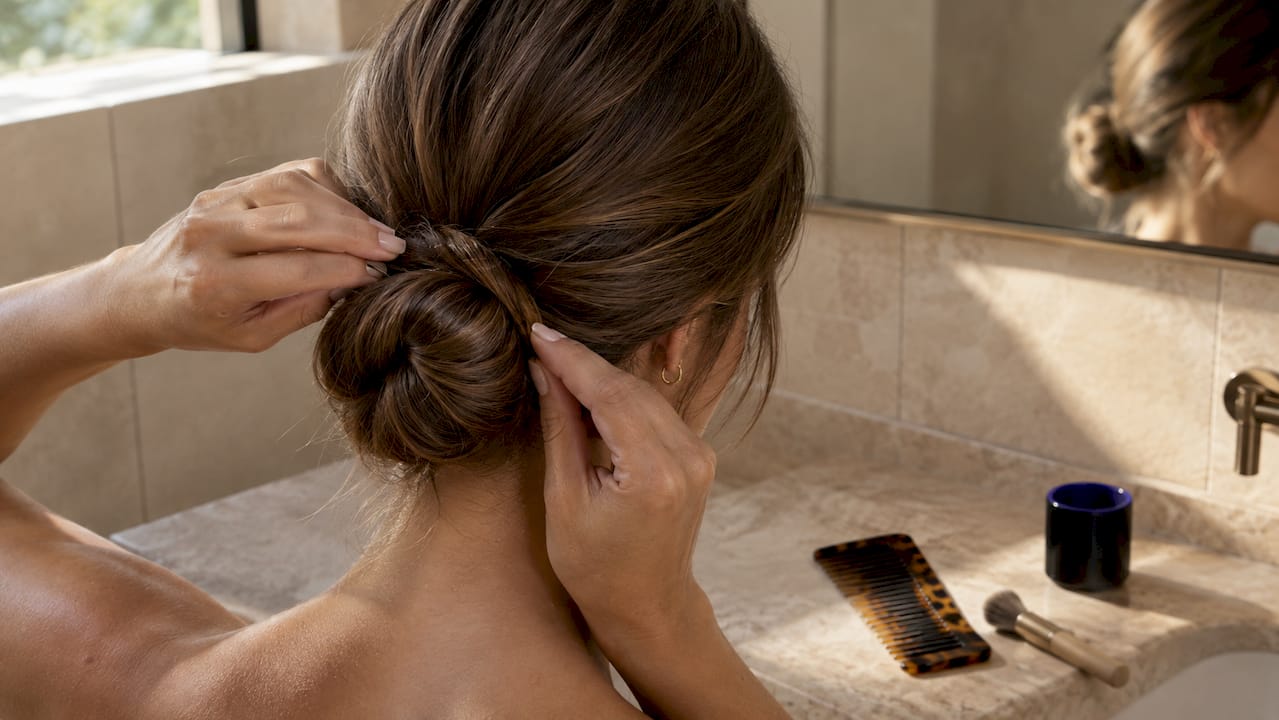
For daytime and casual occasions, a light base, cream blush and a groomed brow read effortless without competing with a print or a statement earring. Evening calls for more contrast: a defined eye or a stronger lip, but rarely both at once if the dress itself has a bold print or a plunging neckline. The same “one focal point” rule that governs accessories applies here. If the dress is quiet, let makeup carry more drama; if the dress is loud, keep the face simple and let the earrings or the fabric do the talking.
Humidity is worth planning for, especially over an Australian summer. A setting spray and a texturising salt spray for the hair hold better through heat than heavier styling products, and a cream or stick formula on cheeks and lips survives a warm evening far better than powder. For a beach wedding or outdoor event, braided styles or a low chignon resist wind and humidity while still looking finished next to a flowing tiered skirt.
Taking a maxi dress from day to night
The fastest day-to-night switch happens at the shoes and the layer, not the dress itself. Swap flat sandals for a heel, or a sneaker for a strappy sandal, and the entire mood shifts even though nothing else has changed. Remove a cropped daytime jacket and the dress instantly reads as more done up, particularly if the neckline or the fabric has any sheen to it.
Jewellery does the rest of the work. A subtle pendant or stud during the day can be swapped for something with more presence in the evening, a drop earring or a fuller necklace, without needing to change the dress or carry a second outfit. Refresh the lip with a stronger colour, add a touch more definition to the eye, and switch a daytime tote for a small clutch or crossbody. If you’re heading straight from work drinks to dinner, keep a compact bag with the swap pieces (earrings, lipstick, a folded clutch) so the transition takes minutes rather than a full outfit change.
Why proportion, structure and shoes are the three game-changers
Most maxi dress frustration comes down to skipping one of these three checks, not a lack of options in the wardrobe. Get proportion, structure and shoe weight right, and a single well-chosen European maxi earns its place as a genuinely versatile piece, reflecting quality curation.
— Mickael Martin
Edito picks that work across a season of maxi outfits
Building a wardrobe around one great maxi is easier when the finishing pieces like So…? The Collection perfume & fragrance for women & girls are already doing the right job. Edito’s edit includes a handful of accessories designed for exactly this kind of repeat wear across silhouettes and necklines.
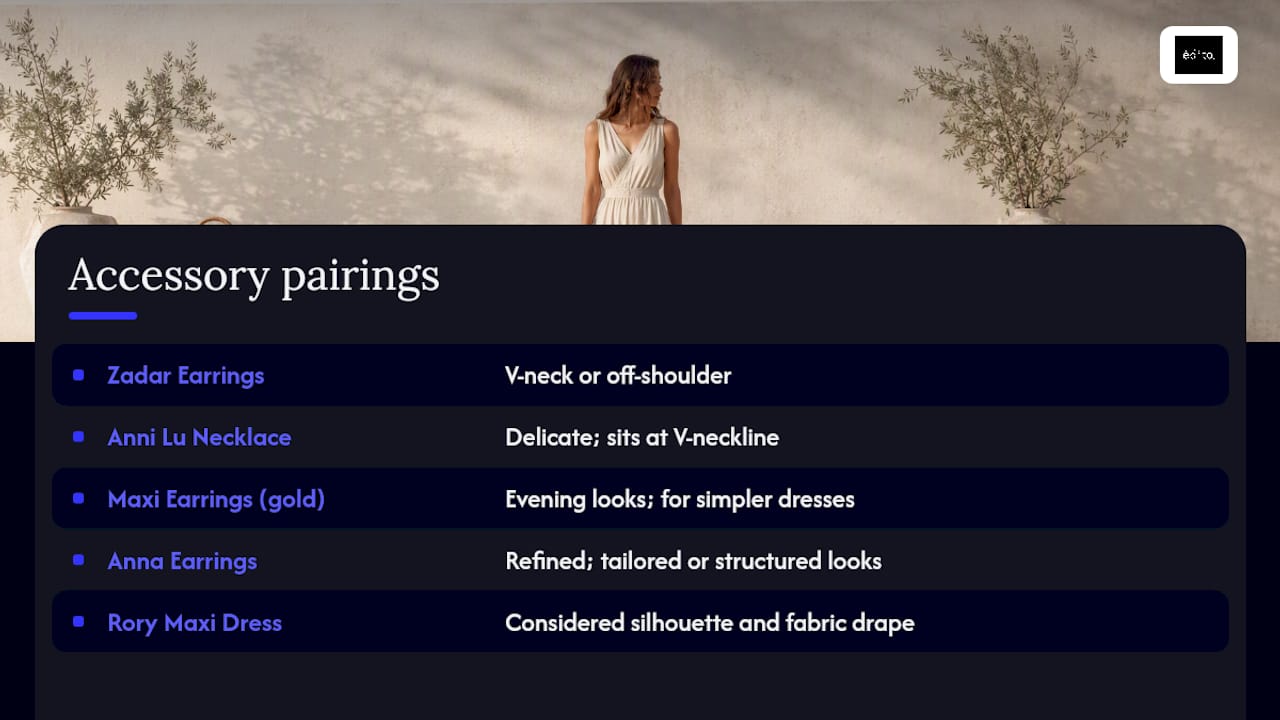
The Zadar Earrings in silver by Sœur bring the single statement element that works with a V-neck or off-shoulder maxi without competing with the dress. For something more delicate, the Anni Lu Piccolo Necklace sits neatly against a V-neckline and moves easily from a day look into evening. The Maxi Earrings in gold or their silver counterpart suit an evening formula where the dress itself is simpler, while the Anna Earrings by Dorothée Sausset offer a more refined option for tailored, structured outfits. On the dress side, the Rory Maxi Dress by Bird & Knoll and the Raes Maxi Dress both show how a considered silhouette and fabric weight make styling easier from the outset.
These are starting points rather than the only combinations that work. Visit each product page on Edito for full sizing and fabric details, and use the silhouette and drape guidance above to check any piece against your own shape before you buy.
Sources
For more on outfit formulas and body-shape styling, see the maxi skirt outfit guide and smart casual formulas on Edito, alongside the stylist advice from Looqs and Life and Trendz referenced throughout.
- Maxi dresses: Australia comfort & style for every occasion — Fusion Creations
- How to wear maxi dress: outfit ideas and styling tips — OutfitTrends
FAQ
How do you make a maxi dress look flattering?
Match the silhouette to your shape, use the drape test to choose the right fabric weight, and add either a belt or a single structured layer so the outfit has a defined waistline rather than falling like a sheet.
What can you wear on top of a maxi dress?
A cropped jacket or cardigan that stops above the waist, or a longline coat that runs close to the dress’s own length, both work; anything that cuts off mid-thigh tends to read as boxy.
What goes well with a maxi dress?
Shoes matched to the hem length, one statement accessory rather than several competing pieces, and a belt or wrap detail at the waist if the dress itself is loose or unstructured.
How do you wear a maxi dress without looking frumpy?
Check the hem grazes your shoe with a walk test, add waist definition through a belt or wrap, and choose a fabric like jersey, viscose or ponte that drapes rather than clings or overwhelms your frame.