
Choose linen when cooling and longevity are your priorities; choose cotton when you want immediate softness and a lower price point. That single distinction covers most clothing and bedding decisions. Three quick signals: if you sleep hot or want bedding that improves over decades, linen is your fabric. If you want sheets or shirts that feel soft from the first wear, or if your budget is firm, cotton delivers. And if you launder frequently at higher temperatures or simply prefer low-maintenance care, cotton’s forgiving nature makes it the practical choice. Both verdicts draw on laboratory comparisons and fiber-structure research that we unpack throughout this guide.
Key Takeaways
Linen outperforms cotton on breathability, durability, and long-term value; cotton wins on immediate softness, care ease, and price range — and the right choice depends on how you sleep, dress, and shop.
| Point | Details |
|---|---|
| Breathability and cooling | Linen’s hollow tubular fibers and looser weave outperform cotton in air permeability and moisture evaporation, per CETELOR lab testing. |
| Durability advantage | Linen gains 20–30% tear resistance when wet and typically outlasts cotton in bedding and garments with proper care. |
| Softness and ease | Cotton is soft from the first wear and tolerates warmer washes and machine drying; linen softens after 3–5 wash cycles. |
| Shopping checklist | Prioritize fiber content (100% vs blend), GSM, fiber origin (European flax or long-staple cotton), and pre-washed claims. |
| Edito’s recommendation | Edito curates linen-forward summer pieces and long-staple cotton shirting from European brands where fabric quality matches the label. |
Table of Contents
- How does linen compare to cotton across the key performance traits?
- What linen and cotton actually are
- How linen and cotton feel, and how that changes with washing
- Does linen actually keep you cooler than cotton?
- Absorbency versus wicking: how each fabric handles sweat
- Which fabric lasts longer?
- Washing, drying, and wrinkle management
- Environmental impact: flax versus cotton farming
- Which fabric works best for sheets, shirts, and summer dressing?
- Pros and cons of linen and cotton at a glance
- How to shop smart: labels, weights, and red flags
- What the research actually shows
- A note from Edito’s perspective on fabric and craft
- Edito’s curated selection for the fabric-conscious buyer
- Sources
How does linen compare to cotton across the key performance traits?
- Feel: Linen starts crisp and slightly coarse; cotton is soft from day one. Linen softens with washing; cotton stays consistent.
- Breathability: Linen’s hollow fibers and looser weave move air more freely. Cotton’s breathability depends heavily on weave and finish.
- Moisture handling: Linen wicks and evaporates moisture faster. Cotton absorbs more total water but can feel clingy when saturated.
- Durability: Linen is typically stronger and longer-lasting, especially with repeated washing. Cotton quality varies widely by staple length.
- Care and wrinkles: Linen wrinkles easily and needs gentle, cool washing. Cotton is more forgiving of heat and machine drying.
- Price: Linen costs more at retail, reflecting labor-intensive processing. Cotton spans a wide price range.
- Best uses: Linen excels in summer shirts, dresses, and hot-sleeper bedding. Cotton covers everything from everyday tees to hotel-crisp percale sheets.
| Trait | Linen | Cotton |
|---|---|---|
| Feel / Softness | Crisp initially; softens over 3–5 washes | Soft from first wear; long-staple varieties feel luxurious |
| Breathability | High — hollow fibers, open weave | Moderate — weave-dependent |
| Moisture handling | Fast wicking and evaporation | High absorbency; slower to dry |
| Durability | Stronger fiber; gains strength when wet | Good durability; weakens slightly when saturated |
| Care | Cool wash, air-dry, wrinkle-prone | Tolerates warmer washes, machine-dry friendly |
| Price | Higher — $30 per yard at retail | Lower to mid — $5–$40 per yard |
| Best uses | Summer bedding, shirts, dresses, pants | Everyday wear, towels, winter bedding, percale sheets |
Linen suits the buyer who values long-term performance and thermal comfort. Cotton suits the buyer who values immediate softness, versatility, and ease of care.
What linen and cotton actually are
Linen comes from the Linum usitatissimum flax plant — specifically from the bast fibers in the plant’s stem. Harvesting those fibers requires retting (soaking the stalks to loosen the woody core) and scutching (mechanically separating the fiber from the stalk). The result is a long, smooth, tubular fiber with a naturally hollow structure. That hollow channel is the physical reason linen breathes and wicks the way it does.
Cotton grows as a seed hair inside the boll of the Gossypium plant. The fibers are shorter and ribbon-shaped, with a natural twist that gives cotton its characteristic softness. Staple length matters enormously: standard upland cotton (the most common variety) produces shorter fibers and a slightly rougher hand, while long-staple varieties like Pima and Egyptian cotton yield a noticeably finer, more durable yarn.
| Property | Linen (flax bast fiber) | Cotton (seed hair fiber) |
|---|---|---|
| Fiber source | Flax stem | Cotton boll |
| Fiber shape | Long, smooth, tubular | Short to medium, ribbon-twisted |
| Moisture regain | ~8% (higher bound moisture) | ~8% |
| Relative tenacity | High — among the strongest natural fibers | Moderate — varies by staple length |
| Typical uses | Apparel, bedding, table linens | Apparel, bedding, towels, medical textiles |
How linen and cotton feel, and how that changes with washing
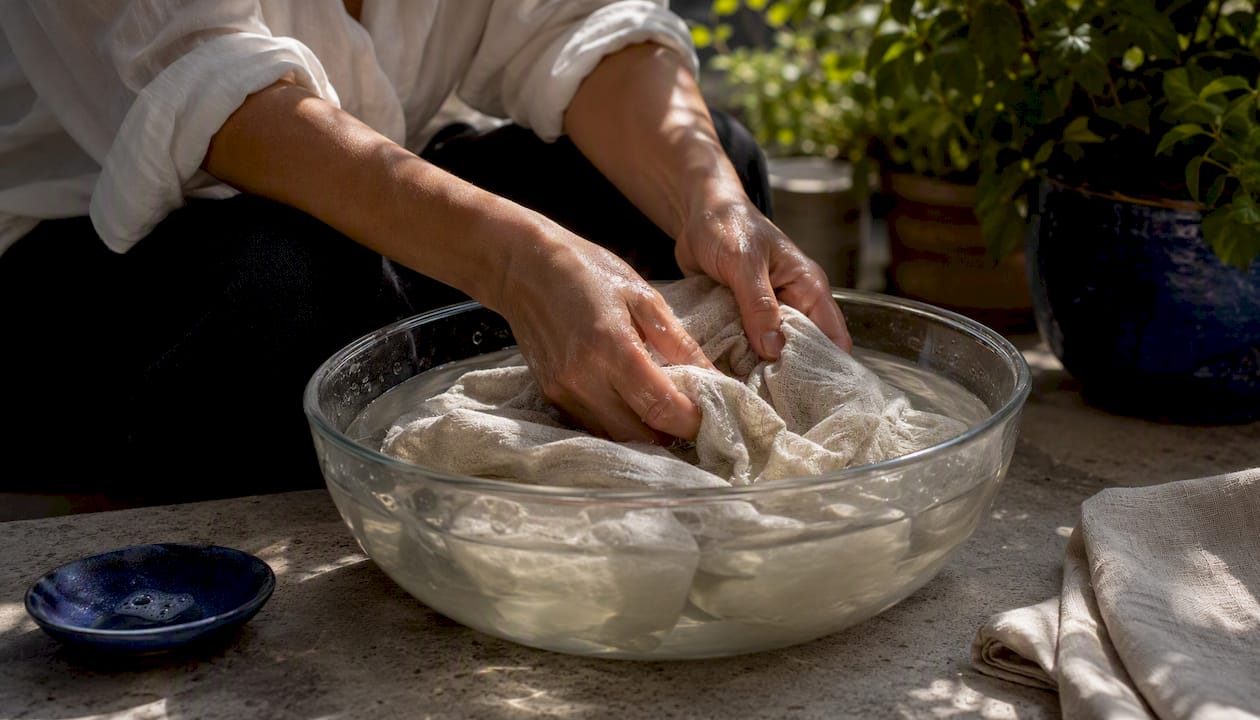
Linen’s initial hand-feel is unmistakable: crisp, slightly textured, with a subtle slub that signals handcrafted character. For some buyers, that texture reads as élégance; for others, it feels stiff against bare skin. The good news is that the stiffness is temporary. Natural pectin coatings on flax fibers are gradually removed by mechanical action over roughly 3–5 wash cycles, permanently transforming the hand-feel from crisp to supple. This is a structural evolution, not a chemical softening — the fabric genuinely improves, not just feels broken in.
Cotton behaves differently. A quality cotton shirt or sheet feels soft on first contact, and that softness stays relatively stable over time. Long-staple cotton (Pima, Egyptian) feels noticeably silkier than standard upland cotton, and finishing treatments like mercerizing or sateen weaving amplify that effect further.
What to look for when shopping:
- Visible slubs in the weave signal genuine linen (not a linen-look synthetic).
- A heavier hand weight (higher GSM) usually means a more durable, less sheer fabric in both fibers.
- Tight, even weave with no visible texture often indicates cotton or a cotton blend rather than pure linen.
- Pre-washed or stonewashed linen has already begun the break-in process — worth the slight premium for sensitive-skin buyers.
Pro Tip: When shopping online, zoom into product photos and look for the characteristic irregular slub texture of linen versus the uniform surface of cotton. If the listing says “linen look” without a fiber percentage, treat it as a red flag — it may be rayon or viscose.
Does linen actually keep you cooler than cotton?
The short answer is yes, and the mechanism is structural. Linen’s hollow tubular fibers act as tiny conduits for moisture, drawing sweat away from the skin and releasing it into the air faster than cotton can. A looser weave amplifies this by allowing more airflow across the fabric surface. Cotton’s breathability, by contrast, depends almost entirely on how it is woven: a loosely woven cotton muslin can feel nearly as airy as linen, while a tightly woven cotton sateen traps heat.
CETELOR laboratory testing found linen outperformed cotton on air permeability, water vapor permeability, and moisture absorption speed — three of the four metrics that determine thermal comfort in clothing and bedding. For apparel buyers, Georgia Tech researchers identified linen among the top natural fabrics for keeping the body cool in high ambient temperatures, making it a well-supported choice for summer shirts and dresses.
For practical wardrobe decisions: a light linen shirt or summer dress in a plain or open weave will outperform most cotton equivalents on a humid day. Cotton poplin or percale remains a solid alternative when a softer hand is the priority and temperatures are moderate.
Absorbency versus wicking: how each fabric handles sweat
Linen and cotton both absorb moisture, but they handle it differently. Linen’s capillary transport pulls moisture through the fiber and releases it quickly, so the fabric dries faster and rarely feels clingy. Cotton absorbs a large volume of water — useful for towels — but holds onto that moisture longer, which can feel uncomfortable against skin during sustained activity or a warm night.
For hot sleepers, that drying-speed difference is meaningful. Research summaries consistently note that linen’s hollow fiber structure and looser weave enable faster moisture evaporation and superior cooling, while cotton delivers immediate softness and a wider range of finishes. Linen also shows limited allergic activity in some studies, with its smooth tubular fibers creating less mechanical friction than cotton’s twisted ribbon shape — a consideration for sensitive-skin sleepers.
In practical terms: linen sheets feel dry and cool even after a warm night; cotton percale sheets feel soft and comfortable but may feel slightly damp by morning for heavy sweaters. For athletic summer wear, linen’s faster evaporation gives it an edge, though cotton jersey remains more comfortable for high-stretch movement. Towels are cotton’s domain — the fiber’s high absorbency and familiar terry weave are hard to match.
Which fabric lasts longer?
Linen. Flax fibers have higher dry tenacity than cotton and carry an unusual property: linen’s tear resistance increases by 20–30% when the fabric is damp, while cotton typically weakens when saturated. That means every wash cycle is slightly less damaging to linen than to cotton at the fiber level — a compounding advantage over years of use.
Well-made linen bedding from a reputable manufacturer can last 15–20 years with proper care. Quality cotton sheets, particularly long-staple varieties, typically last 5–10 years under similar conditions. Construction matters as much as fiber identity, though: a high-GSM, tightly woven linen will outlast a thin, loosely constructed one regardless of the fiber’s inherent strength.
What to look for when durability is the priority:
- For linen: seek European long-fibre flax (Belgian or French origin is a reliable signal), a GSM of 170 or above for bedding, and a plain or twill weave rather than a very open slub weave.
- For cotton: long-staple varieties (Pima, Egyptian, or GIZA) with a thread count of 300–500 in percale weave offer the best longevity without sacrificing breathability.
- Avoid very low price points in either fiber — thin, low-GSM fabrics pill and wear through faster regardless of the fiber content on the label.
Washing, drying, and wrinkle management
Linen and cotton both tolerate machine washing, but linen rewards a gentler approach. Cool to warm water (30–40°C / 86–104°F) with a mild detergent preserves the fiber’s integrity and color. High heat accelerates wear. Air-drying is preferable; if you use a dryer, a low-heat setting and removing the fabric slightly damp reduces wrinkle severity.
| Care factor | Linen | Cotton |
|---|---|---|
| Wash temperature | 30–40°C (cool to warm) | 30–40°C (warm for whites) |
| Dryer use | Low heat or air-dry | Medium heat generally safe |
| Shrinkage risk | 3–5% if not pre-washed | 3–5% for non-sanforized cotton |
| Wrinkle tendency | High — part of the aesthetic | Low to moderate — depends on weave |
| Ironing | Damp iron on medium-high; or embrace the texture | Easy to iron; cotton sateen stays smooth longer |
Shrinkage is manageable in both fibers if you buy pre-washed or sanforized fabric. Linen labeled “pre-washed” or “stonewashed” has already shrunk; cotton labeled “sanforized” has been mechanically pre-shrunk. For untreated fabrics, wash before cutting or sewing, and size up slightly when buying garments.
Linen’s wrinkle tendency is a matter of philosophy as much as care. Many buyers come to appreciate the relaxed, lived-in texture as part of linen’s allure. For those who prefer a crisper look, ironing linen while still slightly damp on a medium-high setting produces a clean finish.
Environmental impact: flax versus cotton farming
Flax cultivation typically requires less irrigation and fewer pesticides than conventional cotton, making linen a lower-water, lower-chemical option at the farming stage. European flax (grown primarily in France, Belgium, and the Netherlands) is often rain-fed and processed without heavy chemical retting, which reduces the overall footprint further. Cotton’s water demand is substantially higher, particularly for conventionally grown upland cotton in arid regions.
Processing choices change the picture, though. Wet retting (soaking flax in rivers or tanks) can release organic matter into waterways if poorly managed. Chemical retting is faster but more polluting. Finishing treatments — bleaching, dyeing, softening — add to the footprint of both fibers regardless of origin.
| Factor | Linen (European flax) | Conventional cotton | Organic cotton |
|---|---|---|---|
| Water use | Low (often rain-fed) | Very high | High (reduced vs conventional) |
| Pesticide use | Low | High | None (by certification) |
| Processing impact | Moderate (retting method-dependent) | Moderate | Moderate |
| Biodegradability | High | High | High |
Pro Tip: Look for GOTS (Global Organic Textile Standard) or Oeko-Tex Standard 100 certification on both linen and cotton products. For linen specifically, “European Flax” certification (from the CELC) guarantees traceability and low-impact retting. These labels are the most reliable shorthand for lower environmental impact.
Which fabric works best for sheets, shirts, and summer dressing?
| Product | Recommended fabric | Rationale |
|---|---|---|
| Summer bedding (hot sleepers) | Linen | Superior airflow and moisture evaporation; softens with use |
| Hotel-crisp sheets | Cotton percale | Smooth, cool hand; easy care; widely available |
| Winter bedding | Cotton flannel | Warmth and softness; linen is too cool for cold nights |
| Summer shirts and dresses | Linen or linen blend | Breathability and structure; best fabrics for heat per Georgia Tech |
| Everyday T-shirts | Cotton jersey | Stretch, softness, and washability |
| Dress trousers / tailored pants | Linen or linen blend | Structure and cooling; wrinkle tolerance required |
| Towels | Cotton terry | High absorbency is cotton’s strength |
| Sensitive-skin sleepwear | Linen | Smooth tubular fibers reduce mechanical friction |
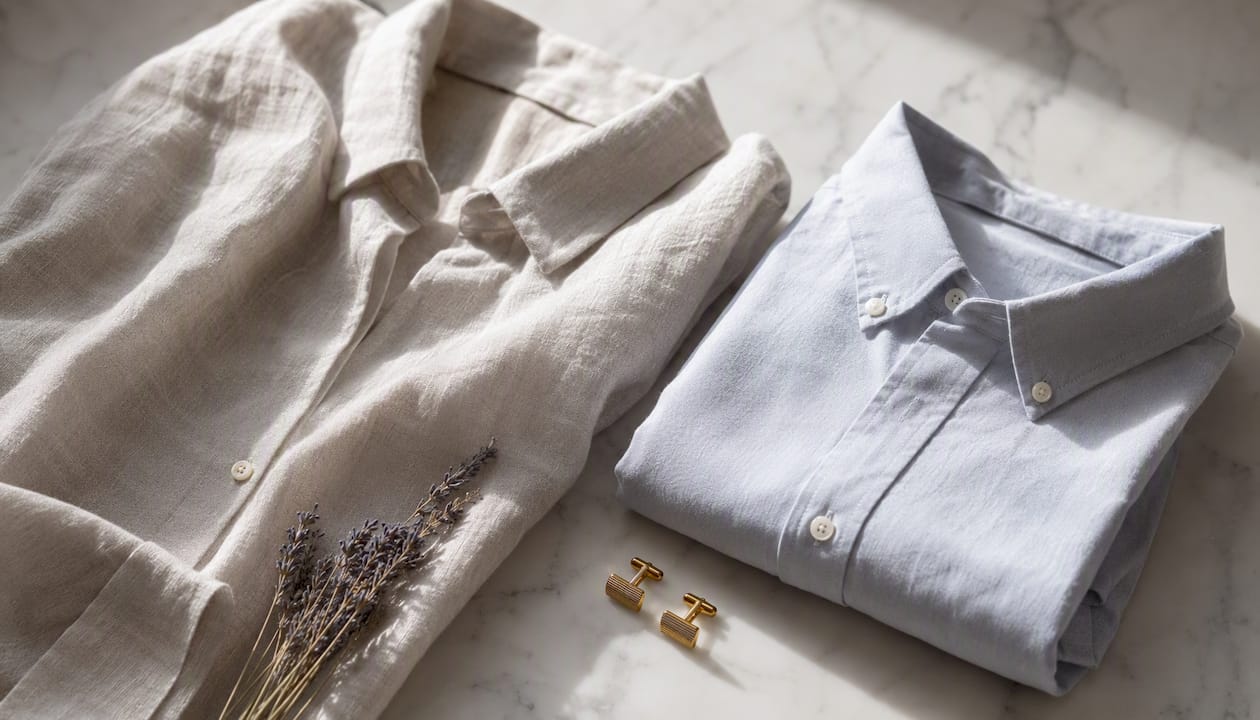
A few exceptions worth noting: heavy cotton flannel outperforms linen for winter bedding in every respect. Cotton blends (cotton-linen or cotton-modal) reduce wrinkling in shirts while retaining some cooling benefit. For Sita Murt’s spring/summer collections, linen-forward pieces tend to anchor the warm-weather wardrobe precisely because the fabric holds its shape and breathes through long days.
Pros and cons of linen and cotton at a glance
Linen
Pros:
- Superior breathability and active cooling in warm conditions
- Stronger fiber with longer potential lifespan; gains strength when wet
- Softens and improves with every wash cycle
- Lower environmental footprint at the farming stage (European flax)
Cons:
- Higher price point at retail
- Wrinkles easily and requires more care to maintain a polished look
- Initial texture can feel coarse — a break-in period of 3–5 washes is typical
- Fewer finish options and color ranges than cotton
Linen is the fabric for the buyer who thinks in decades: a considered investment in comfort, longevity, and understated savoir-faire.
Cotton
Pros:
- Soft from the first wear, especially long-staple varieties
- Wide price range and finish options (percale, sateen, jersey, flannel)
- Easy care — tolerates warmer washes and machine drying
- Excellent absorbency for towels and everyday use
Cons:
- Less breathable than linen in high heat, particularly in tighter weaves
- Weakens slightly when saturated; shorter lifespan than quality linen
- Conventional cotton farming is water- and pesticide-intensive
- Can feel clingy when saturated with sweat
How to shop smart: labels, weights, and red flags
Shopping checklist:
- Check fiber content first: “100% linen” or “100% cotton” is the baseline. Blends are fine, but the percentage matters — a “linen” product that is 30% linen and 70% polyester will not perform like linen.
- Look for fiber origin: European flax (French, Belgian, Dutch) and long-staple cotton (Pima, Egyptian, GIZA) are reliable quality signals.
- Ask for or check GSM: for bedding, 170–200 GSM is a good range for linen; 120–180 GSM for cotton percale. Below 120 GSM in either fiber usually means a thin, less durable fabric.
- Identify the weave: percale (crisp, cool) vs. sateen (smooth, slightly warmer) for cotton sheets; plain weave vs. twill for linen garments.
- Check for pre-washed or sanforized claims to anticipate shrinkage.
Red flags:
- “Linen look” or “linen texture” without a fiber percentage — likely rayon, viscose, or a synthetic blend.
- Very low price on a product labeled “100% linen” — genuine linen processing is labor-intensive and commands a higher cost.
- “Linenised cotton” or “cottonised flax” — these are marketing terms for blends or chemically treated fibers, not pure linen or cotton.
- No country of origin for the fiber — a sign of low traceability and often lower quality.
What the research actually shows
The strongest evidence for linen’s thermal performance comes from CETELOR, a French textile laboratory affiliated with the University of Lorraine. Their comparative testing measured air permeability, water vapor permeability, and moisture absorption speed across linen and cotton fabrics under controlled conditions. Linen outperformed cotton on all three metrics, supporting the practical claim that linen regulates body temperature more actively in warm or humid conditions.
A Japanese bedroom-temperature trial corroborated those findings in a real-sleep context. The CETELOR lab and the Japanese study together reported that linen improved thermal comfort at bedroom temperatures around 29–30°C compared with cotton in controlled tests — a meaningful finding for anyone who sleeps warm or lives in a humid climate.
One important caveat: fabric construction varies enormously. A loosely woven cotton muslin may outperform a tightly woven linen in airflow tests. The studies cited here used representative fabric samples, not every construction on the market. Fiber identity sets the ceiling; weave and finishing determine where a specific product lands beneath it.
A note from Edito’s perspective on fabric and craft
What strikes me most, after years of curating European fashion for women who care about both aesthetics and longevity, is how rarely the linen-versus-cotton question has a single right answer — and how often the wrong answer comes from buying on price alone.
At Edito, we tend to reach for linen-forward pieces when building a summer wardrobe: the structure holds through a long day, the texture reads as considered rather than casual, and the fabric genuinely rewards the wearer over time. For elevated bed linens, the same logic applies — a well-made linen sheet set from a traceable European source is one of the few textile purchases that actually improves with age. Cotton earns its place in the collection too, particularly in long-staple shirting and fine percale, where the immediate softness and clean finish suit a different kind of élégance.
The brands we carry — SOEUR, Hartford, Sessun, and others — make deliberate fabric choices that reflect this philosophy. When a piece arrives in linen, it is because the designer chose breathability and longevity over convenience. That choice deserves to be understood, not just worn.
Edito’s curated selection for the fabric-conscious buyer
For women who have read this far, the fabric question is already half-answered. The other half is finding pieces where the fiber quality actually matches the label.
At Edito Boutique, we curate European women’s clothing from brands that treat fabric selection as a design decision, not an afterthought. Whether you are looking for a lightweight summer shirt that breathes through a warm afternoon or a considered piece that holds its shape across seasons, the collection reflects the same standard this guide applies to fabric: traceability, craftsmanship, and longevity over trend. Orders ship within one business day, and returns are straightforward — so finding the right piece carries no risk. Browse the full collection and let the fabric speak for itself.
Sources
- What is linen? Material guide | The Linen Lounge
- Linen vs. Cotton: The Complete Research-Backed Guide | ODE Sleep
Recommended
- French Fashion vs Scandinavian Fashion | Edito Guide | Australia | Edito Boutique
- Sita Murt Spring Summer 2026 | European Fashion | Australia | Edito Boutique
- Laurence Bras Autumn Winter 2024 | French Fashion | Australia | Edito Boutique
- Sessùn Winter 2024 Collection | French Winter Fashion | Australia | Edito Boutique