
Choose mohair when a project calls for halo, drape and an airy, almost weightless structure, and choose alpaca when you want soft, dense warmth that sits close to the skin. A lace shawl or a loosely knitted cardigan benefits from mohair’s signature glow, while a fitted jumper or a scarf meant for genuine cold favours alpaca’s density. Some collections include alpaga pieces; the technical reasons behind this choice are worth understanding before you commit a season’s knitting time to either one.
TL;DR:
- Mohair usually measures 20 to 40 microns; Suri alpaca measures 16 to 22, while alpaca fleece overall spans 15 to 30 microns.
- Pure alpaca can stretch out in cables and ribbing because it lacks wool’s crimp; add wool or nylon when shape retention matters.
- For lace shawls and airy cardigans, pair brushed mohair with fine wool or silk, and use slightly larger needles to let its halo bloom.
- Hand wash both fibers in cool water and dry flat; block mohair to open its halo, but use light tension with alpaca to limit stretching.
Table of Contents
- Mohair vs alpaca: a side-by-side comparison for knitters
- Mohair deep dive: what it is and how it knits up
- Alpaca deep dive: huacaya, suri and thermal performance
- How to choose between mohair and alpaca for your project
- Caring for mohair and alpaca garments after you knit or buy them
- How we choose alpaga knitwear for our edit
- Where mohair and alpaca earn their place in a wardrobe
- Edito picks: alpaga knitwear worth adding to your wardrobe
- FAQ
- Sources
Mohair vs alpaca: a side-by-side comparison for knitters
The two fibres come from entirely different animals and behave in correspondingly different ways on the needles. Mohair comes from the Angora goat and typically measures between 20 and 40 microns, with a smooth, low-scale surface that gives it notable luster and dyeability. Alpaca comes from the alpaca itself, with Suri grades running finer at 16 to 22 microns and general alpaca fleece spanning 15 to 30 microns.
That difference in structure explains almost everything else about how each fibre knits up.
- Warmth per weight: alpaca’s semi-hollow core traps air efficiently, giving it strong insulation for its weight, while mohair relies on loft and halo rather than density to retain heat.
- Drape: alpaca falls with a smooth, almost liquid drape thanks to its lack of crimp; mohair holds more structure and springs back into shape.
- Halo and sheen: mohair is prized for its fuzzy halo and glassy shine, an effect alpaca rarely produces unless brushed heavily.
- Durability: mohair’s tensile strength, measured around 5 to 6 grams per denier, makes it resilient against abrasion over years of wear.
- Dyeability: mohair takes dye with notable clarity and depth; alpaca accepts dye well too, though its natural colour range (from white through fawn to black) often shines through undyed.
- Pilling and shedding: mohair is prone to shedding loose fibres, particularly brushed styles, while alpaca sheds less but can pill under friction at cuffs and underarms.
- Skin sensitivity: both fibres are naturally lanolin-free, which suits people who find lanolin-rich wool irritating, though mohair’s coarser grades can still feel prickly against sensitive skin.
- Availability and cost: alpaca is widely farmed and accessible across several price points; Australian mohair exists but much of it is exported, with processing often happening offshore, which can affect local availability and price.
For lace, textured stitches and anything meant to catch the light, mohair is the better pick. For next-to-skin warmth and a fluid silhouette, alpaca wins.
Mohair deep dive: what it is and how it knits up
Mohair is sheared from the Angora goat, an animal distinct from the Angora rabbit despite the shared name confusion among newer knitters. Fibre diameter typically falls between 20 and 40 microns depending on the animal’s age and the specific cut, with kid mohair at the finer end and adult mohair coarser and better suited to outerwear. The fibre’s minimal surface scales give it a slicker hand and higher luster than wool, which is why brushed mohair yarns photograph with that characteristic glow.
In practice, mohair changes how a finished fabric behaves more than it changes how it feels on the needles. A brushed mohair held together with a fine wool or silk base creates the halo effect seen in popular lace shawls, where the mohair strand blooms after blocking to soften stitch definition. Worked alone, mohair produces a crisper, more structured fabric that suits cropped cardigans and textured pullovers where you want the stitches to remain visible.
- Best suited to lace shawls, airy cardigans and layering pieces where warmth without weight matters.
- Pairs well with silk or fine merino for added drape without losing the signature halo.
- Works best on slightly larger needles than the yarn label suggests, since mohair’s loft fills the gauge naturally.
Pro Tip: When working with brushed mohair, use a blunt-tipped needle and go slowly through the halo, especially when picking up dropped stitches, since the fibres cling and can be hard to separate once knotted.
Alpaca deep dive: huacaya, suri and thermal performance

Alpaca fleece splits into two distinct types. Huacaya, the more common of the two, grows in a crimped, fluffy configuration that gives yarns a soft, rounded hand. Suri alpaca grows in long, lustrous locks with little crimp and a notably silken drape, making it rarer and typically more expensive. Suri grades often measure a finer 16 to 22 microns against Huacaya’s broader range.
Alpaca’s semi-hollow fibre structure is what gives it such efficient warmth for its weight, a quality that makes it popular for scarves, beanies and fitted jumpers worn through genuine cold. The trade-off is elasticity: alpaca lacks wool’s natural crimp, so knitted fabric has less bounce and can stretch out of shape over a long wearing session unless the pattern accounts for it.
- Best suited to scarves, beanies, fitted jumpers and anything meant to sit directly against skin.
- Blocks beautifully but benefits from a firmer gauge to counter its natural drape and prevent sagging.
- Suri grades suit drapier silhouettes; Huacaya suits classic, cosy knitwear.
Pro Tip: Blend alpaca with a small percentage of wool or nylon when stitch memory matters, since pure alpaca can lose shape in cables and ribbing that rely on the yarn snapping back into place.
How to choose between mohair and alpaca for your project
Start with the finished garment in mind rather than the fibre itself, then work backwards to the yarn that will get you there.
- Decide whether the piece needs halo (mohair) or a smooth, dense hand (alpaca).
- Consider where it sits on the body: next-to-skin pieces favour alpaca’s softer, lanolin-free surface, while outer layers can carry mohair’s coarser grades comfortably.
- Match warmth needs to climate and use: alpaca for consistent cold-weather warmth, mohair for warmth-without-bulk layering.
- Choose a blend if you want the best of both: mohair with wool for structure and sheen, alpaca with silk for drape and softness.
- Size up needles for mohair to let the halo bloom, and keep gauge slightly firmer for alpaca to offset its natural drape.
- Factor in yardage, since mohair’s lightness often means more metres per gram, stretching your yarn budget further than alpaca of a similar weight.
For a lace shawl or an airy cardigan, mohair blended with a fine wool gives the best balance of structure and glow. For a scarf or fitted jumper meant for real warmth, alpaca, ideally blended with a touch of silk for drape, is the stronger choice.
Caring for mohair and alpaca garments after you knit or buy them
Both fibres reward gentle handling, though the details differ slightly between them.
- Hand wash in cool water with a wool-safe detergent, avoiding agitation that can felt the fibres.
- Lay flat to dry on a towel, reshaping gently rather than wringing or hanging.
- Block mohair pieces while damp to open up the halo; block alpaca with light tension only, since it stretches more readily than wool.
- Store both fibres folded, never on hangers, in a breathable bag with cedar or lavender to deter moths.
- Remove pills gently with a fabric shaver, working in the direction of the knit rather than against it.
Woolmark’s sweater care guidance notes that gentle washing and flat drying preserve shape in delicate animal fibres and help prevent the felting that aggressive washing can cause in both mohair and alpaca knits. For more on keeping natural fibres looking their best across an Australian wardrobe, our guide to natural fabric care covers the broader principles that apply here too.
How we choose alpaga knitwear for our edit
When we select alpaga pieces for our collection, fibre content and finish come first. We look for consistent stitch definition, clean seam finishing and a yarn that holds its shape without excessive stretch at the cuffs and hem, all signs of a well-constructed garment rather than a loosely assembled one.
- Seam finishing should lie flat with no visible puckering at the shoulder or side seam.
- The yarn should feel dense and cohesive when gently stretched, not slack or prone to immediate sagging.
- Colour should be even throughout, since uneven dye uptake often signals inconsistent fibre quality.
- Labelling should state fibre content clearly, including any blend percentages.
These are the same signals worth checking on any ready-made alpaga piece, whether it comes from our edit or elsewhere.
Where mohair and alpaca earn their place in a wardrobe
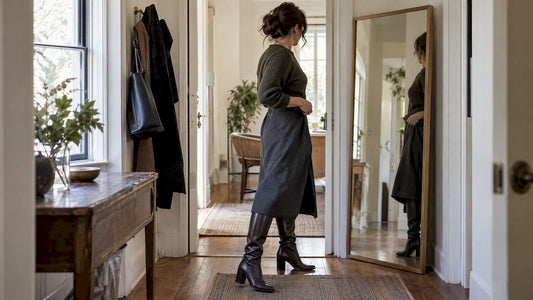
We reach for alpaca when a Brisbane evening calls for warmth without bulk, layered under a coat for the rare cold snap, and for mohair when a textured cardigan needs to soften a tailored outfit. A capsule wardrobe benefits from one alpaca knit as a dependable base layer and one mohair piece as a textural accent, worn over a simple dress or with tailored trousers for contrast. For more on building these combinations, our guide to styling knitwear covers the pairing principles in more depth, and lighter layering options from Athleta’s lightweight sweaters show how softer knits can work into everyday layering too.
— Mickael Martin
Edito picks: alpaga knitwear worth adding to your wardrobe
A small, carefully chosen range of alpaga knitwear exemplifies qualities such as softness, drape and dependable warmth.

- The Namaste Pullover in Ecru suits a soft, neutral base layer with a relaxed drape.
- The Namaste Pullover in Rose offers the same silhouette in a warmer tone for colour-led wardrobes.
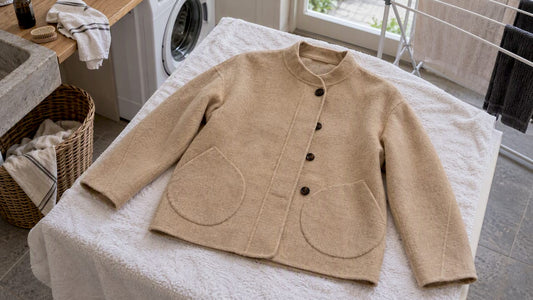
- The Sahajo Jacket in Alpaga brings structure and warmth to layering over dresses or tailored pants.
| Piece | Softness | Drape | Recommended use |
|---|---|---|---|
| Namaste Pullover in Ecru | Soft, next-to-skin | Relaxed | Everyday base layer |
| Namaste Pullover in Rose | Soft, next-to-skin | Relaxed | Colour-led layering |
| Sahajo Jacket in Alpaga | Dense, warm | Structured | Outer layer over dresses |
Pro Tip: Size up slightly when layering an alpaga jacket over a knit, since alpaca’s density adds warmth without the bulk you’d get from a wool equivalent.
Browse our full knitwear collection, or explore tops and dresses to build a complete look around either piece.
FAQ
What is more expensive, mohair or cashmere?
Cashmere is generally the more expensive of the two, owing to the finer, more limited yield from cashmere goats compared with Angora goats. Mohair still commands a premium over many wools, but it typically sits below cashmere in price.
What are the downsides of alpaca wool?
Alpaca’s main handling challenge is its lack of natural crimp, which means knitted fabric can stretch out of shape over time without careful gauge and blocking choices. It can also pill at points of friction like cuffs and underarms, though less readily than many wool blends.
Is mohair better than cashmere?
Neither is strictly better: mohair offers halo, sheen and durability thanks to its tensile strength and smooth fibre surface, while cashmere offers a softer, denser hand suited to close-fitting knits. The right choice depends on whether you want structure and glow or maximum softness.
Is 100% mohair itchy?
Coarser, adult-grade mohair can feel prickly against sensitive skin, while finer kid mohair is considerably softer. Blending mohair with wool or silk, or layering it over another garment rather than wearing it directly against skin, reduces any itch.
Sources
- Natural protein fibres: properties, production, and sustainability — TextileSchool
- Natural protein hair/fur fibres — TextileSchool