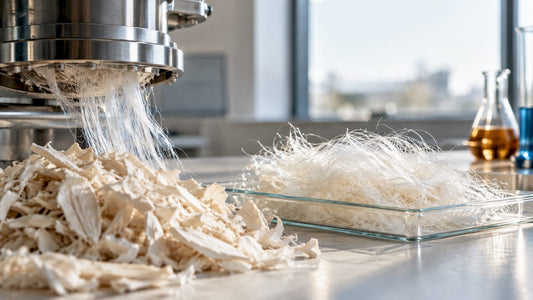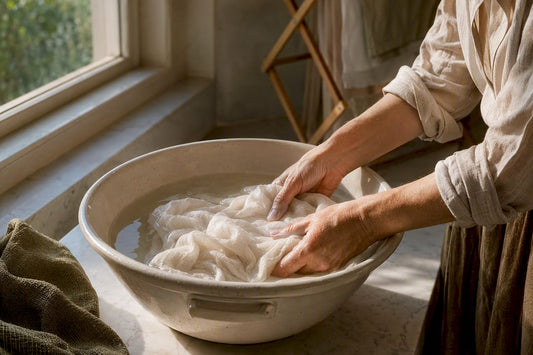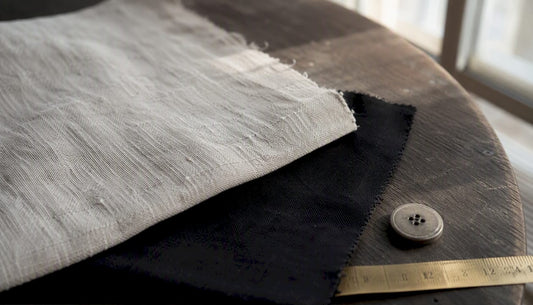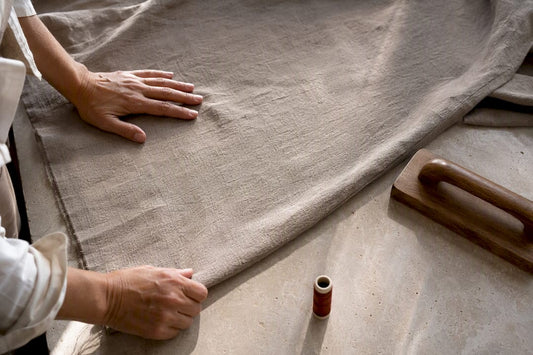

GSM, grams per square metre, measures the mass of a textile rather than its thickness or quality. Use it as a compass, not a verdict: light weights suitable for summer tops and linings, midweights that generally cover shirting and knitwear through most of the year, and heavier fabrics typically signalling structure, warmth and durability, the territory of denim and tailored outerwear. and heavier fabrics typically signalling structure, warmth and durability, the territory of denim and tailored outerwear.
TL;DR:
- Fabrics under 150 GSM are ideal for lightweight summer tops, linings, and breathable garments, while midweights between 150 and 220 GSM suit most year-round wearables.
- The calculated GSM relies on consistent sample preparation and is globally comparable, with conversion to ounces per square yard straightforward for overseas comparisons.
- A higher GSM generally indicates increased durability and warmth, but does not account for fiber type, weave, or finishing that also influence fabric feel and performance.
- Thickness and drape are influenced by weave structure and GSM, with denser weaves feeling firmer and more shape-retentive, especially above 200 GSM.
- Laboratory testing of GSM involves conditioned samples and precise equipment, offering more accurate results than at-home measurements using simple scales and sample cuts.
Table of Contents
- What GSM is, the calculation and quick unit conversions
- Why GSM matters, and where it falls short
- How GSM shapes thickness, drape and durability by fabric family
- Common GSM ranges and their typical uses
- How to measure GSM at home and how labs measure it
- Conversions, calculators and worked garment examples
- How to choose the right GSM for a project or wardrobe
- Edito’s editorial take: reading GSM for curated designer pieces
- A short expert perspective on GSM and wardrobe longevity
- Find pieces chosen for weight and handle
- Sources
- FAQ
What GSM is, the calculation and quick unit conversions
GSM stands for grams per square metre, and the calculation behind it is refreshingly simple: cut a sample of known area, weigh it, then divide mass by area. A mill testing a metre-square swatch that weighs 180 grams reports the fabric as 180 GSM. Testing facilities usually work with smaller, standardised samples (often 100 square centimetres) and scale the result up, which is why consistent sample preparation matters so much to the accuracy of the figure.
The industry favours GSM over other measures because it is a single, comparable number that holds regardless of fabric width or roll length. A shirting cotton from Portugal and a knit from Spain can be placed on the same scale immediately, which matters enormously when specifying materials across European mills that may use different loom widths or knitting gauges.
For readers more familiar with imperial units, particularly if you are comparing overseas supplier specification sheets, the conversion to ounces per square yard is straightforward: multiply GSM by 0.0295 to get oz/yd², or divide oz/yd² by 0.0295 to reverse it. A 150 GSM cotton converts to roughly 4.4 oz/yd². A heavier 300 GSM fleece comes out around 8.85 oz/yd². Both figures describe the same physical property, just expressed in a different convention, and you will see oz/yd² most often on denim and workwear specification sheets that trace back to American manufacturing standards.
The laboratory method behind these figures follows ISO 3801, the international standard for determining mass per unit area in woven fabrics, which underpins how mills and testing houses arrive at a GSM figure in the first place.

Why GSM matters, and where it falls short
A higher GSM generally means a warmer, more durable and more opaque fabric, which is why the number is such a useful shorthand when you are comparing two similar textiles at a glance. A 220 GSM cotton jersey will usually outlast a 140 GSM version in everyday wear, and it will almost certainly show less through to skin or underlayers.
But GSM measures mass, not feel, and it says nothing about fibre fineness, weave density or finishing. Research into fabric handle and thermal behaviour confirms that fibre type, yarn count and structure strongly affect thermal comfort and pressure behaviour, meaning GSM should be interpreted alongside these properties rather than in isolation, as work from the University of Technology Sydney sets out. A tightly woven, fine-yarn shirting at 130 GSM can feel more substantial and wear better than a loosely knit 160 GSM alternative.
This is where GSM reaches its limit as a shopping tool. For a luxury hand or a technical performance fabric, the number is a starting point, not the final word: finishing treatments, fibre origin and construction quality carry at least as much weight in how a piece drapes, breathes and ages.
How GSM shapes thickness, drape and durability by fabric family
GSM and thickness tend to move together, but weave and knit structure decide how that mass sits on the body. A dense, tightly woven cotton at 150 GSM can feel firmer to the touch than a loosely knitted wool at the same weight, because the yarns in the woven cloth are packed closer together with less air trapped between them.
Drape follows a similar logic. Lightweight silks and fine linens at 90 to 120 GSM fall in soft, fluid lines, which is why they suit blouses and unstructured dresses. Push past 200 GSM and a fabric begins to hold its own shape rather than following the body, useful for tailored trousers and structured jackets but less forgiving for a slip dress.

Durability and breathability sit in tension with each other as GSM rises. A heavier weave resists abrasion and pilling better over repeated wear, but it also traps more heat and moves less air, which matters through an Australian summer as much as a European winter.
Fabric behaviour by family and weight:
- Lightweight cotton and linen (100 to 150 g/m²): breathable and soft, prone to creasing, ideal for summer tops and linings.
- Midweight shirting and knitwear (150 to 220 g/m²): balances structure and comfort, holding shape without excess bulk.
- Denim and canvas (220 to 400 g/m²): dense, abrasion-resistant weaves that soften gradually with wear.
- Fleece and wool coating (250 g/m² and above): traps warmth through loft as much as mass, prioritising insulation over drape.
Common GSM ranges and their typical uses
Sorting fabrics into weight bands makes shopping and sewing decisions considerably faster, provided you treat the bands as guides rather than hard boundaries.
- Lightweight (100 to 150 g/m²): summer tees, linen dresses, blouse linings and anything meant to move with the body in warm weather.
- Midweight (150 to 220 g/m²): everyday shirts, knitwear, midi dresses and the bulk of transitional-season wardrobe pieces.
- Heavyweight (220 g/m² and above): denim, fleece-backed knits and structured outerwear built to hold shape and resist wear.
Exceptions crop up often enough to be worth flagging. A fine merino knit can sit at just 180 GSM and still feel warmer than a bulkier 220 GSM cotton fleece, because wool’s crimped fibre structure traps air more effectively gram for gram. Borderline cases like this are exactly why the Australian Border Force tariff classification framework uses GSM benchmarks alongside fibre content and weave description, not GSM alone, when differentiating textiles for trade purposes.
How to measure GSM at home and how labs measure it
Checking a fabric’s weight yourself takes only a ruler, a pair of scissors and kitchen scales accurate to a gram, and it is a genuinely useful skill if you sew or buy fabric by the metre.
- Cut a clean square or circle of known area, ideally at least 10 centimetres by 10 centimetres, well away from selvedges or printed edges.
- Let the sample sit at room temperature for a few minutes, since damp or freshly ironed fabric will weigh differently to its resting state.
- Weigh the sample on kitchen or jeweller’s scales and record the mass in grams.
- Divide the mass by the sample’s area in square metres to get grams per square metre.
- Repeat with a second sample from a different part of the fabric and average the two results to smooth out any unevenness in weave or finish.
Pro Tip: Always cut samples away from selvedges, hems and printed motifs, since ink, coatings and woven edges add mass that skews the reading.
Laboratory testing follows a stricter version of the same principle under ISO 3801 or the equivalent ASTM D3776 method, with conditioned samples, calibrated cutting dies and precision balances. ARPANSA notes that mass per unit area for shade fabrics is reported to an accuracy of ±1 gram when tested in NATA-accredited facilities following AS 4174:2018, a level of precision well beyond what a home scale can offer. Australian training packages such as LMTTX4003A build routine textile testing skills around exactly this kind of measurement, treating mass per unit area as a core quality control checkpoint.
Send a sample to a lab when you need certified figures for commercial specification or compliance, rather than for a quick personal check before a sewing project.
Conversions, calculators and worked garment examples
The conversion between GSM and oz/yd² comes up often enough on supplier spec sheets that it is worth keeping the formula close at hand: GSM multiplied by 0.0295 gives oz/yd², and oz/yd² divided by 0.0295 gives GSM back again.
Take a 200 GSM cotton jersey as a worked example: 200 multiplied by 0.0295 comes to 5.9 oz/yd², a figure you might see quoted on an American supplier’s cut sheet for the same fabric. Reverse it with a 12 oz/yd² denim: divide by 0.0295 and the fabric sits at roughly 407 GSM, solidly in heavyweight territory.
Typical GSM figures give a useful shopping benchmark, even though individual mills vary:
- A summer tee in cotton jersey generally sits around 140 to 160 GSM.
- Shirting cotton, like the weight used in the Dulim cotton shirt, typically falls between 120 and 150 GSM.
- A linen dress built for warm weather often has a relatively light fabric weight.
- A merino knit may vary within midweight ranges depending on gauge and construction.
- Denim fabric weights vary widely from mid-to heavyweight categories, depending on style and purpose.
One caveat worth carrying into every purchase: manufacturer labelling is not always consistent, and a “midweight” tag from one label can sit closer to another brand’s “heavy” range. When shopping European designer sizing online, checking a stated GSM figure against the garment’s described drape and use is more reliable than the weight category alone.
How to choose the right GSM for a project or wardrobe
Choosing the right weight comes down to matching the number to how and where you will actually wear the piece, not to chasing a single ideal figure.
- Consider the season and climate: lighter weights breathe better through humid months, while heavier ones hold warmth through cooler ones.
- Think about silhouette: fluid, body-following shapes need lower GSM, while structured tailoring needs higher.
- Factor in layering: a fabric worn alone can sit heavier than one meant to slide under a coat or jacket.
- Check laundering behaviour: heavier weaves generally hold their shape through repeated washing better than fine, lightweight cloth.
- Ask about translucency: lightweight fabrics under 130 GSM often need lining, particularly in pale colours.
- Weigh intended lifespan: a piece meant for years of wear benefits from a denser, more durable weight.
When buying online, ask for sample photos taken in natural light, check whether the listing states a GSM figure at all, and read the care notes closely, since fibre content often matters as much as weight for how a garment will age. And remember that fibre quality and construction can outweigh GSM entirely: a beautifully woven linen at a modest weight will often outperform a coarser, heavier fabric in both comfort and longevity.
Edito’s editorial take: reading GSM for curated designer pieces
At Edito, fabric weight is one of the first things we consider when curating each season’s edit, alongside handle, drape and how a piece will actually move through an Australian wardrobe. The Go Overhead Top in Gameboard Print illustrates this well: its weight sits squarely in the versatile midweight band, giving it enough body to hold a considered print while staying light enough to layer through the shoulder seasons.
A short expert perspective on GSM and wardrobe longevity
GSM is a useful shorthand, but it is not where the real question of longevity lives. The pieces that stay in a wardrobe for years usually combine a sensible weight with fibre quality and construction that a single number cannot capture. My own rule when assessing a new piece: let GSM narrow the shortlist, then let handle, weave density and finish make the final call.
— Mickael Martin
Find pieces chosen for weight and handle
We select every piece in our edit with fabric weight and handle in mind, favouring fabrics that hold their shape through an Australian season without sacrificing the softness that makes a garment worth returning to.

Explore our curated clothing and dresses, or browse tops and pants built from fabrics chosen for exactly the qualities this guide describes. If you are unsure which weight suits your climate or silhouette, styling advice tailored to your wardrobe can be helpful.
Sources
- ARPANSA — shade fabric testing service and explanatory notes
- Australian Border Force — Tariff concession and classification references
- ISO 3801: Textiles — Determination of mass per unit area
- Training
- UTS research — pressure and thermal behaviour of knitted fabrics
FAQ
What is a good GSM for fabric?
There is no single “good” GSM, since the right figure depends entirely on the garment: lightweight fabrics around 100 to 150 g/m² suit summer tops, while midweight fabrics between 150 and 220 g/m² work well for shirts, dresses and knitwear year-round.
Is 200 GSM fabric heavy?
A 200 GSM fabric sits at the upper end of midweight rather than truly heavy, comparable to a substantial shirting cotton or a fine merino knit. It has enough body to hold shape without the density of denim or structured outerwear, which typically starts above 220 g/m².
Is 300 GSM fabric thick?
Yes, 300 GSM sits firmly in heavyweight territory, typical of denim, fleece and structured coating fabrics. Fabrics at this weight generally resist abrasion well and hold their shape, though thickness also depends on weave or knit structure, not mass alone.
How do I figure out the GSM of fabric?
Cut a sample of known area, weigh it on accurate scales, then divide the mass in grams by the area in square metres. For a certified figure, laboratories follow methods such as ISO 3801, which use conditioned samples and calibrated equipment for a more precise result than a home scale can offer.