
Brush suede after every couple of wears, apply a protector spray before it ever touches the outside world, treat stains only once the piece is completely dry, and store each item on cedar shoe trees away from direct light. That routine alone prevents most of the damage suede ever suffers. Deep stains, ink, or colour bleed on a valuable piece are the moments to stop experimenting and call a professional cleaner instead.
TL;DR:
- Regular brushing after every two to three wears and applying protector spray before first use help prevent most suede damage.
- Dry methods, such as brushing and erasing, are essential for stains like mud, salt, or marks, with water-based treatments reserved for last resort.
- Use absorbent powders like talcum or cornstarch overnight to lift grease, and avoid home remedies that can worsen ink or deep stains.
- Avoid heat sources like hairdryers and always air-dry suede away from direct sun or heaters to prevent warping and discolouration.
- Hand over deep, set-in, or ink stains to professionals, especially on valuable pieces, as home repairs often cause more harm than good.
Table of Contents
- The suede-care kit: brushes, erasers, absorbents and protectors
- Daily and seasonal habits that prevent most suede problems
- A stepwise method for cleaning everyday dirt and common stains
- How to lift a flattened nap and dry wet suede safely
- When to use a professional suede cleaner and Edito’s care credentials
- Correct storage and end-of-season preparation
- Handling and cleaning suede accessories beyond shoes
- Tips for preventing colour fading and maintaining suede texture over time
- Edito’s perspective on suede and wardrobe care
- Style suede with pieces built to last a season and beyond
- Sources
- FAQ
The suede-care kit: brushes, erasers, absorbents and protectors
Suede rewards the right tools and punishes the wrong ones, so building a small, dedicated kit is the first real step in any suede care guide worth following.
A brass or nylon bristle brush does the daily work, lifting dust and flattened nap without tearing the fibres. Brass bristles suit heavier grazing (thick suede boots, work shoes), while softer nylon bristles are kinder to delicate pieces like a suede clutch or a fine jacket cuff. A crepe brush, made from natural rubber, works differently. Rather than sweeping debris away, it grips and lifts the nap, which makes it the better choice for reviving texture rather than just cleaning surface dirt.
For scuffs and light marks, a suede eraser (a firm, white rubber block sold specifically for this purpose) lifts scratches without wetting the material. A clean pencil eraser is a reasonable stand-in if you don’t own one, though it wears out faster and can leave grey rubber crumbs behind that need a quick brush-off.
Every kit also needs absorbents on hand for the moment oil or grease finds its way onto a shoe. Cornflour or talcum powder draws grease out of the fibres overnight, and baking soda works as a gentle deodoriser when sprinkled on and left for a few hours before brushing or vacuuming off, without adding any moisture to the leather.
Finally, a protector spray, typically fluorocarbon or silicone based, forms the first line of defence against water and oil. Always test a spray on a hidden patch, like the inside heel or an underarm seam on a jacket, and let it dry fully before judging the result, since some formulas subtly darken lighter shades.
Avoid reaching for:
- General leather conditioners or creams (they’re formulated for smooth leather, not nap)
- Dish detergent or laundry soap
- Alcohol-based household cleaners or wipes
- A hairdryer, on any setting, at any distance
Daily and seasonal habits that prevent most suede problems
Most suede damage isn’t caused by one dramatic accident. It’s the slow result of skipping small habits that take less than five minutes.
- Brush after every two or three wears, working in one consistent direction with light, even strokes rather than scrubbing back and forth. This lifts dust before it embeds and keeps the nap standing upright, which is what gives suede its characteristic soft, matte finish.
- Apply protector spray before the very first wear, then refresh it every two to three months, or immediately after any deep clean, since reapplying on that kind of schedule gives the fibres time to properly resist water and oil before they’re exposed again.
- Rotate your shoes rather than wearing the same pair daily. Suede needs recovery time to release the moisture absorbed from your feet, and wearing the same pair two days running traps that moisture in the fibres.
- Use shoe trees, ideally cedar, every time you take a pair off. They hold the shape while the leather is still slightly warm and pliable, and cedar actively wicks moisture rather than just filling space.
- Treat rain as suede’s real enemy. Unlike smooth leather, suede doesn’t shed water; it absorbs it unevenly, which is exactly what produces those blotchy tide marks. If you’re caught in a downpour, don’t panic and don’t head for a radiator. Blot excess water immediately with a clean cloth, remove any insoles, stuff the shoe loosely with paper to hold its shape, and let it air-dry away from direct heat before brushing once fully dry.
Preventative care, done consistently, carries far less risk than reactive cleaning after the fact — a protector spray applied on schedule is cheaper insurance than any stain treatment you’ll read about further down this guide.
Pro Tip: Keep a travel-sized protector spray in your overnight bag if you’re taking suede boots away for a weekend. Reapplying before an unfamiliar climate, especially somewhere wetter than home, takes thirty seconds and can save the trip.
A stepwise method for cleaning everyday dirt and common stains
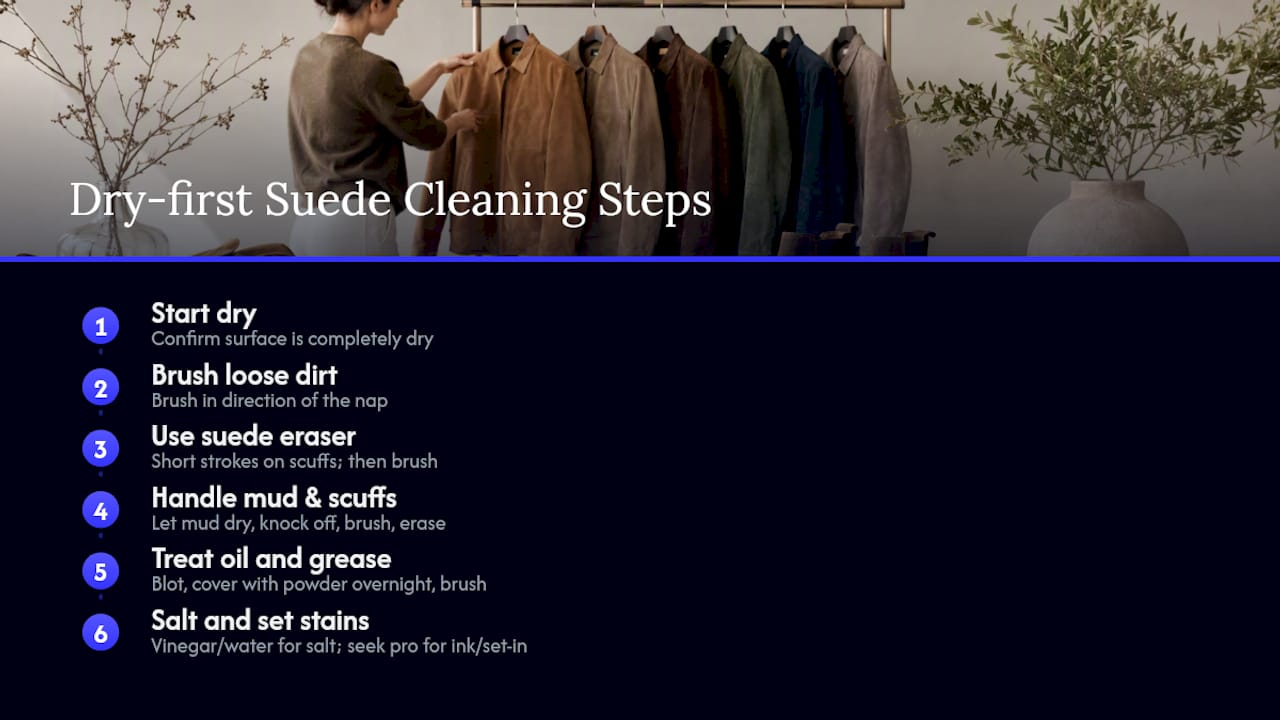
Every suede cleaning job, no matter the stain, follows the same golden rule: start dry. Reaching for water or a cleaning product before you’ve exhausted dry methods is the single most common mistake owners make, and it’s usually the moment a minor mark becomes a permanent one.
Dust, scuffs and light surface marks Brush first, in the direction of the nap, to clear loose dust. If a scuff remains, work a suede eraser gently over the mark using short strokes, then brush again to blend the texture back in. This resolves the majority of everyday marks without any liquid at all.
Mud Let the mud dry completely before touching it. Wet mud smears and pushes deeper into the fibres; dry mud flakes off cleanly. Once dry, knock off the bulk with your hands, brush firmly in one direction, then finish any remaining residue with the suede eraser.
Watermarks and rings This is where instinct usually leads people astray. The temptation is to dab only at the ring itself, but spot-treating a watermark almost always makes it worse, creating a harder secondary tide line around the edge of your repair. Instead, dampen the entire panel evenly with a clean, barely-wet cloth, so the whole surface dries at the same rate. Let it air-dry naturally, away from heaters or direct sun, then brush once it’s completely dry to lift the nap back into place.
Oil and grease Blot any excess immediately with a dry cloth. Don’t rub. Cover the mark generously with cornflour or talcum powder and leave it overnight so the powder has time to draw the grease out of the fibres. Brush the powder away in the morning. If a faint mark remains, repeat the process. Two or three cycles is normal for a stubborn stain; expecting one overnight treatment to fully lift older grease is the most common source of disappointment here.
Salt stains Road salt and sea spray leave a chalky residue that suede absorbs readily. Mix white vinegar and water in equal parts, dampen a soft cloth (not the suede directly), and dab carefully over the salt line, working from the outside in to avoid spreading it further. Let the item dry fully away from heat, then brush to restore the nap.
Ink and heavy or set-in stains This is the point to stop. Ink sits in dye that can bleed or shift the moment it meets any solvent, and by the time a stain has fully set, home treatments risk pushing pigment deeper rather than lifting it. Professional cleaning is the safer route here, particularly on a piece you actually want to keep wearing.
A quick gut check before you start any of the above: if you’re not confident the stain is fully dry, wait. Every method above depends on starting from a completely dry surface, and rushing that first step is what turns a fifteen-minute fix into a ruined shoe.
How to lift a flattened nap and dry wet suede safely
Flattened, shiny patches on suede aren’t permanent, but they do need a gentler touch than most people expect.
Hold the item eight to ten centimetres from a steaming kettle or garment steamer and pass it through the steam in short two or three second bursts, never lingering in one spot. Steam relaxes the fibres just enough to let them stand back up, without saturating the leather the way direct water would. The moment you finish steaming, brush.
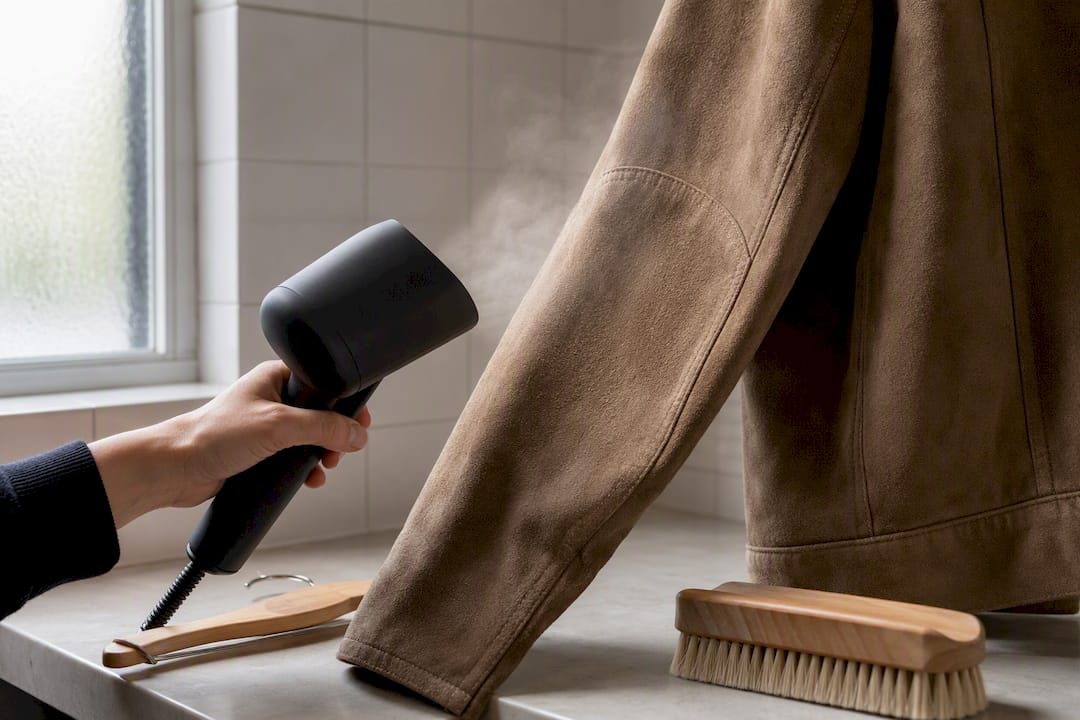
Brushing technique matters more than most guides admit. Use short, controlled strokes, always finishing in the same direction as the natural grain, and keep the pressure light. For heavier flattening, a combined approach works best: a brass brush to agitate the fibres first, followed by a softer crepe brush to finish and even out the texture, so you’re never using the coarser bristle for the final pass.
Heat is the one shortcut to avoid entirely. A hairdryer might look like it speeds up drying, but concentrated heat on suede does real damage:
- It shrinks and stiffens the fibres unevenly
- It can cause visible warping or curling at the edges
- It leaves patches discoloured that no amount of brushing will fix
Let suede dry at room temperature, away from radiators, heaters, or direct sun. While it dries, stuff the shoe loosely with plain paper (not printed newspaper, which can transfer ink) to hold its shape, or slide in a cedar shoe tree once it’s no longer damp to the touch. Cedar’s slow, steady moisture absorption finishes the job without introducing any heat at all.
When to use a professional suede cleaner and Edito’s care credentials
Some jobs are worth handing over, and knowing which ones saves you from turning a repairable mark into a ruined piece.
Call in a professional when you’re facing deep, set-in stains that haven’t responded to drying and brushing, any mark where the dye itself appears to have lifted or bled, ink of any kind, or damage to a genuinely valuable piece where a failed attempt would cost far more than the cleaning fee. Designers and repair specialists consistently warn that home attempts on ink or deep staining tend to make the damage worse rather than better, because the tools available at a professional level simply aren’t available at home.
Professional suede cleaners use specialised solvents formulated specifically for nap leather, controlled steam equipment, and colour-matched re-dyeing when a stain has genuinely altered the shade. That combination of tools is what makes deep or luxury-item stains a job for specialists rather than a kitchen-cupboard fix.
Edito’s own approach to caring for premium pieces starts from the same principle that guides this whole article: prevention beats correction, and knowing your limits protects the investment.
Suede is one of those fabrics where patience outperforms effort every time. The right brush and a little restraint will fix almost everything a professional would otherwise need to.
Before you drop a piece off, prepare it properly. Note exactly what caused the stain (oil, water, an unknown liquid), flag any trims, hardware, or mixed materials the cleaner should work around, and mention if a protector spray has already been applied, since some solvents interact differently with treated leather.
Correct storage and end-of-season preparation
Storage is where a lot of suede damage happens quietly, long after the shoe has been worn.
Never put suede away dirty. Clean and protect a piece properly before it goes into storage for a season, because any oil, dust, or moisture left behind will set into the fibres while the item sits untouched.
- Use breathable cotton dust bags, never sealed plastic, which traps moisture and encourages mould and mildew
- Slide in cedar shoe trees before storing boots or shoes, both to hold their shape and to keep drawing out residual moisture over weeks, not just hours
- Choose a cool, dark, well-ventilated spot; a wardrobe shelf away from a sunny window beats a garage or anywhere near direct heat
- Check stored pieces every few weeks during long off-seasons, giving them a quick brush even while they’re not being worn
This kind of end-of-season handover matters more in Australia than owners often realise, given how quickly a suede boot can go from daily wear in a Melbourne winter to six months in the back of a wardrobe. A few minutes of preparation before that gap makes the difference between a boot that looks the same in spring and one that’s stiffened, faded, or gone slightly mouldy at the toe.
Handling and cleaning suede accessories beyond shoes
Suede care principles don’t change much once you move from footwear to accessories, but the stakes often go up, because a bag or jacket sits closer to skin, fabric, and jewellery than a shoe ever does.
A suede handbag picks up oil from hands and makeup residue from being set on a lap or car seat. The same rules apply: brush regularly, treat with a protector before first use, and use the cornflour method for any oil transfer. Hardware, zips, and structured handles complicate the process slightly, since sprays and dampening need to stay clear of metal fittings to avoid tarnishing. For a bag with mixed leather and suede panels, Edito’s guide to leather bag care covers how to treat combined materials without damaging either surface.
Suede jackets face a different challenge: they flex constantly at the elbows and shoulders, which flattens the nap in those spots faster than almost anywhere on a shoe. Brush jacket panels more frequently at stress points, and steam-and-brush those areas specifically rather than treating the whole jacket uniformly. Collars and cuffs, which meet skin and hair product daily, benefit from a slightly more frequent protector refresh than the rest of the garment. A suede jacket that’s cared for this way holds its shape and colour for years rather than developing the tell-tale shiny patches at the elbows within a single season.
Tips for preventing colour fading and maintaining suede texture over time
Fading in suede is almost always about light and friction, not just age, and both are manageable once you know what’s driving them.
Direct sunlight is the biggest long-term threat to colour. UV exposure breaks down dye molecules gradually, which is why a suede shoe left on a sunny windowsill fades visibly faster than an identical pair stored in a dark wardrobe. Store suede away from direct light even when it’s not in active rotation, and avoid leaving jackets draped over a chair near a window for weeks at a time.
Friction is the second driver, and it’s the one people notice as texture loss rather than colour loss. Repeated rubbing against fabric linings, car seats, or other shoes in a crowded closet wears the nap down until it looks patchy and slightly shiny rather than matte. Give suede pieces their own space where possible, and avoid packing a wardrobe so tightly that items rub against each other constantly.
Protector spray plays a role here too, beyond just water resistance. A fresh coat every couple of months creates a barrier that reduces how much dust and oil settle directly into the fibres, both of which dull colour over time if left untreated. Combined with regular brushing to keep the nap standing upright and catching light evenly, a consistent routine is what keeps a five-year-old suede boot looking closer to its original shade than most owners expect.
Edito’s perspective on suede and wardrobe care
At Edito, we think about suede the way we think about any considered piece in a wardrobe: it’s an investment in silhouette and texture, not a disposable trend item, and it deserves a routine that matches that status. The brands we curate, from Sessùn’s seasonal pieces to structured European leather goods, are chosen because they reward exactly this kind of attention. A protector spray and a brush aren’t glamorous purchases, but they’re what separates a suede boot that looks tired by its second winter from one that still holds its colour five years on.
Our boutique tip is a simple one: pair your suede care routine with your seasonal wardrobe changeover. When you’re storing summer linens and pulling out cooler-weather pieces, that’s the natural moment to brush, protect, and shoe-tree every suede item before it goes back into rotation. For the mixed-material pieces in a curated wardrobe, our guide to leather bag care is a useful companion to this one.
— Mickael Martin
Style suede with pieces built to last a season and beyond
Suede shoes and accessories deserve outfits that share their same quiet quality, and a few considered layering pieces make that easy across an Australian spring or autumn wardrobe. The Sillans Shirt in Rose brings a soft, wearable colour that sits beautifully against tan or chocolate suede boots, while the crisp Allin Linen Shirt in White offers the kind of easy neutral that lets a suede bag or loafer do the talking.
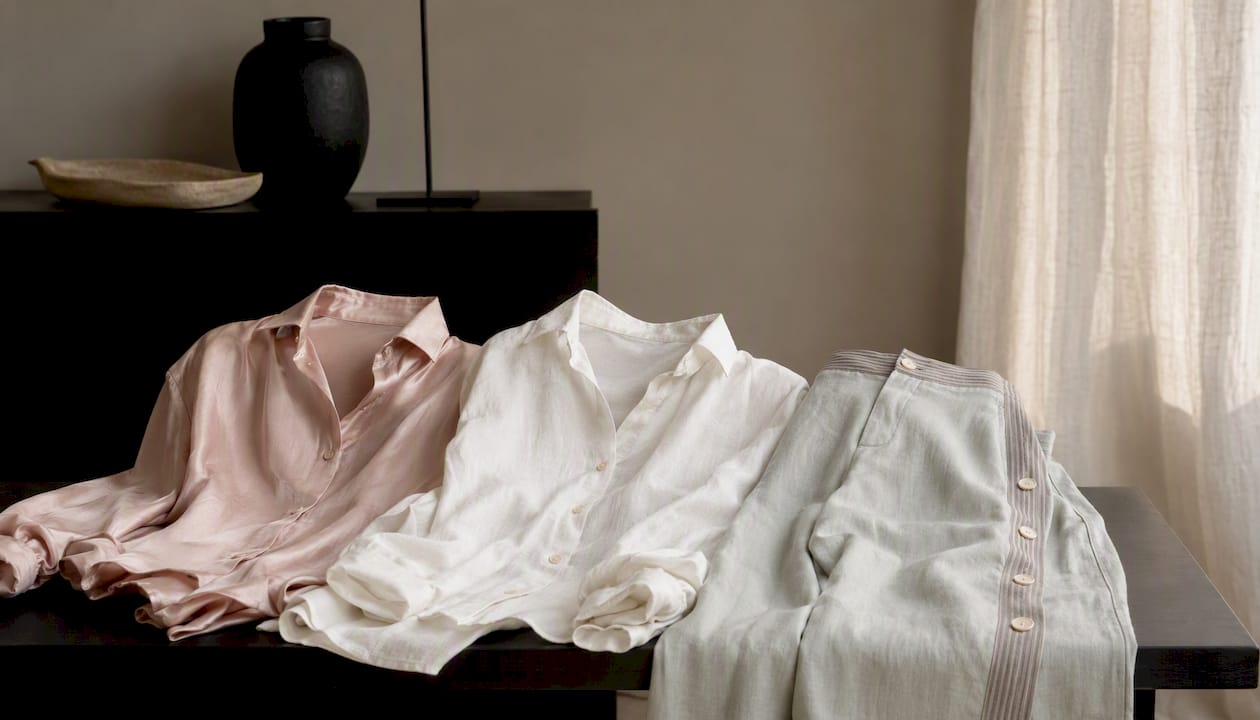
For warmer days when boots give way to loafers or suede flats, the Seven Linen Pant in Mint pairs a fresh, seasonal tone with the earthy texture suede naturally has. Each of these pieces reflects the same philosophy that guides this whole care routine: buy well, care properly, and wear a piece for years rather than one season.
If you’d like personalised guidance on caring for a specific suede piece, or want to talk through styling it with something from Edito’s current edit, our Brisbane boutique team is happy to help, whether you’re shopping online or visiting in person. Browse Edito’s full collection to find your next considered piece, or drop into the boutique for a hands-on consultation.
Sources
- How to Clean Suede Leather Without Damaging It | The Leather Laundry
- How to Care for Suede Shoes: Brushing, Protecting, Reviving the Nap | John White Shoes
- How to clean suede without ruining it | Good Housekeeping
FAQ
What should you not use on suede?
Avoid general leather conditioners, dish detergent or laundry soap, alcohol-based household cleaners, and hairdryers or any direct heat source, all of which can stiffen, discolour or shrink the fibres.
What can you put on suede to protect it?
A dedicated fluorocarbon or silicone-based protector spray, applied before first wear and reapplied every two to three months, is the most reliable way to guard suede against water and oil.
Does white vinegar clean suede?
A diluted white vinegar and water solution, applied carefully to a cloth rather than directly onto the suede, works well for lifting salt stains, but it should be used sparingly and followed by full air-drying and brushing.
Are you supposed to condition suede?
No. Standard leather conditioners are formulated for smooth leather and will saturate suede’s nap, flattening it and leaving oily patches; suede needs a protector spray and regular brushing instead, not conditioning oils or creams.