
Fast fashion is built on speed, low prices and constant turnover; slow fashion is built on longevity, craftsmanship and considered production. The practical difference for anyone shopping today is simple: buy fewer pieces, choose better construction, and care for what you own. That single shift in approach carries most of the environmental and ethical weight this comparison ultimately turns on.
TL;DR:
- Choosing garments with durable fabrics, better construction, and the potential for repairs significantly reduces environmental waste and extends clothing lifespans.
- Fast fashion generates approximately $2 billion in retail revenue annually and produces short-lived garments from difficult-to-recycle blended fibers, increasing waste.
- Labour issues in fast fashion are widespread, with factory workers facing excessive overtime and little power to refuse shifts, especially in offshore production.
- Practical shoppers should check seam allowances, buttonholes, and zips to assess a garment’s durability and aim for higher cost per wear to maximize value.
- Circular models like rental, repair, resale, and remaking help lower environmental impact but are often limited by access, especially outside major cities.
Table of Contents
- What fast fashion and slow fashion look like in practice
- Environmental impacts: waste, materials and the lifecycle cost of cheap clothing
- Labour and ethical issues tied to rapid production
- How to choose clothes: a practical shopper checklist
- Circular alternatives: how rental, repair, resale and remaking reduce the harm
- Historical development and cultural context of fast fashion and slow fashion
- Economic impacts of fast vs slow fashion, including effects on local and global economies
- Health and social impacts of fashion consumption patterns
- Role of fashion marketing and media in shaping consumer behaviour
- Innovative materials and sustainable technologies in slow fashion
- Case studies of brands exemplifying fast and slow fashion approaches
- Edito Boutique’s perspective on building a slow wardrobe
- Explore Edito’s curated collection as a slow fashion option
- Sources
- FAQ
What fast fashion and slow fashion look like in practice
Fast fashion describes a business model built around short design-to-shelf cycles, often weeks rather than seasons, low unit costs and a deliberate rhythm of newness that encourages frequent purchasing. Slow fashion, by contrast, prioritises design for longevity: better fabrics, considered construction and a far slower turnover of styles. Neither is a moral label so much as an operational one, and the enabling design for environmental good sub-report on textiles frames the fast model largely in terms of reduced product durability rather than any single ingredient or origin.
Recognising the pattern matters more than memorising a definition. A few markers tend to separate the two in practice:
- Fast fashion favours rapid, high-volume drops designed to be worn briefly and replaced.
- Slow fashion favours smaller runs, considered fabric choices and construction meant to outlast a season.
- Greenwashing sits in between: a “conscious” capsule collection released monthly is still operating on a fast-fashion cadence, whatever the marketing copy says.
Spotting the difference is the first, most useful skill a shopper can develop.
Environmental impacts: waste, materials and the lifecycle cost of cheap clothing
The scale of the waste problem tied to fast fashion is well documented, even if precise figures are limited by patchy reporting. The textiles sector report from Australia’s environment department points to limited recovery and recycling infrastructure as a structural weak point, alongside a fast-fashion retail sector estimated at around $2 billion in revenue.
Fast fashion retail revenue sits at roughly $2 billion, according to the same departmental analysis, a scale that helps explain why recovery systems built for a smaller, slower industry are struggling to keep pace.
Short-lived garments compound the problem twice over: they are made quickly, often from blended fibres, and then discarded quickly, often before recycling infrastructure can do anything useful with them. Mixed-fibre fabrics, cotton and polyester blends in particular, are notoriously difficult to separate for recycling, which means many garments that could theoretically be reprocessed simply are not. The same report notes that repair costs frequently exceed replacement costs for low-priced fast-fashion items, an economic signal that nudges shoppers toward disposal rather than mending. Choosing natural or mono-material fibres, and paying a little more for pieces designed to be repaired rather than replaced, is one of the more reliable levers available to an individual shopper.
Labour and ethical issues tied to rapid production
Speed in the supply chain rarely stays contained to the factory floor. It flows downward, from retailer deadlines to factory quotas to individual workloads, and the people at the end of that chain absorb the pressure most directly. One industry study cited by the International Labour Organization found that a significant share of surveyed garment workers reported being unable to refuse overtime, a pattern closely tied to the compressed production windows that rapid, high-volume fashion demands.
This is not a claim about any single brand; it is a structural feature of an industry built to move quickly and cheaply. For shoppers who want some assurance about how a garment was made, a few signals are worth checking:
- Look for a published modern slavery statement, which larger retailers are increasingly required to disclose.
- Check whether a brand names its factories or supply chain partners rather than describing sourcing in vague terms.
- Treat vague claims like “ethically made” with caution unless they are backed by a specific certification or audit reference.
None of these signals is a guarantee, but their absence is itself informative.
How to choose clothes: a practical shopper checklist
Durability is mostly invisible until you know where to look. A few checks, done in-store or from product photos, tell you more than any care label:
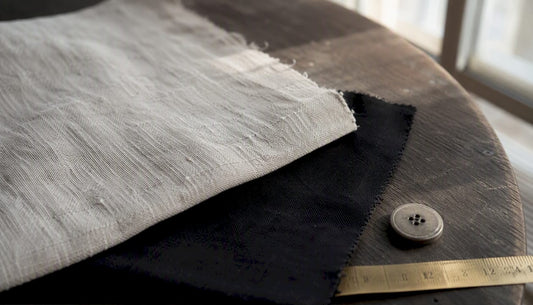
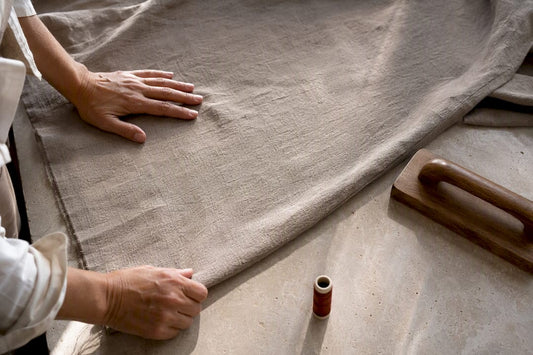
- Check seam allowances: a generous seam can be let out or restitched, while a narrow one usually cannot.
- Look at buttonholes: hand-finished or reinforced buttonholes hold up to years of wear, while raw-cut ones fray quickly.
- Test the zip: a replaceable metal zip on a well-made garment is a small sign the maker expected the piece to last.
Cost per wear turns a purchase price into something more honest. Say a dress costs $200 and you wear it 40 times over several years, that works out to $5 per wear, considerably better value than a $60 dress worn four times before it’s discarded. The Ellen MacArthur Foundation’s practitioner guidance on durability makes a similar point: garments assessed for repairability at the point of purchase tend to stay in circulation far longer than those chosen on price alone.
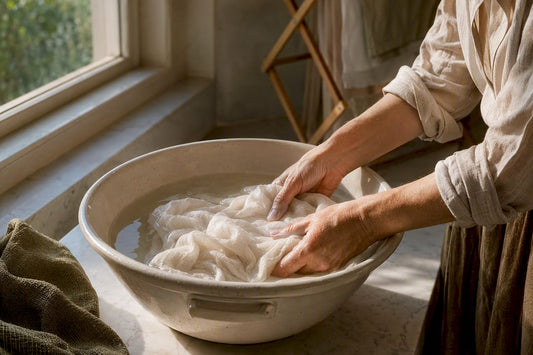
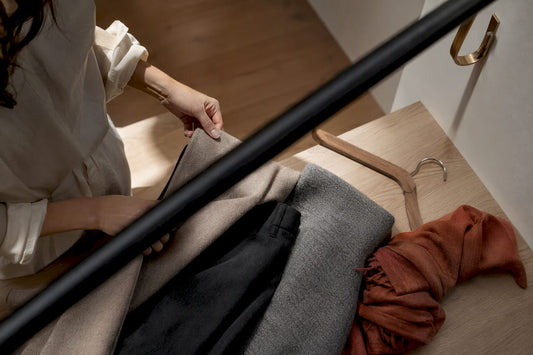
Basic care habits, air drying instead of tumble drying, spot cleaning instead of full washes, storing knitwear folded rather than hung, extend a garment’s working life without any special effort. Our guide to pay less per wear walks through the maths in more detail for anyone building a longer-term wardrobe strategy.
Pro Tip: Keep a trusted repairer’s number in your phone the way you’d keep a hairdresser’s: a $15 hem or button repair is nearly always cheaper than a replacement garment.
Circular alternatives: how rental, repair, resale and remaking reduce the harm
The Ellen MacArthur Foundation’s Fashion ReModel identifies four circular models as central to decoupling fashion revenue from new resource extraction: rental, repair, resale and remaking. Each works differently for the consumer.
- Rental suits occasion wear, a formal event dress worn once rather than bought and shelved.
- Repair extends a garment already in your wardrobe, from a resewn hem to a replaced zip.
- Resale gives a well-made piece a second owner, particularly viable for garments built from durable fabrics in the first place.
- Remaking transforms a garment into something new, extending its material life well past its original design.
Brands experimenting with take-back and resale programmes, such as the Tommy for Life initiative, demonstrate that circular offerings can sit alongside conventional retail rather than replacing it outright. The barrier for most shoppers is not willingness but access: resale platforms and repair services remain patchier outside major cities, which means the easiest circular choice today is often simply buying pieces sturdy enough to be worth repairing or reselling later.
Historical development and cultural context of fast fashion and slow fashion
Rapid-turnover clothing is not a recent invention so much as an acceleration of trends already underway through the 20th century. Ready-to-wear manufacturing, seasonal collections and department store retail all predate the term “fast fashion,” which entered common use only as production and shipping timelines compressed dramatically from the 1990s onward. What changed was not the existence of trend cycles but their speed: designs once translated from runway to shopfront over a season now move in a matter of weeks.
Slow fashion, as a named counter-movement, emerged partly in response to that acceleration, drawing on older traditions of tailoring, made-to-order garment production and regional craft heritage that predate industrial fashion altogether. Academic researchers at QUT have argued that framing this as a simple binary, fast against slow, misses the more useful question, which is one of speed itself: the distance and time between a garment’s production and its consumption. Slowing that relationship, rather than picking a moral side, is the more productive lens.
Culturally, the two movements now coexist in most wardrobes rather than sitting in strict opposition. A shopper might buy a handful of fast-fashion basics for convenience while investing in a small number of slow-fashion pieces, tailored trousers, a well-made coat, meant to anchor a wardrobe for years. That blended reality is closer to how most people actually dress than either pure model suggests, and it is why the more useful conversation is about proportion and intention rather than total allegiance to one system.
Economic impacts of fast vs slow fashion, including effects on local and global economies
Fast fashion’s economic footprint is substantial in raw output terms, with Australia’s own fast-fashion retail sector valued at around $2 billion in revenue. That scale supports jobs across retail, logistics and marketing, but it also concentrates manufacturing offshore, where production costs are lowest, leaving little of the value chain within the country where garments are ultimately sold.
Slow fashion tends to distribute value differently. Smaller production runs, closer relationships with makers and a slower pace of design work often support more specialised roles, pattern cutters, artisans, small ateliers, rather than high-volume manufacturing jobs. It also shifts spending patterns: a household buying fewer, better-made pieces spends less frequently but often more per item, which changes cash flow for retailers without necessarily changing total spend over a year.
The circularity push adds a further economic dimension. The Ellen MacArthur Foundation argues that rental, repair and resale models can generate revenue without requiring new raw material extraction, effectively decoupling growth from production volume. That is a meaningful shift for an industry historically measured by units sold rather than value retained. For local repair trades and resale platforms, this represents a genuine, if still small, economic opportunity: every garment kept in circulation for longer supports a repairer, a tailor or a resale seller, rather than only a factory offshore.
Health and social impacts of fashion consumption patterns
The pace of fast fashion shapes consumer behaviour in ways that extend beyond the wardrobe. Constant novelty, new drops every week rather than every season, trains shoppers to treat clothing as disposable, which can quietly erode the satisfaction that comes from wearing something well-chosen for years. There is a social dimension here too: dressing has always signalled identity and belonging, and a retail environment built on constant turnover pushes that signalling toward whatever is newest rather than whatever suits the wearer.
Slow fashion’s social pitch runs the other way. Choosing fewer, more considered pieces encourages a different relationship with clothing, one built around personal style rather than trend-chasing, and a wardrobe assembled this way tends to feel more coherent and less disposable over time. That is not a claim about any clinical outcome, simply an observation about how consumption habits shape everyday experience.
There is also a fairness dimension worth naming plainly. The International Labour Organization’s research into garment worker conditions makes clear that the social cost of speed falls hardest on the people making the clothes, not the people buying them. Consumer awareness of that reality, however imperfect, has been part of what has pushed modern slavery disclosure and audit transparency further up the retail agenda over the past decade.

Role of fashion marketing and media in shaping consumer behaviour
Marketing does a great deal of the work in making fast fashion feel necessary. Constant new arrivals, limited-time framing and social media content built around outfit variety all normalise a purchasing rhythm that would have seemed excessive a generation ago. The message, explicit or not, is that a wardrobe should always be refreshing itself.
Slow fashion marketing, by contrast, tends to lean on different levers: heritage, craftsmanship, fabric provenance and the promise of a garment that earns its place over years rather than weeks. Both are marketing, and both deserve some scepticism, but the underlying claims are testable in different ways. A fast-fashion “new in” claim asks you to believe something is desirable because it is new; a slow-fashion durability claim can actually be checked, at the seam, the buttonhole, the zip, in a way trend-based marketing cannot.
Media coverage has shifted too. Where fashion journalism once focused almost exclusively on runway trends and seasonal must-haves, a growing strand of coverage now interrogates production speed and supply chain ethics directly. That shift has given shoppers more vocabulary, and more scepticism, to bring to their own purchasing decisions, even if habits have been slower to follow.
Innovative materials and sustainable technologies in slow fashion
Fabric choice sits at the centre of most slow-fashion claims, and it is worth being specific about why. Natural fibres such as wool, linen and organic cotton tend to age more gracefully than synthetic blends, developing character rather than simply wearing out, and they are generally easier to recycle at end of life because they are not fused with plastic-based fibres.
The mixed-fibre recycling problem flagged in the departmental textiles report is precisely why mono-material construction, a garment made entirely from one fibre type, has become a more visible design goal among slow-fashion makers. It is a modest technical shift, but it directly addresses one of the industry’s clearest structural weaknesses.
Beyond fibre choice, some of the more meaningful innovation in slow fashion is less about new materials and more about better use of established ones: improved dye processes that reduce water use, natural fibre finishing techniques that avoid harsh chemical treatments, and construction methods designed explicitly for future repair rather than as an afterthought. None of these carries the novelty of a lab-grown textile headline, but together they represent the more grounded end of sustainable fashion innovation, the kind built to last in practice rather than in a press release.
Case studies of brands exemplifying fast and slow fashion approaches
Rather than naming individual companies as good or bad, it is more useful to look at the behaviours that separate the two models in practice. A fast-fashion approach typically shows up as weekly or fortnightly new arrivals, aggressive discounting cycles and a heavy reliance on synthetic, low-cost fabrics chosen for price rather than longevity. The retail revenue and waste patterns described in the departmental textiles report are the aggregate result of that behaviour repeated across an entire sector.
A slow-fashion approach looks different at every stage: seasonal rather than weekly collections, natural or mono-material fabrics chosen for durability, and construction detailing, generous seams, quality closures, finished linings, built to survive years of wear and repeated repair. Independent European labels working in smaller production runs tend to sit closer to this end of the spectrum, not because of any single certification, but because the entire model, from fabric sourcing to run size, is built around a slower relationship between design and consumption.

The circular examples referenced by the Ellen MacArthur Foundation, take-back schemes, repair services layered onto existing retail, show that the fast and slow models are not entirely separate universes. Some brands are experimenting with elements of both, offering rapid new arrivals alongside repair or resale programmes, a hybrid that may become more common as the Seamless clothing product stewardship scheme pushes the industry toward circularity by 2030.
Edito Boutique’s perspective on building a slow wardrobe
We think the most useful response to this whole debate is a wardrobe built deliberately, one piece at a time, rather than a vow to abstain from shopping altogether. At Edito, that means curating European labels chosen for construction and fabric quality, and being precise about where each piece is made and by whom, rather than letting heritage claims do unearned work. A well-cut dress, a considered trouser, a knit built to be re-worn for years: these are the pieces worth the investment. For readers assembling their own capsule, our guide to European capsule wardrobes and our trans-seasonal dressing approach are useful next steps.
— Mickael Martin
Explore Edito’s curated collection as a slow fashion option
If the checklist above has you rethinking a purchase, curated European fashion offers a practical way to put it into action. A curated edit favours quality and craftsmanship over rapid turnover, so pieces are chosen to earn their cost per wear rather than to be replaced next season.
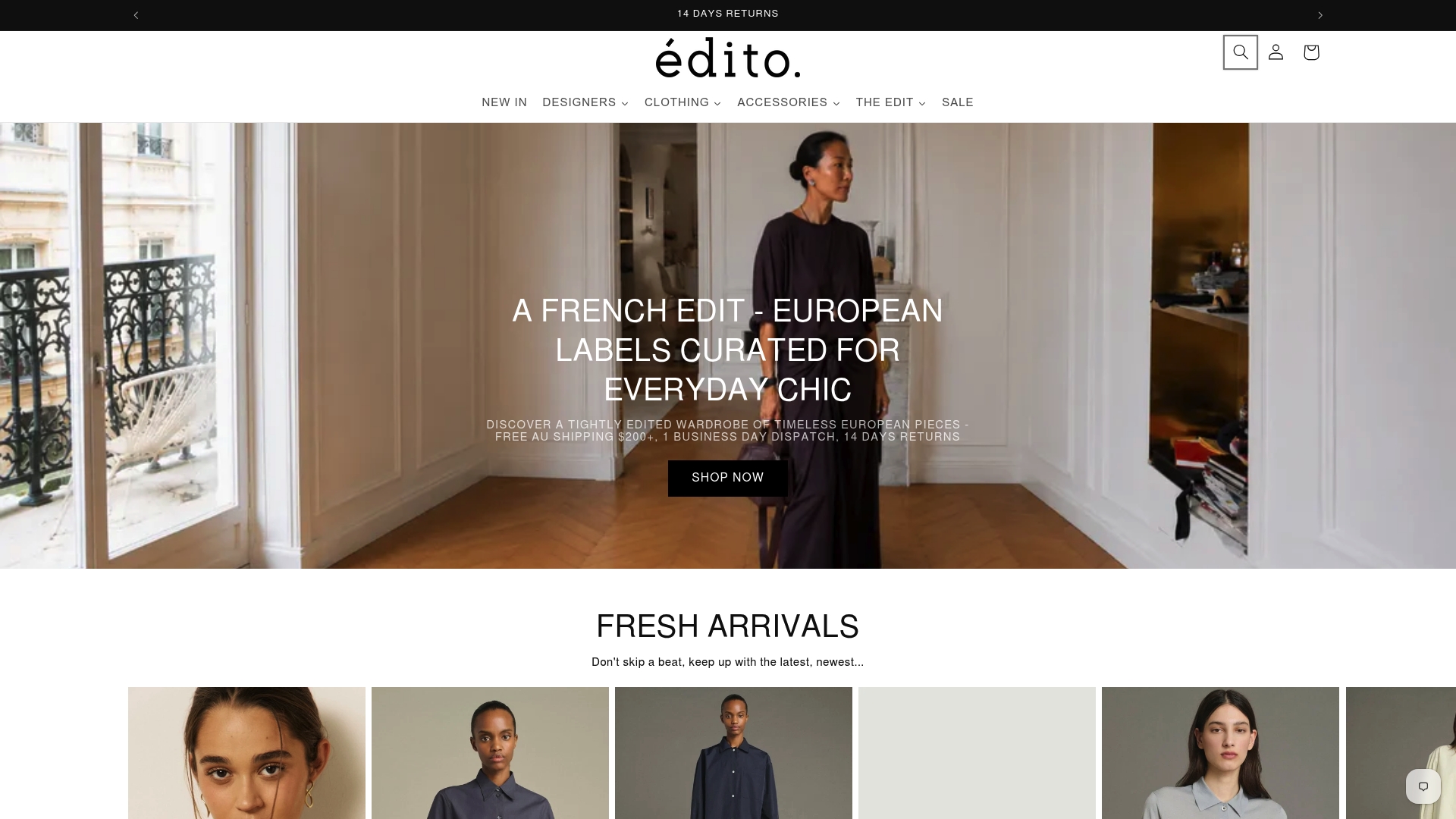
A few current examples show what that looks like: the Reflection Dress in Beige/Blue and the Muriel Dress in Rose offer considered construction suited to repeated wear across seasons, while the Poem Dress in Blue works as a versatile anchor piece. For separates, the Palerme Pants in Stone and the Millim Top in Rose pair easily with existing wardrobe staples, extending their cost per wear further still. Browse the full dresses collection or the clothing range to see how a smaller, better-chosen edit can work harder for you.
Sources
- International Labour Organization (garment industry labour studies)
- Speech launching the National Clothing Product Stewardship Scheme (Seamless)
- Enabling design for environmental good: sub-report — textiles (Departmental report)
- QUT ePrints — research on fashion’s speed, ethics and sustainability
FAQ
How does Gen Z feel about fast fashion?
Attitudes among younger shoppers are mixed rather than uniform: many express concerns about fast fashion’s environmental and labour record while still shopping it for price and convenience. Resale and rental platforms have grown in popularity as a middle path, letting shoppers chase variety without buying new every time.
Is Shein considered fast fashion?
Ultra-rapid, high-volume online retailers built around constant new arrivals and very low prices are widely categorised as fast fashion under the operational definition used throughout this guide: short design-to-shelf cycles and low unit costs. The specific retailer’s practices are a matter of public record rather than something this guide assesses directly.
Is Zara fast fashion or sustainable?
Large mass-market retailers with frequent new arrivals and seasonal churn generally sit within the fast-fashion model as defined by short production cycles and high turnover, regardless of any sustainability initiatives layered on top. A brand can run sustainability programmes while its core business model remains fast fashion.
Is Lululemon considered fast fashion?
Activewear brands built around performance fabrics and longer product cycles tend to sit closer to the slow-fashion end of the spectrum than mass-market apparel retailers, though “fast” and “slow” are best understood as a spectrum of production speed and durability rather than a strict label applied to any one company.
What is the simplest way to start shifting from fast to slow fashion?
Start with cost per wear rather than sticker price: a more expensive, well-constructed piece worn for years is often better value than a cheap one discarded after a handful of wears. Checking seams, buttonholes and zips before buying, and keeping a repairer on hand, extends that value further.