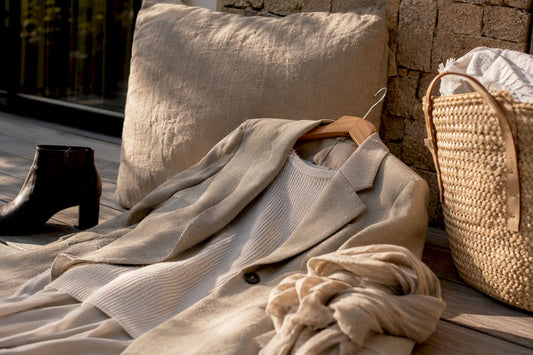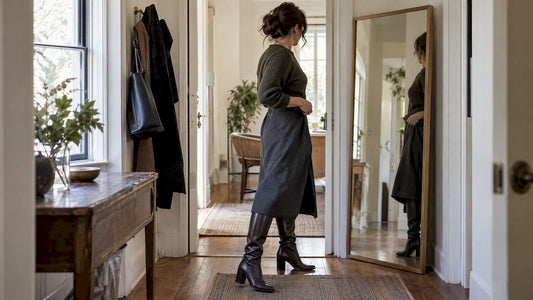

The most reliable way to handle trans-seasonal dressing is a modular capsule: a breathable base layer, a shaping mid-layer, and a removable outer piece, all in colours that mix freely. Add a neutral foundation palette with two accent pieces per season, and you can dress for a 12 degree swing without owning twice the wardrobe. The hanger-reversal audit tells you which pieces to build around before you buy anything new.
TL;DR:
- A modular capsule wardrobe with breathable base layers, structured mid-layers, and removable outer pieces allows for versatile dressing across a 12-degree temperature swing.
- Fabrics should be chosen based on weight, construction, and breathability rather than fiber content, with emphasis on fit and layering potential.
- An effective hanger-reversal audit reveals actual clothing usage, helping to identify gaps and prevent unnecessary purchases.
- Outdoor layers, including coats and jackets, should be tested over bulky clothing to ensure comfortable fit during layering and weather changes.
- Accessories like scarves, belts, and umbrellas are key to adjusting warmth and weather protection without adding bulk or buying separate seasonal pieces.
Table of Contents
- Core pieces for a trans-seasonal capsule
- How layering actually works: base, mid, outer (with the coat-fitting test)
- Colours, prints and fabric rules for in-between weather
- Wardrobe audit: the hanger method and gap-based shopping
- Outfit formulas and day plans (five adaptable looks)
- Shoes and accessories that extend outfits across seasons
- Why this works: expert evidence and Edito contributor notes
- Transitioning outfit ideas for common Australian climate zones
- Handling unexpected weather changes: rain and wind
- A curated edit built around exactly the principles above features pieces from European labels chosen for how well they layer, not just how they photograph on their own. That’s a deliberate difference from fast fashion racks, where trans-seasonal versatility is rarely the design brief.
- Author perspective: why a trans-seasonal capsule is a better long-term wardrobe choice
- Sources
- FAQ
Core pieces for a trans-seasonal capsule
A trans-seasonal capsule wardrobe works because every piece in it does at least two jobs. That’s the whole logic. Before you add anything new, check it against a morning that starts at 14 degrees and finishes at 26.
The categories that carry the load, season after season:
- Breathable tops in linen, cotton or lightweight merino — worn alone in the afternoon, layered under a knit before 9am.
- Light knits with some structure through the shoulder, so they read as smart over a shirt collar, not just cosy.
- Shirts, particularly in a fabric with a little weight to it, which take a jumper over the top or roll up alone once the temperature lifts.
- A trench or lightweight jacket that goes over a blazer on the cold days and over nothing at all on the mild ones.
- Versatile denim or tailored pants in a mid to dark wash, chosen for how many tops they can partner rather than how they look with one outfit.
- Adaptable dresses, worn solo in warmer weather and reworked with a knit or jacket when it cools. Edito’s Cap Sleeve Button Front Dress in White is a useful example: the button-through front and cap sleeve mean it layers cleanly under a blazer without bunching at the shoulder, then stands alone once the mercury climbs.
- A neutral blazer, arguably the hardest-working piece in the capsule, because it dresses up a tee and formalises a shirt in the same afternoon.
On quantity, resist the urge to follow a rigid checklist. Two to three base tops, one or two mid-layers, and a single reliable outer per season focus is a reasonable starting point. Stylists interviewed for Broadsheet’s capsule wardrobe guide are consistent on this point: personalise the capsule to what you actually wear, not to a universal list, because your version of “core” depends on your commute, your climate and your week.
How layering actually works: base, mid, outer (with the coat-fitting test)
Layering only works when each layer has a distinct job. Confuse the jobs and you end up either sweating on the train or shivering at the bus stop.
- Base layer — sits against the skin and manages comfort and breathability. This is where fabric choice matters most; a synthetic blend that traps heat will undo the rest of the system.
- Mid-layer — adds warmth and shape. A knit, a fine cardigan or a structured shirt belongs here, and it should be roomy enough to move under an outer piece without pulling.
- Removable outer — handles weather and finishes the look. This is the layer you take off on the tram, so it needs to be genuinely easy to shed and carry.
The fabric itself does most of the practical work. Fine cardigans, lightweight overshirts, scarves and unlined jackets are the pieces stylists consistently recommend for days with real temperature swings, because they pack down and come off without fuss.
Before buying a coat or jacket, run the coat-fitting test: put it on over the thickest combination you actually intend to wear underneath, not over a bare shoulder in the fitting room mirror. Check that you can lift your arms above your head and that the sleeve still covers your wrist. A coat that fits over a t-shirt but binds over a chunky knit is a coat you’ll leave at home. Retailers rarely mention it, but this single check prevents most of the seasonal wardrobe purchases that end up unworn.
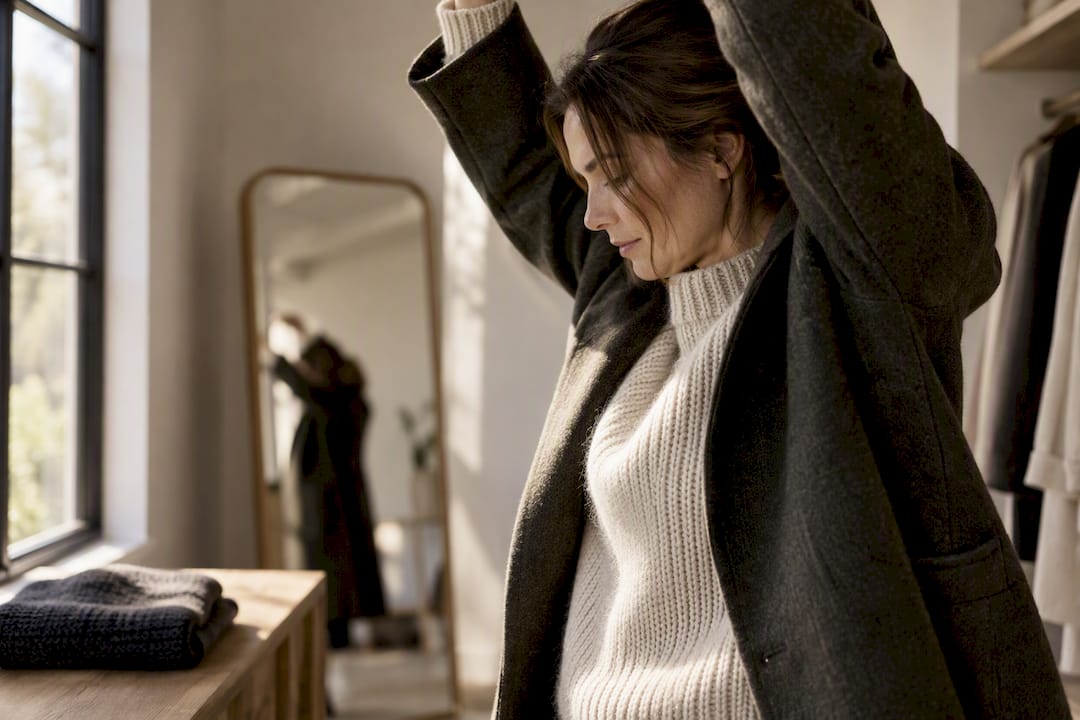
Pro Tip: Look for raglan or set-in sleeves with a little extra room through the upper arm when you’re buying outerwear specifically for layering — a slim, fitted armhole is the first thing to fail the coat-fitting test. For milder climates, choose unlined jackets over fully lined ones; lining adds warmth you may not need most of the year.
Colours, prints and fabric rules for in-between weather
Build the capsule around four neutrals and let two seasonal accents do the rest of the work. Black, navy, cream and stone form a foundation that mixes without a second thought, and stylists point to this exact approach as the reason a small wardrobe can feel much larger than it is. One or two accent colours per season, a rust or a soft green, keep the capsule from feeling flat without multiplying your laundry pile.
Fabric weight and construction matter more than the fibre printed on the label. A heavy cotton twill can outperform a thin wool in both warmth and structure, and a loosely knitted merino breathes far better than a tightly woven synthetic marketed as “wool blend.” This is a point stylists make repeatedly: fit and layering potential should decide the purchase, not the fibre name on the swing tag.
Quick checks worth running before you buy:
- Weight in hand — a fabric that feels substantial without stiffness usually layers and drapes well.
- Lining check — a lined piece runs warmer and bulkier; an unlined piece is more trans-seasonal by nature.
- Breathability test — scrunch the fabric; if it springs back with little resistance, it will likely move with your body rather than trap heat against it.
Wardrobe audit: the hanger method and gap-based shopping
Turn every hanger backwards at the start of the season, then flip each one the right way round as you wear the item. After four to six weeks, the hangers still facing backwards show you exactly what isn’t earning its space, a method Broadsheet’s stylist sources use precisely because it reveals actual wearing patterns rather than good intentions.
- Reverse every hanger at the start of a season.
- Wear normally and flip hangers as items get used.
- Review the unturned hangers after a few weeks and ask honestly whether the piece was wrong for the weather, the fit, or simply forgotten.
- Sort what’s left: mend anything with a genuine fix, donate what no longer fits your life, and store bulky pieces that are seasonal rather than trans-seasonal.
Resist the instinct to pack every warm layer away the moment it warms up. Keeping a handful of knits and one solid outer piece visible through the transition saves you from an unexpected cold snap and a repeat purchase of something you already own, buried at the back of a cupboard.
Once you know your actual gaps, shop them specifically rather than browsing broadly. Op shops and resale marketplaces are worth checking first for one-off basics, and a targeted buy, in exactly the neutral or fabric weight your audit flagged, beats a trend-led purchase every time. Edito’s guide to capsule wardrobe building goes deeper into this gap-first approach if you want a fuller framework.
Outfit formulas and day plans (five adaptable looks)
A capsule only proves its worth once you can dress from it without thinking too hard on a Tuesday morning. Five formulas, each built to flex as the temperature moves:
- Commute: breathable base top, blazer, loafers. Add a scarf or light coat for the walk to the station and you’re covered until midday.
- Office: tailored pants, thin knit, blazer. As the office warms up or the afternoon sun hits, swap the knit for a shirt underneath the same blazer.
- Weekend: denim, tee, overshirt. Ankle boots go on if the morning is cool; the overshirt comes off entirely by early afternoon.
- Evening: the Cap Sleeve Button Front Dress in White with a lightweight blazer over the top, plus covered sandals or a low heel. A clutch and scarf handle the cooler walk home.
- Travel: a layerable top, one mid-layer, and a packable outer, matched with shoes built to bridge walking and dressing up. Edito’s travel capsule wardrobe guide breaks this down further if you’re packing for a multi-climate trip.
None of these formulas depend on buying five new outfits. They depend on the same eight or nine pieces working differently depending on what’s added or removed.
Shoes and accessories that extend outfits across seasons
Footwear does more seasonal heavy lifting than most women give it credit for. Low ankle boots read as cool-weather without tipping into full winter bulk; loafers sit comfortably in almost any temperature; closed sandals bridge the gap between bare feet and boots; and a smart sneaker covers the days when comfort has to win. Rotate between them based on the morning temperature rather than the calendar date.
Accessories are the fastest way to adjust warmth without changing the outfit underneath:
- A lightweight scarf adds meaningful warmth with almost no bulk, and it comes off the moment you don’t need it.
- A belt can shift a loose knit or shirt from casual to considered in seconds.
- A hat does double duty against both sun and wind, useful in a climate that offers plenty of both in the same week.
- A compact umbrella kept in your bag rather than your car means you’re never caught out by an afternoon change.
For the commute, a structured bag with an internal pocket for a folded scarf or packable jacket means you’re not visibly carrying your layers, just wearing them when you need them.
Why this works: expert evidence and Edito contributor notes
The modular system holds up because it’s built on how women actually dress, not on a theoretical seasonal switch. The hanger-reversal audit surfaces genuine wearing patterns, the three-layer system separates comfort, warmth and weather protection into distinct jobs, and fabric construction consistently outperforms fibre labelling as a predictor of how a piece will perform across a season.
A carefully curated selection of European fashion labels typically leans toward pieces built with enough structure and fabric weight to layer well, rather than one-note seasonal statements. Broader industry coverage backs the shift: reporting from Australian Fashion Week has tracked designers moving toward permanence and trans-seasonal collections rather than hard seasonal cycles, a signal that the capsule approach isn’t a budget compromise but a genuine direction in contemporary fashion.
At home, two checks are enough to verify most purchases: the coat-fitting test over your bulkiest layer combination, and a simple scrunch test on any fabric you’re unsure of, to see whether it holds shape or springs back.
Transitioning outfit ideas for common Australian climate zones
Coastal mornings in places like Sydney or Perth tend to carry humidity even when the temperature reads mild, so a linen shirt over a fitted tank works better than a heavier knit, with a light unlined jacket for the breeze off the water. Swap the jacket for a folded scarf by mid-morning.
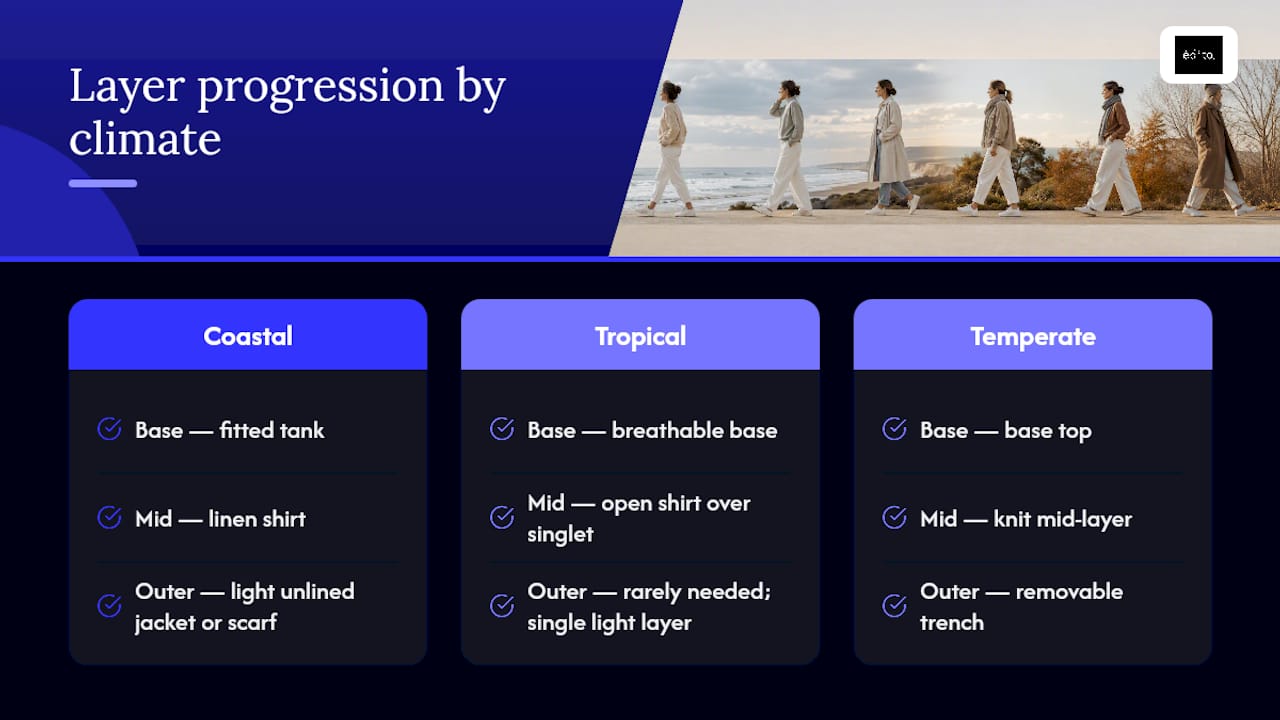
Tropical zones, think Cairns or Darwin during the shoulder months, rarely need a true outer layer at all. The capsule logic still applies, just shifted down a layer: a breathable base and a single light layer, such as an open shirt over a singlet, covers the gap between an air-conditioned office and a warm evening outside.
Temperate cities, Melbourne and Canberra especially, are where the full three-layer system earns its keep. Mornings can sit near single digits in the shoulder seasons while afternoons climb into the low twenties, so a base top, a knit mid-layer and a genuinely removable trench cover the whole day without a wardrobe change at lunch.
Whatever the zone, the same neutral foundation and modular structure travels with you. The pieces shift proportion, more layers in Melbourne, fewer in Darwin, but the underlying system doesn’t change.
Handling unexpected weather changes: rain and wind
Trans-seasonal weather rarely sticks to the forecast, so the capsule needs at least one piece that handles rain and wind without looking like it was bought for a hike. A water-resistant trench, ideally the same one already doing outer-layer duty on cold mornings, covers both jobs at once rather than sitting in the cupboard as a single-purpose raincoat.
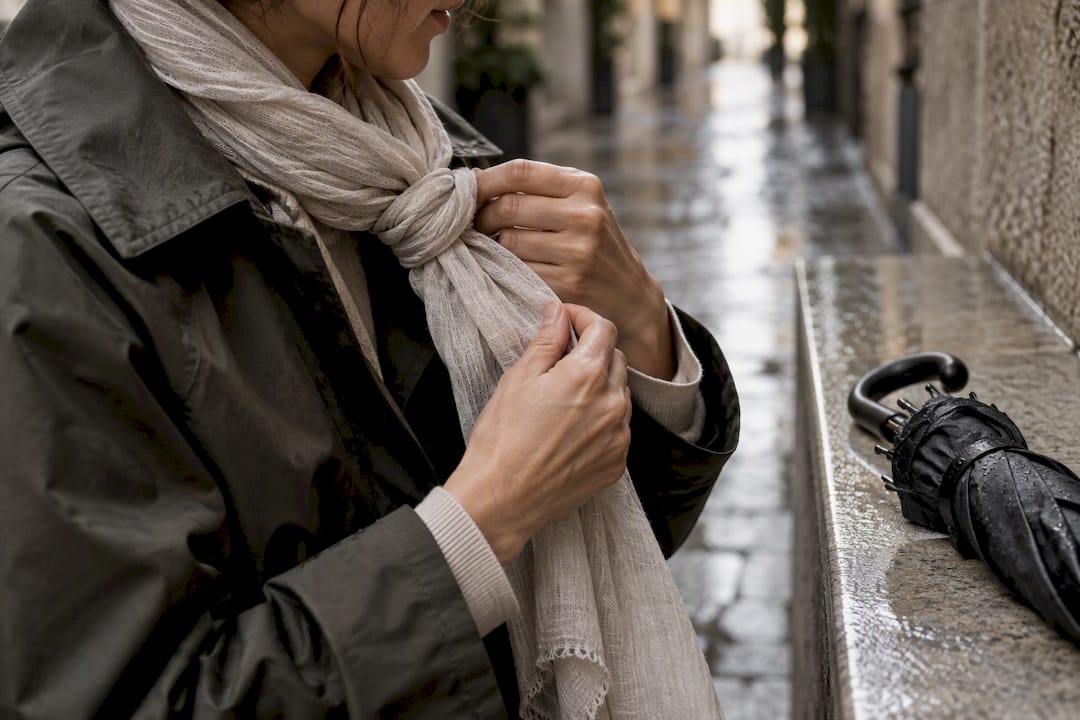
Wind is the more common disruptor on a trans-seasonal day, particularly in coastal and southern cities. A jacket with a higher collar or a scarf that can wrap securely does more than a hood that just gets pushed back by the gust anyway. Keep a compact umbrella in your everyday bag rather than reserving it for days the forecast looks certain. Australian weather rarely gives enough notice.
Footwear needs the same forward planning. A shoe with some water resistance, or a spare pair of flats kept at the office or in the car, saves you from spending an afternoon in wet sandals. None of this calls for a separate “wet weather” wardrobe. It calls for choosing capsule pieces that were already going to double as protection, which is the same modular thinking that runs through the rest of this system.
A curated edit built around exactly the principles above features pieces from European labels chosen for how well they layer, not just how they photograph on their own. That’s a deliberate difference from fast fashion racks, where trans-seasonal versatility is rarely the design brief.
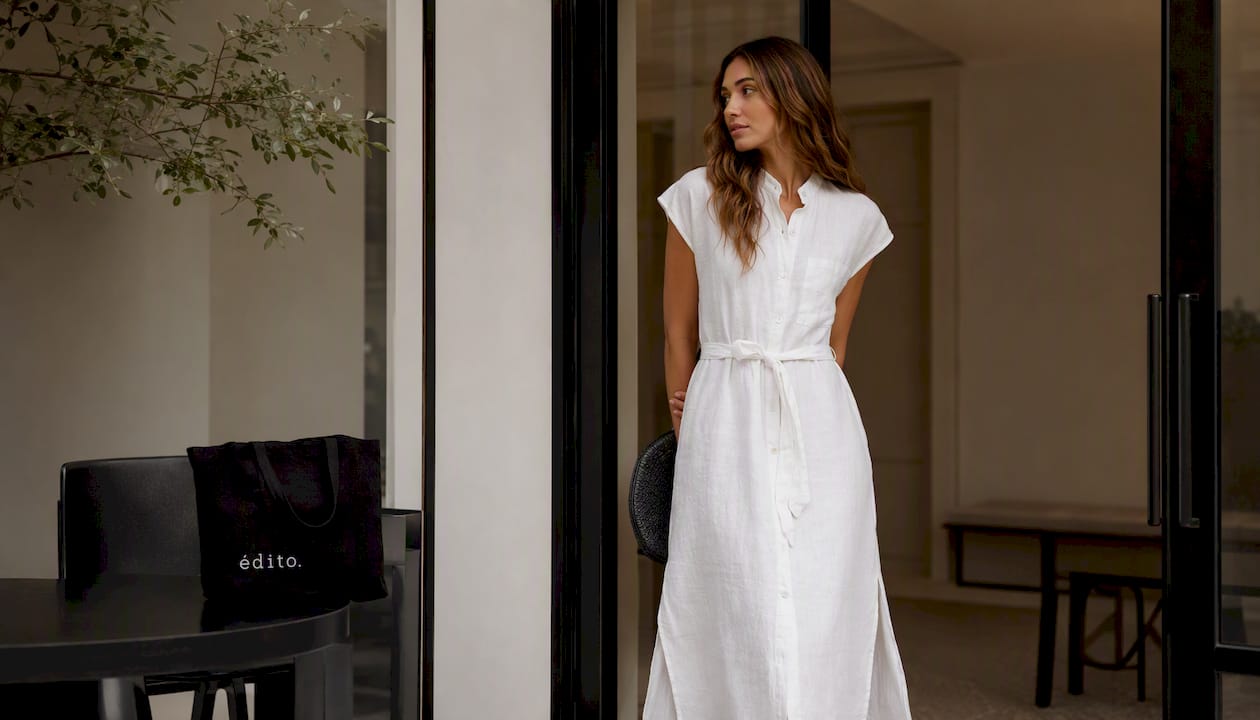
The Cap Sleeve Button Front Dress in White is a good example of what to look for: a piece that stands alone in warm weather and layers cleanly under a blazer once the temperature drops, without the shoulder bulk that ruins most dresses under outerwear. It sits within Edito’s broader dresses collection, alongside other pieces chosen for the same reason. If your hanger audit turns up gaps elsewhere, Edito’s clothing collection covers the mid-layers and outer pieces the capsule depends on, its tops and pants collections fill the base categories, and the accessories edit covers the scarves and belts that do the daily temperature adjusting.
Run the hanger audit first. Once you know what’s genuinely missing, whether that’s a removable outer, a versatile knit or one adaptable dress, shop that specific gap rather than a whole new season’s wardrobe.
Author perspective: why a trans-seasonal capsule is a better long-term wardrobe choice
The conventional advice to swap your wardrobe twice a year has always struck me as impractical for Australian weather, which rarely respects the calendar anyway. A modular capsule is a better fit because it treats versatility as the design brief, not an afterthought.
There’s also a quieter argument here about buying less, better. Fewer, well-made pieces that layer across seasons cost more per item but far less over years, and that maths only works if you actually wear what you own. Try the hanger method this season, then test just one formula from this guide before you buy anything new. For more on the reasoning behind this approach, Edito’s trans-seasonal dressing guide is worth a further read.
— Mickael Martin
Sources
- A stylist’s guide to building a capsule wardrobe for every season | Broadsheet
- A slow fashion stylist’s tips for adding to your winter wardrobe on a budget - ABC News
- Resort and trans-seasonal trend coverage | Vogue Australia
FAQ
What is the 3-3-3 rule for clothes?
The 3-3-3 rule is a wardrobe challenge where you dress from just three tops, three bottoms and three pairs of shoes (or similar categories) for three weeks, to see how versatile your existing pieces really are. It works well alongside the hanger-reversal audit as a way of testing capsule gaps before you shop.
How can I dress to look slimmer in trans-seasonal outfits?
Structured layers, like a tailored blazer over a fitted base top, tend to create a cleaner silhouette than bulky, boxy knits worn alone. Vertical lines, such as a button-front dress like Edito’s Cap Sleeve Button Front Dress in White, and well-fitted tailored pants generally read as more flattering than layers that add width at the shoulder or hip.
What are the essential pieces every woman should own?
Most capsule frameworks centre on breathable tops, a couple of light knits, a shirt, a trench or light jacket, versatile denim or tailored pants, one or two adaptable dresses, and a neutral blazer. Building around these categories, rather than a fixed number, lets you adjust quantities to your own climate and lifestyle.
What should go into a 2026 capsule wardrobe for summer?
A summer-leaning capsule still benefits from the modular approach: breathable base layers, one light layer for air-conditioned interiors or cooler evenings, and versatile dresses that work with or without a light jacket. Edito’s summer wardrobe guide covers specific pieces for the Australian summer if you want a more detailed seasonal breakdown.